What's the Difference Between IBS Symptoms and H. Pylori?
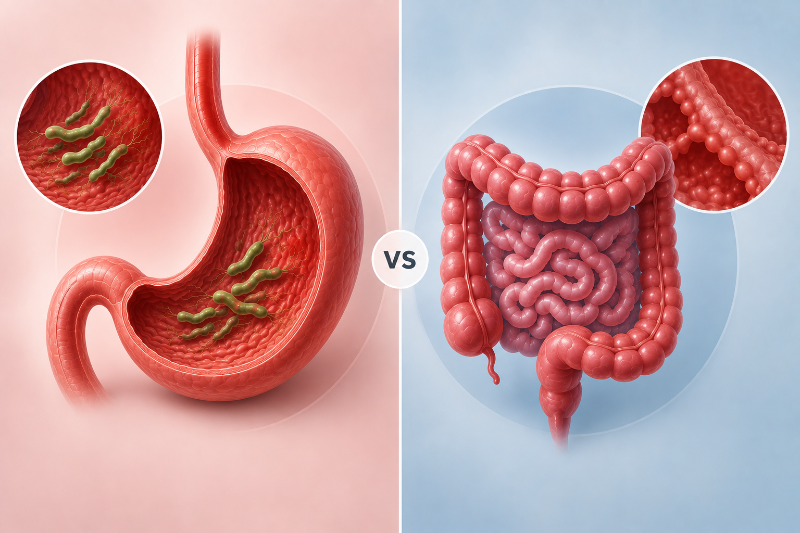
What's the Difference Between IBS and H. Pylori?
Even though they can look alike on the surface, IBS and H. pylori are not the same thing. IBS is a disorder that disrupts how the large intestine works. It causes symptoms like abdominal pain, bloating, and changes in bowel habits, but there's no visible inflammation or damage inside the intestine.
H. pylori, on the other hand, is a bacterial infection that settles into the stomach lining. It can trigger inflammation and cause a burning pain in the stomach, particularly with certain foods or on an empty stomach. Left untreated, it can develop into a stomach ulcer.
What Are the Symptoms of IBS?
IBS symptoms mainly hit the lower part of the digestive system. They tend to come in waves, often tied to stress or specific foods you've eaten.
Common symptoms include:
- Cramping and pain in the lower abdomen: usually eases up after a bowel movement.
- Bloating and gas: a feeling of fullness and pressure in the belly.
- Changes in bowel habits: alternating bouts of diarrhea and constipation.
- Mucus in the stool: sometimes shows up in small amounts.
What Are the Symptoms of H. Pylori?
H. pylori symptoms center around the upper abdomen. They're connected to irritation of the stomach lining or the formation of ulcers.
Key symptoms include:
- Pain and burning in the upper abdomen: gets worse when the stomach is empty.
- Nausea and vomiting: a persistent urge to throw up.
- Early satiety: feeling full after eating just a small amount of food.
- Frequent burping: caused by gas that the bacteria produce in the stomach.
- Loss of appetite: which can lead to unexplained weight loss.
Does H. Pylori Cause Bloating and Gas?
Yes. The bacterial infection slows down digestion and causes food to ferment inside the stomach and intestines, which produces significant amounts of gas and bloating.
What's the Key Difference Between IBS and H. Pylori Symptoms?
The location and nature of the pain are the biggest giveaways. H. pylori pain sits in the upper abdomen, right under the ribcage. It's a burning sensation that tends to flare up when you're hungry, and it often comes with nausea and burping.
IBS pain, by contrast, spreads across the lower abdomen and sides. It feels more like cramping and spasms, and it's closely tied to bowel movements, diet, and stress. You typically won't get that stomach-burning feeling with IBS.
Can H. Pylori Cause IBS-like Symptoms?
Yes. Poor digestion and gas buildup from the infection can put extra pressure on the colon, triggering symptoms that mimic IBS flare-ups.
Does H. Pylori Affect the Colon?
It does, indirectly. The bacteria cause inflammation that throws off the balance of stomach acid production. That impairs how well food gets digested in the stomach, so partially undigested food moves into the intestines and colon. The result? More fermentation, more gas, and irritation of the colon, especially if you already have IBS.
How Are IBS and H. Pylori Diagnosed?
When symptoms like abdominal pain, bloating, and digestive problems show up, your doctor may order several tests to pinpoint the cause and rule out other conditions. The most common ones include:
- Blood tests: help detect signs of inflammation or anemia. Your doctor may also request additional tests to rule out conditions that share symptoms with IBS.
- Stool test: used to detect H. pylori by looking for its antigens in the stool. Other stool tests can also help rule out infections or inflammatory bowel diseases.
- Upper GI endoscopy: allows the doctor to examine the esophagus, stomach, and duodenum from the inside. It may be ordered if symptoms persist or there are warning signs that need closer investigation. During the procedure, a biopsy from the stomach lining can confirm H. pylori, inflammation, or ulcers.
- Colonoscopy: not typically used to diagnose IBS, but your doctor might recommend it to rule out other colon conditions, especially if there are unusual symptoms or red flags.
It's worth knowing that not every patient needs all of these tests. Your doctor decides which ones are appropriate based on your symptoms, age, and medical history.
How Are IBS and H. Pylori Treated?
Treatment depends on what the tests reveal. If H. pylori is confirmed, the goal is clearing the infection. If the symptoms point to IBS with no other underlying cause, treatment focuses on symptom management.
If tests confirm H. pylori:
- The doctor prescribes a combination of antibiotics to kill the bacteria.
- Acid-reducing medications are used alongside the antibiotics to help the stomach lining heal.
- After treatment is completed, a follow-up test is done to make sure the infection is gone.
If the diagnosis is IBS:
- Treatment starts with dietary changes and avoiding foods that trigger symptoms.
- Medications can be used to manage specific symptoms, like cramping, diarrhea, or constipation, depending on what you're dealing with.
- Reducing stress, staying active, and getting good sleep all help keep symptoms under control.
If you have both conditions at the same time, the doctor will treat H. pylori first to clear the infection, then reassess your IBS symptoms to see if they still need a separate treatment plan.
Does Treating H. Pylori Cure IBS?
No. H. pylori treatment only eliminates the bacterial infection. That said, getting rid of the bacteria can reduce the bloating that irritates the colon.
Can You Have IBS and H. Pylori at the Same Time?
Yes, it's possible to have both conditions simultaneously. H. pylori can cause digestive symptoms that closely resemble IBS, like abdominal pain, bloating, and indigestion. That overlap is exactly why it can be tricky to tell them apart without proper testing. A proper medical evaluation helps identify what's actually causing the symptoms and choose the right treatment.
When Should You See a Gastroenterologist?
Don't wait to get medical advice if you notice warning signs that go beyond the usual digestive discomfort.
These warning signs include:
- Rapid, unexplained weight loss.
- Difficulty or pain when swallowing.
- Persistent vomiting or vomiting blood.
- Black-colored stool.
- Severe anemia with no known cause.
IBS and H. pylori may share some symptoms, but each has a different cause and requires its own approach to diagnosis and treatment. Relying on symptoms alone isn't enough to figure out what's going on, particularly when abdominal pain, bloating, or digestive issues won't go away. The right medical workup and testing will get you to the actual cause and the right treatment, whether it's H. pylori, IBS, or both.
If you still need a doctor’s consultation regarding this condition, you can easily book an appointment through Vezeeta.
Related Keywords


Specialized Doctors

Andre atef Saweras
consultant of Gastrointestinal Diseases, Liver Diseases, Endoscopy, and Infectious Diseases - Faculty of Medicine (Kasr El Aini).

Ahmed Almarakby
Consultant in internal medicine, digestive system, liver and endoscopy

Ahmed Amer Afifi
Consultant of Gastroenterology , Endoscopy And Hepatology Faculty of medicine Al Azhar University
References
https://my.clevelandclinic.org/health/diseases/21463-h-pylori-infection
https://my.clevelandclinic.org/health/diseases/4342-irritable-bowel-syndrome-ibs
https://www.mayoclinic.org/diseases-conditions/h-pylori/symptoms-causes/syc-20356171
https://www.webmd.com/digestive-disorders/h-pylori-helicobacter-pylori
https://www.healthline.com/health/helicobacter-pylori
https://www.nhs.uk/conditions/irritable-bowel-syndrome-ibs/
https://medlineplus.gov/lab-tests/helicobacter-pylori-h-pylori-tests/
Specialized Doctors
Andre atef Saweras
consultant of Gastrointestinal Diseases, Liver Diseases, Endoscopy, and Infectious Diseases - Faculty of Medicine (Kasr El Aini).
Ahmed Almarakby
Consultant in internal medicine, digestive system, liver and endoscopy
Ahmed Amer Afifi
Consultant of Gastroenterology , Endoscopy And Hepatology Faculty of medicine Al Azhar University