ICSI: The Procedure, Success Rates, and How It Differs from IVF
What Are the Steps of the ICSI Procedure?
The ICSI procedure involves several carefully planned stages designed to maximize the chances of successful fertilization and pregnancy.
1. Ovarian Stimulation
The treatment begins with fertility medications that stimulate the ovaries to produce multiple mature eggs instead of the single egg released during a natural menstrual cycle. Throughout this phase, your fertility specialist monitors follicle development using ultrasound scans and hormone blood tests to determine the optimal time for egg retrieval.
2. Egg Retrieval
Once the eggs have matured, they are collected using a fine needle guided by ultrasound while the patient is under light sedation. The procedure usually takes 15 to 30 minutes, and most women return home the same day.
3. Sperm Collection and Preparation
A semen sample is obtained from the male partner, and embryologists carefully select the healthiest sperm based on its movement and appearance. This preparation helps improve the likelihood of successful fertilization.
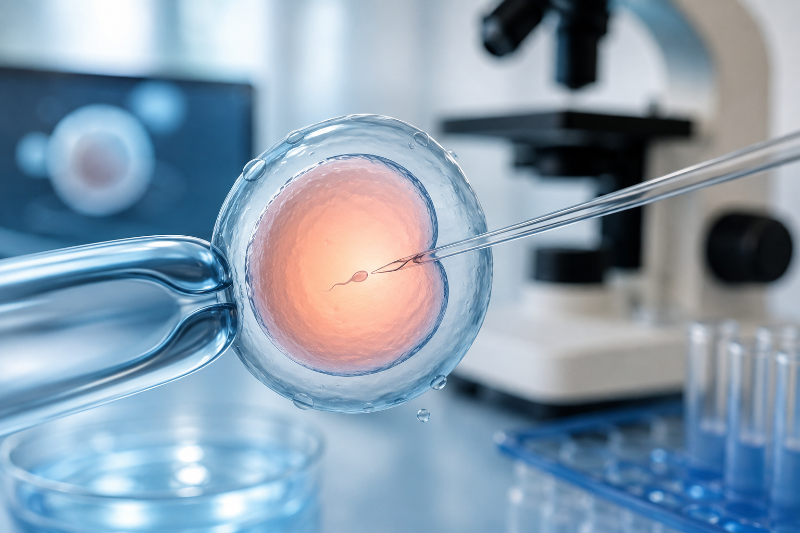
4. Intracytoplasmic Sperm Injection (ICSI)
Using a high powered microscope, an embryologist injects a single healthy sperm directly into each mature egg. The fertilized eggs are then monitored in a specialized laboratory incubator to evaluate embryo development over the following days.
5. Embryo Transfer
One or more high quality embryos are transferred into the uterus using a thin, flexible catheter. The procedure is typically painless and does not require anesthesia. A pregnancy blood test is usually performed 10 to 14 days after embryo transfer to determine whether implantation has been successful.
ICSI Success Rates
The success rate of ICSI treatment depends on several important factors, including:
- The woman's age.
- Egg quality.
- Sperm quality.
- The underlying cause of infertility.
- The experience and expertise of the fertility clinic.
In general, the ICSI success rate ranges from 30% to 50% per treatment cycle for women under the age of 35. Pregnancy rates gradually decline with increasing maternal age, particularly after the age of 40, mainly because of reduced egg quality.
Although success rates vary from one patient to another, individualized treatment plans and experienced fertility specialists can significantly improve the chances of achieving pregnancy.
ICSI vs IVF, What's the Difference?
Both ICSI (Intracytoplasmic Sperm Injection) and IVF (In Vitro Fertilization) are assisted reproductive technologies, but they differ in the way fertilization occurs and the situations in which each treatment is recommended.
IVF
During conventional IVF, thousands of sperm are placed together with each egg in a laboratory dish. Fertilization occurs naturally when one sperm successfully penetrates the egg on its own.
IVF is commonly recommended for:
- Blocked or damaged fallopian tubes.
- Ovulation disorders.
- Unexplained infertility.
- Certain female fertility conditions.
ICSI
During ICSI, an embryologist injects a single healthy sperm directly into the egg using specialized microscopic equipment.
ICSI is usually recommended for:
- Low sperm count.
- Poor sperm motility.
- Abnormal sperm morphology.
- Previous IVF fertilization failure.
- Male factor infertility.
Because fertilization is assisted directly, ICSI offers higher fertilization rates for couples affected by severe male infertility.
What Are the Symptoms After ICSI?
After embryo transfer, it is normal to experience mild symptoms caused by the procedure itself or by the hormone medications used to support implantation.
These symptoms do not necessarily indicate whether the ICSI cycle has been successful or unsuccessful.
Common symptoms include:
Mild Abdominal Cramping
Light cramping similar to menstrual cramps is common and usually improves within a few days.
Bloating
Hormonal medications used during ovarian stimulation may cause temporary abdominal bloating and fluid retention.
Light Spotting
A small amount of vaginal spotting may occur after embryo transfer or during embryo implantation. Light spotting is usually not a cause for concern.
Fatigue
Feeling unusually tired is common due to hormonal changes, emotional stress, and the body's response to treatment.
Breast Tenderness
Breast soreness or fullness often results from progesterone and other fertility medications administered after embryo transfer.
When Should You Contact Your Doctor?
Seek immediate medical attention if you experience:
- Heavy vaginal bleeding.
- Severe or worsening abdominal pain.
- High fever.
- Difficulty breathing.
- Significant abdominal swelling.
- Severe nausea or vomiting.
These symptoms may indicate complications such as ovarian hyperstimulation syndrome (OHSS) or infection and require prompt medical evaluation.
ICSI and Twin Pregnancy
One of the most common questions couples ask is whether ICSI increases the chance of having twins.
The likelihood of a twin pregnancy is primarily influenced by:
- Fertility medications that stimulate the ovaries.
- The number of embryos transferred into the uterus.
Multiple pregnancies occur in approximately 15% to 25% of ICSI treatment cycles when more than one embryo is transferred. To reduce the risks associated with twins or higher order multiple pregnancies, fertility specialists carefully determine the appropriate number of embryos to transfer based on the patient's age, embryo quality, and medical history.
Today, many fertility centers recommend single embryo transfer whenever appropriate to achieve a healthy pregnancy while minimizing pregnancy related complications.
How Long Does the ICSI Process Take?
A complete ICSI treatment cycle typically takes 4 to 6 weeks, beginning with ovarian stimulation and ending with the pregnancy test.
The timeline generally includes:
- Ovarian stimulation, during which fertility medications encourage the development of multiple mature eggs.
- Regular monitoring using ultrasound scans and hormone blood tests to assess the ovaries' response.
- Egg retrieval, followed by sperm preparation and fertilization in the laboratory.
- Embryo culture, where fertilized eggs are monitored for several days as they develop into healthy embryos.
- Embryo transfer into the uterus.
After the embryo transfer, patients usually wait 10 to 14 days before taking a blood pregnancy test (Beta hCG) to determine whether implantation has been successful.
When Is ICSI Recommended?
Doctors may recommend Intracytoplasmic Sperm Injection (ICSI) when natural conception is unlikely or when other fertility treatments have not been successful.
ICSI is commonly recommended for:
- Severe male factor infertility, including low sperm count, poor sperm motility, or abnormal sperm morphology.
- Blocked or damaged fallopian tubes.
- Unexplained infertility after a comprehensive fertility evaluation.
- Previous IVF cycles with failed or poor fertilization.
- Conditions in which natural fertilization is unlikely to occur.
Your fertility specialist will recommend the most appropriate treatment based on your medical history, fertility test results, and the underlying cause of infertility.
Key Takeaway
ICSI has become one of the most effective fertility treatments for couples experiencing infertility, particularly when male factor infertility is involved. Advances in reproductive medicine have significantly improved pregnancy outcomes, making ICSI a trusted option for many couples worldwide.
Because every fertility journey is unique, treatment success depends on several factors, including age, egg and sperm quality, the cause of infertility, and the expertise of the fertility team. A thorough fertility evaluation, personalized treatment plan, and close adherence to your specialist's recommendations before and after the procedure can help maximize the chances of a healthy pregnancy and a successful outcome.
If you still need a doctor’s consultation regarding this condition, you can easily book an appointment through Vezeeta.
Related Keywords





References
https://www.mayoclinic.org/tests-procedures/in-vitro-fertilization/multimedia/icsi/img-20008645
https://www.nhs.uk/tests-and-treatments/ivf/
https://pmc.ncbi.nlm.nih.gov/articles/PMC4046257/