What Is the Best Age to Treat Strabismus in Children?
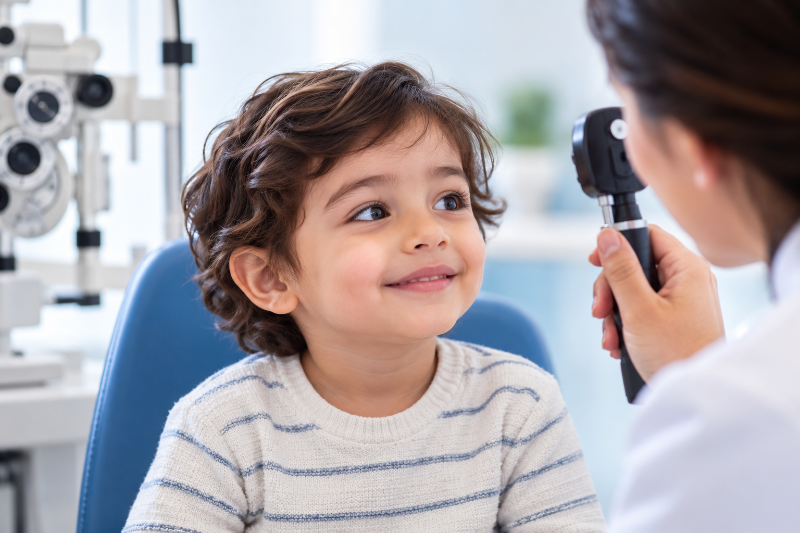
What Is Strabismus in Children?
Strabismus in children, also known as strabismus, is a misalignment of the eyes in which one eye looks forward while the other turns inward, outward, upward, or downward.
Strabismus occurs when the eyes, muscles, and nerves responsible for eye movement do not work together properly. It may be present all the time or appear intermittently.
Strabismus is not always related to a problem in the eye muscles themselves. It may result from refractive errors, reduced vision in one eye, or certain other health conditions.
Is Strabismus in Children Normal?
Unsteady eye movements may be normal during the first months of an infant’s life. However, constant strabismus or strabismus that appears after this period requires medical evaluation.
During the early period after birth, an infant may not have complete control over eye movement. Parents may therefore notice slight, intermittent misalignment.
As the visual system develops and control of eye movement improves, the direction of the eyes becomes more stable. If the misalignment continues after the early months, or becomes clear and recurrent, it is best to have the child examined by a pediatric ophthalmologist.
Strabismus in a 3-year-old child should not be considered a normal stage of development, especially if it is constant or has appeared recently.
When Does Strabismus End in Infants?
Unsteady eye movements in infants usually improve during the first few months, and eye coordination becomes more stable by the age of 4 to 6 months.
If you notice constant eye misalignment after the child reaches 6 months of age, or if the misalignment was clear before then and occurs repeatedly, it is important to take the child to an eye doctor.
This is especially important if the child:
- Closes one eye when looking.
- Tilts their head to see clearly.
- Has difficulty following objects.
- Has one eye that constantly appears to look in a different direction.
- Has clearly reduced vision.
What Are the Types of Strabismus in Children?
The types of strabismus in children vary according to the direction of the eye deviation and whether it is constant or intermittent.
Common types include:
Esotropia in Children
An inward-turning eye is called esotropia. In this condition, one or both eyes turn inward toward the nose.
In some children, this type may be associated with farsightedness. The eyes need to make greater focusing effort, which may affect their alignment.
Exotropia in Children
An outward-turning eye is called exotropia. In this condition, one or both eyes turn outward, away from the nose.
Exotropia may be intermittent, meaning that it appears at certain times, such as when the child is tired, ill, or distracted.
Vertical Strabismus
In this type, one eye turns upward or downward compared with the other eye.
The misalignment may be slight or obvious. Identifying its cause requires a careful examination of eye movement.
Intermittent or Mild Strabismus
The misalignment may appear only for short periods, after which the eyes return to their normal position.
However, the fact that strabismus is intermittent does not necessarily mean that it does not require follow-up. In some cases, it may become more frequent over time.
Pseudostrabismus in Children
Sometimes one eye appears to be misaligned even though the eyes are properly aligned.
This may result from the shape of the bridge of the nose, the eyelids, or the distance between the eyes. It is known as pseudostrabismus.
What Is the Difference Between Pseudostrabismus and True Strabismus?
True strabismus means that the eyes are actually misaligned. Pseudostrabismus makes the eyes appear misaligned even though their direction is normal.
It may be difficult for parents to distinguish between the two simply by looking. Therefore, an eye doctor relies on eye-movement examinations, light-reflex tests, and cover tests to confirm the diagnosis.
This distinction matters because true strabismus may require treatment, while pseudostrabismus usually does not require specific treatment.
What Causes Strabismus in Children?
The causes of strabismus in children vary. They may include refractive errors, reduced vision in one eye, or problems affecting the muscles or nerves responsible for eye movement.
Common causes include:
- Farsightedness or refractive errors: The need to make a great focusing effort may lead to strabismus in some children.
- Reduced vision in one eye: When vision in one eye is poorer than in the other, the brain may begin relying on the stronger eye. This may be associated with the development of strabismus.
- Congenital cataracts: They may prevent a clear image from reaching the eye and affect visual development.
- Retinal or eye problems: Some eye diseases that affect vision may be associated with strabismus.
- Muscle or nerve problems: Problems controlling eye movement may lead to eye misalignment.
- Some neurological disorders: These are less common but become more important when strabismus appears suddenly.
In some children, there is no clear cause of strabismus. Genetic factors may increase the likelihood of developing it.
Causes of Sudden Strabismus in Children
Sudden strabismus in children requires medical evaluation because a new onset may be related to a refractive error, a problem in the eye, or, less commonly, a neurological disorder.
Possible causes of sudden strabismus in children include:
- A clear change in refractive errors.
- Sudden reduced vision in one eye.
- An injury to the head or the area around the eye.
- A disorder affecting the nerves that control eye movement.
- Some neurological problems that may affect eye movement.
The situation requires greater attention if sudden strabismus is accompanied by severe headache, vomiting, double vision, weakness in movement, or any other neurological symptoms.
In these cases, do not wait for the strabismus to disappear on its own. The child should be medically evaluated as soon as possible.
Can Strabismus Be Permanently Treated in Children?
Yes, many cases of strabismus in children can be treated and eye alignment can be improved. However, the possibility of complete correction and the final outcome depend on the type and cause of strabismus, the child’s age, and whether amblyopia is present.
There is no single treatment suitable for every child. The eye doctor determines the appropriate plan after the examination.
How Is Strabismus Treated in Children?
Treatment depends on the cause, the severity of the misalignment, and its effect on vision. It may include:
Prescription glasses
If strabismus is related to farsightedness, nearsightedness, or another refractive problem, appropriate glasses may help improve vision and reduce the misalignment.
In some cases, glasses are the main first step in treatment.
Treatment for amblyopia
If one eye is weaker than the other, the doctor may recommend covering the stronger eye for a specific period. This encourages the child to use the weaker eye.
The aim is to improve visual development and reduce the risk of persistent amblyopia, also known as lazy eye.
Vision exercises
Some exercises may help with specific types of eye-movement disorders or poor coordination between the eyes. Their use depends on the condition, and exercises should not be started without medical evaluation.
Strabismus Surgery for Children
Some children may need strabismus surgery when glasses or other treatments are not sufficient to correct the eye misalignment.
The surgery involves adjusting the strength or position of certain eye muscles to improve eye alignment.
Needing surgery does not necessarily mean that the condition is serious. The decision depends on the type and degree of strabismus, its effect on vision, and the child’s response to treatment.
Can Untreated Strabismus Cause Complications?
Yes, neglecting true strabismus may lead to visual complications, especially when it is accompanied by amblyopia.
Possible complications include:
- Amblyopia.
- Reduced vision in one eye.
- Reduced three-dimensional vision and depth perception.
- Persistent eye misalignment.
- Difficulty with activities that require precise coordination between the eyes.
For this reason, it is preferable to detect and treat strabismus early, especially during the first years of a child’s life.
When Should a Child See an Eye Doctor?
A child should be examined if strabismus continues, appears after the first months of life, or develops suddenly.
Greater attention is needed when there is:
- Sudden strabismus.
- Double vision.
- Headache or vomiting accompanying the strabismus.
- Clearly reduced vision.
- A recent head injury.
- Difficulty moving the eye.
- Persistent head tilting when looking.
- A clear difference in pupil size.
- Other neurological symptoms.
Timely examination helps identify the cause early and establish an appropriate plan to protect vision.
In closing, it may begin with a small observation during play or in a photograph of the child, but strabismus in children deserves attention, especially when it is constant or appears suddenly. Although some forms of unsteady eye movement may be normal during the first months, early examination helps distinguish true strabismus from pseudostrabismus and detect amblyopia or any problem affecting vision.
If you still need a doctor’s consultation regarding this condition, you can easily book an appointment through Vezeeta.
Related Keywords



References
https://www.nhs.uk/conditions/Squint/
https://medlineplus.gov/ency/article/001004.htm
https://www.mayoclinic.org/medical-professionals/pediatrics/news/strabismus-the-importance-of-timely-specialized-care/mqc-20452790
https://my.clevelandclinic.org/health/diseases/strabismus-eye-misalignment
https://www.moorfields.nhs.uk/eye-conditions/strabismus-eye-squint/strabismus-for-children
https://medlineplus.gov/lab-tests/vision-screening/