What Is a CBC Test? And How Do You Read Your Complete Blood Count Results?
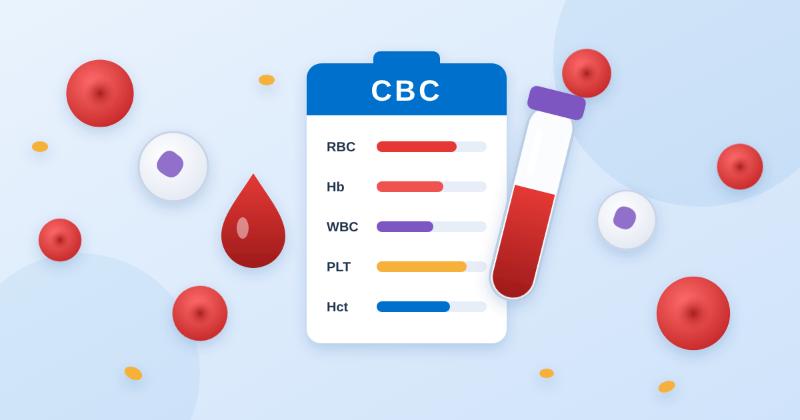
The CBC test is one of the most common tests doctors order, whether for a routine checkup or when you feel tired or feverish. This article explains what the test measures, its normal ranges, whether you need to fast, and how to book it with up to 80% off through Vezeeta Shamel.
What Is a CBC Test?
CBC stands for Complete Blood Count, also called a full blood count. It is a group of tests done on one blood sample that measure the number and size of your blood cells.
The test measures five main components:
- Red blood cells (RBC): Carry oxygen from your lungs to the rest of your body.
- Hemoglobin (Hb): The iron-rich protein inside red blood cells that carries oxygen.
- Hematocrit (Hct): The share of your blood made up of red blood cells.
- White blood cells (WBC): Fight infections and other diseases.
- Platelets (PLT): Help your blood clot and stop bleeding.
A CBC with differential also breaks white blood cells into their five types: neutrophils, lymphocytes, monocytes, eosinophils, and basophils.
A CBC does not tell you your blood type. Blood type is not one of its components and needs a separate test.
When Does a Doctor Order a CBC?
Doctors order a CBC in several situations:
- Routine checkups: To catch problems such as anemia early.
- Unexplained symptoms: Such as fatigue, weakness, fever, bruising, bleeding, or unexplained weight loss.
- Monitoring chronic conditions: Such as chronic kidney disease and blood disorders.
- Monitoring treatment: Especially chemotherapy, radiation, and medicines that affect blood counts.
It is often ordered alongside other tests such as ESR, liver function tests, and a thyroid test as part of a full checkup.
CBC Abbreviations and Normal Ranges
Normal ranges vary slightly between labs and between medical references. The range printed next to each value on your own report is the one to go by. Below are common adult ranges from two international medical sources:
- RBC — What it measures: Red blood cell count | MedlinePlus: Men: 4.6–6.2 million/mcL · Women: 4.2–5.4 | Cleveland Clinic: Men: 4.5–6.1 million/mcL · Women: 4.0–5.4
- Hb — What it measures: Hemoglobin | MedlinePlus: Men: 13–18 g/dL · Women: 12–16 | Cleveland Clinic: Men: 13–17 g/dL · Women: 11.5–15.5
- Hct — What it measures: Hematocrit | MedlinePlus: Men: 40–55% · Women: 36–48% | Cleveland Clinic: Men: 40–55% · Women: 36–48%
- MCV — What it measures: Average red cell size | MedlinePlus: 80–100 fL | Cleveland Clinic: 80–100 fL
- MCH — What it measures: Average hemoglobin per red cell | MedlinePlus: 27–32 pg | Cleveland Clinic: 27–31 pg
- MCHC — What it measures: Average hemoglobin concentration | MedlinePlus: 32–36 g/dL | Cleveland Clinic: 32–36 g/dL
- WBC — What it measures: White blood cell count | MedlinePlus: 4,500–11,000/mcL | Cleveland Clinic: 4,000–10,000/mcL
- PLT — What it measures: Platelet count | MedlinePlus: 150,000–400,000/mcL | Cleveland Clinic: 150,000–400,000/mcL
How to Read Your CBC Results
Start by comparing each value with the normal range on your report. But a result alone is not a diagnosis; your doctor reads it together with your symptoms and history.
Low red blood cells or hemoglobin
This usually points to anemia. Causes include low iron or vitamin levels, blood loss, and chronic conditions such as kidney disease.
High red blood cells or hemoglobin
This may be linked to dehydration, heart or lung disease, smoking, or polycythemia vera.
High white blood cells
The most common cause is infection or inflammation. It can also be linked to allergies, medicines such as corticosteroids, bone marrow conditions, or blood cancers.
Low white blood cells
This may result from autoimmune diseases, bone marrow problems, viral infections, or certain medicines and chemotherapy.
High or low platelets
Low platelets may be linked to an enlarged spleen, immune conditions that destroy platelets, or chemotherapy. High platelets may be linked to infection, iron deficiency, or bone marrow problems.
An abnormal result does not always mean disease. Diet, exercise, medicines, menstrual periods, and low fluid intake can all affect values. If your values are far outside the normal range, follow up with a hematologist.
Does a CBC Require Fasting?
No. You can eat, drink, and take your medicines as usual before a CBC. If your doctor orders other tests on the same sample, such as fasting blood sugar or lipids, you may need to fast for several hours as instructed.
How Is a CBC Done?
A health professional draws a small blood sample from a vein in your arm. It takes a few minutes, and you can return to your usual activities right away.
The test is safe. The most common side effects are slight pain or a small bruise at the needle site that fade quickly. Rarely, some people feel lightheaded after the draw.
Can a CBC Detect Cancer?
A CBC may show signs of blood cancers such as leukemia and lymphoma, because they can change white blood cell or platelet counts. But it cannot diagnose any cancer on its own. The same changes can come from infections or medicines, and confirming a diagnosis usually needs further tests and a tissue sample.
Can a CBC Detect Viruses?
A CBC does not identify a specific virus. It may show white blood cell changes that suggest a viral infection, such as changes in lymphocytes, which fight viruses, or a low total white cell count.
CBC During Pregnancy
A CBC does not detect pregnancy. Pregnancy is confirmed by measuring the pregnancy hormone hCG in blood or urine.
However, a complete blood count is one of the routine tests during pregnancy, mainly to check for anemia.
CBC for Children
Children may need a CBC during a routine checkup or when they feel unwell, to look for anemia, infection, and inflammation.
Normal ranges in children vary with age; for example, newborns have much higher hemoglobin than infants. So a child's result should be read against age-specific ranges with a pediatrician.
CBC Test Price
The price of a CBC varies by lab and area. You can compare prices and book nearby laboratories through Vezeeta.
The best way to cut the cost is a Vezeeta Shamel subscription, which gives you up to 80% off lab tests and scans.
Save Up to 80% on Your CBC with Vezeeta Shamel
Shamel is a Vezeeta subscription that gives you discounts across a large network of healthcare providers, including more than 1,300 labs and scan centers.
What does Shamel give you?
- Up to 80% off lab tests and scans, including the CBC.
- Up to 40% off consultations and medical services.
- Up to 16% off pharmacy supplies.
- Discounted prices on surgeries.
Subscription plans:
- Individual — Price: EGP 33/month, paid annually | Users: 1
- Family — Price: EGP 67/month, paid annually | Users: 4
How do you use your Shamel discount on a CBC?
- Choose your plan on the Shamel page and pay online.
- Activate your Shamel eCard, which appears in the Vezeeta app after payment.
- Book your test at a lab in the Shamel network; checkout shows the price before and after the discount. Or show your eCard at the lab.
For Shamel inquiries, call 16676.
Frequently Asked Questions About the CBC
How do I know my CBC is normal?
If all values fall within the normal ranges on your report, the result is usually normal. Values slightly outside the range in someone without symptoms may not need follow-up, but your doctor makes the final call.
When is a CBC result serious?
When values are far outside the normal range, several values change together, or you have symptoms such as persistent fever, bleeding, or bruising. Your doctor may then refer you to a hematologist for more tests.
What diseases can a CBC detect?
It helps detect anemia, infections and inflammation, bone marrow disorders, blood cancers, and platelet disorders.
Conclusion
The CBC is a quick, simple test that needs no fasting and gives your doctor a clear picture of your blood cells. It helps catch anemia, infections, and blood disorders early. Have you decided to get tested?
Book your CBC now at a nearby lab through Vezeeta, and subscribe to Shamel to save up to 80% on lab tests for you and your family. If you need a consultation after your results, you can easily book an appointment with a hematologist through Vezeeta.
Related articles:


References
- Mayo Clinic — Complete blood count (CBC)
- Cleveland Clinic — Complete Blood Count (CBC): What It Is & Normal Ranges
- MedlinePlus (U.S. National Library of Medicine) — Complete Blood Count (CBC)
- MedlinePlus Medical Encyclopedia — Complete blood count
- Mayo Clinic — Cancer blood tests: Lab tests used in cancer diagnosis
- KidsHealth (Nemours) — Blood Test: Complete Blood Count
- Pabón-Rivera S, Flores RR, Frei-Jones M (UT Health San Antonio) — The Complete Blood Count: A Practical Tool for the Pediatrician
- Cleveland Clinic — Human Chorionic Gonadotropin (hCG)
- MedlinePlus Medical Encyclopedia — HCG blood test – quantitative
- NHS, Wirral University Teaching Hospital — Maternity blood tests