Symptoms of High ESR (Erythrocyte Sedimentation Rate), Causes, and Treatment
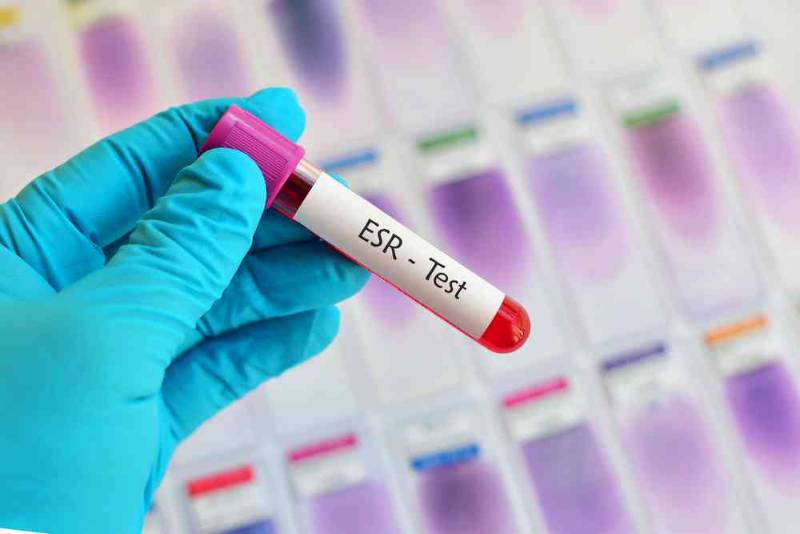
What Is ESR (Erythrocyte Sedimentation Rate)?
ESR is a term that refers to the rate at which red blood cells settle during a blood test. Red blood cells settle faster when a person has inflammation or an infection.
The ESR test measures the distance between the plasma at the top of the test tube and the red blood cells settled at the bottom after one hour.
What Are the Symptoms of High ESR?
Some symptoms may indicate inflammation or infection and the need for an ESR test. Symptoms of high ESR include:
- Joint pain or stiffness lasting more than 30 minutes after waking up.
- Headache accompanied by vision problems.
- Unexplained weight loss.
- Fever without a clear cause.
- Pain in the neck, pelvis, or shoulder.
- Blood in the stool.
- Diarrhea.
- Abdominal pain.
Causes of High ESR
An increased ESR occurs during inflammation because red blood cells stick together, forming heavier clusters that settle more quickly.
Symptoms of high ESR may appear with several health conditions. Common causes of mildly elevated ESR include:
- Rheumatoid arthritis.
- Kidney disease.
- Abnormal red blood cells, such as macrocytosis.
- Anemia.
- General infections.
- Bone or heart infections.
- Thyroid disorders.
A severely elevated ESR may indicate conditions such as:
- Waldenström’s macroglobulinemia (a type of blood cancer).
- Vasculitis caused by hypersensitivity reactions.
- Temporal arteritis.
- Certain tumors such as multiple myeloma.
How Is an ESR Test Performed?
The ESR test is considered one of the simplest blood tests. The doctor takes a blood sample using a standard needle, then examines it microscopically.
The test does not take long, and results are usually available within two hours. It generally carries minimal risks, though some temporary side effects may occur, such as:
- Mild pain when the needle passes through the skin.
- Temporary bruising or discoloration at the injection site.
- Infection at the needle insertion site.
The ESR test can be performed using one of two methods:
Westergren Method
The blood sample is placed in a special 200 mm tube and left upright for one hour before measuring the distance between the top of the sample and the top of the settled red blood cells.
Wintrobe Method
This method uses a narrower 100 mm tube, but it is less accurate than the Westergren method.
It is important to note that the ESR test is not a diagnostic test on its own and cannot diagnose diseases directly. It only helps confirm the presence of inflammation or infection.
When Is ESR Considered High?
ESR becomes elevated when body tissues are affected by inflammation or infection, causing red blood cells to settle faster than normal.
For men under the age of 50, the normal ESR range is between 0 and 15 mm/hour, while values above 15 mm/hour are considered high. For women under 50, the normal range is between 0 and 20 mm/hour, and values higher than 20 mm/hour are considered elevated.
For men over the age of 50, the normal ESR range is between 0 and 20 mm/hour, while for women over 50, the normal range is between 0 and 30 mm/hour. In children, the normal ESR range is between 0 and 10 mm/hour, and levels above 10 mm/hour are considered high.
If ESR rises above 100 mm/hour, it may indicate an active disease such as diabetes or cancer.
The accuracy of ESR results may also be affected by factors such as:
- Pregnancy.
- Aging.
- Certain medications.
- Menstruation.
Can ESR Be Low?
Yes. Some conditions may cause a low ESR and slower red blood cell settling, including:
- Sickle cell anemia, where red blood cells become crescent-shaped instead of round.
- Increased white blood cell count.
- Congestive heart failure.
- Bone marrow disorders that increase red blood cell production.
- Low plasma protein levels.
- Low fibrinogen levels in the blood.
Treatment for High ESR
Treatment depends on the underlying condition. Doctors may prescribe one of the following medications to manage symptoms caused by inflammation or infection, provided they are suitable for the patient’s condition:
- Nonsteroidal anti-inflammatory drugs (NSAIDs) such as ibuprofen or naproxen.
- Antibiotics for infections.
- Steroid medications in cases of severe inflammation.
Foods to Avoid with High ESR
If tests show elevated ESR, doctors may advise avoiding foods that increase inflammation, including:
- Processed and fast foods.
- Trans fats.
- Salty or sugary snacks.
- Processed meats.
On the other hand, foods that may help reduce inflammation and lower ESR include:
- Leafy greens such as spinach, kale, and cabbage.
- Garlic.
- Ginger.
- Turmeric.
- Chia seeds.
- Broccoli.
- Olive oil.
- Dark chocolate.
When Is High ESR Dangerous?
ESR increases in response to the underlying medical condition, so the real danger lies in the disease itself. Symptoms may worsen if the underlying cause is left untreated.
An ESR higher than 100 mm/hour is considered a warning sign that may indicate a rapidly progressing active disease requiring urgent medical attention.
Conclusion
Symptoms associated with ESR often indicate infection or inflammation somewhere in the body. When ESR levels are elevated, doctors usually recommend additional tests to diagnose the underlying problem and provide appropriate treatment along with symptom management.
If you still need to consult a doctor about this condition, you can easily book an appointment through Vezeeta.
Related Keywords




References
- https://www.aafp.org/afp/1999/1001/p1443
- https://www.vijayadiagnostic.com/blog/sedimentation-rate-esr-test-normal-range-and-results
- https://medlineplus.gov/lab-tests/erythrocyte-sedimentation-rate-esr/
- https://emedicine.medscape.com/article/2085201-overview
- https://www.ncbi.nlm.nih.gov/books/NBK557485/