Spinal Curvature: Causes, Degrees, and the Latest Treatment Methods
What Is Spinal Curvature?
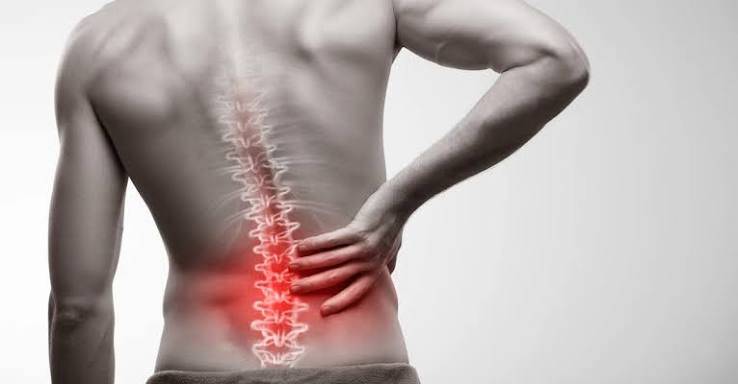
Spinal curvature is a change in the alignment or natural curves of the spine. It may appear as a sideways curve or as an increase in the forward or backward curve. Its type, causes, and effects on the body vary from one person to another.
The main types of spinal curvature include:
- Scoliosis: A sideways curve of the spine, usually accompanied by rotation of the vertebrae. When viewed from behind, the spine may look like the letter C or S.
- Kyphosis: An increase in the normal forward curve of the spine in the chest area. This may make the upper back appear rounded or hunched.
- Lordosis: An increase in the inward curve of the spine, especially in the lower back. This may appear as an excessive arch in that area.
Not every difference in the appearance of the back indicates a disease-related spinal curve. It may be a temporary change in body position or a normal variation in posture. For this reason, identifying the problem requires a medical examination. The doctor may also request imaging to assess the shape of the spine and measure the curve.
What Causes Spinal Curvature?
You may wonder why your child’s back alignment changes during growth or why a noticeable curve appears in your back with age. The cause varies according to the type of curve, age, and health status. Common causes include:
- Congenital causes: These may occur when some vertebrae do not develop fully or form abnormally before birth.
- Neuromuscular disorders: Conditions such as cerebral palsy and muscular dystrophy may disturb the balance of the muscles that support the spine, causing abnormal curves.
- Age-related changes: Degenerative changes in the spinal discs and joints may alter the alignment of the spine or cause a new curve to appear.
- Osteoporosis and vertebral fractures: Osteoporosis-related spinal fractures may increase back curvature, especially in older adults.
- Idiopathic scoliosis: This is one of the most common types of scoliosis in children and adolescents. Its exact cause is unknown, although genetic factors may play a role.
Some types of curvature may be associated with other factors. The cause cannot be determined from the appearance of the back alone.
Poor sitting posture and carrying heavy bags are not usually direct causes of structural scoliosis, although body position may affect posture or increase discomfort.
What Are the Symptoms of Spinal Curvature in Children and Adults?
You may not notice clear symptoms at the beginning, especially when the curve is mild. As some types of curvature progress, changes may appear in the shape of the back or in the way a person stands and moves.
Signs may include:
- Uneven shoulders or one shoulder appearing more prominent than the other.
- One shoulder blade protruding more than the other.
- The body leaning to one side while standing.
- Uneven waist or hip levels.
- Increased rounding of the upper back.
- A noticeable curve in the lower back.
- Back pain or muscle fatigue, especially in adults.
Symptoms vary according to the type of curvature. Uneven shoulders and one side of the rib cage appearing more prominent may occur with scoliosis, while rounding of the upper back is often associated with increased kyphosis.
If you notice these signs in your child, especially during periods of rapid growth, it is best to have the child examined by a doctor. If you are an adult with a new change in the shape of your back or persistent pain, do not assume that spinal curvature is the only possible cause. Another problem may require evaluation.
Increasing leg weakness, new difficulty walking, or loss of bladder or bowel control requires urgent medical evaluation because these symptoms may indicate pressure on the nerves or spinal cord.
Can Spinal Curvature Cause Lower Back Pain?
Some types of spinal curvature may be accompanied by lower back pain, especially in adults because of degenerative changes or strain on the muscles and joints. However, pain does not occur in every case and, by itself, is not enough to determine the cause of the curve. Severe or persistent pain requires medical evaluation.
How Is Spinal Curvature Diagnosed?
If you notice a change in the alignment of your back or your child’s back, the doctor will usually ask about the symptoms and when they began. The doctor will then examine the back, shoulders, waist, standing posture, and movement.
The evaluation may include:
- Physical examination: To identify the shape of the curve, assess shoulder and hip symmetry, and examine spinal movement.
- Forward-bend test: This helps identify asymmetry or prominence on one side of the back, but it does not confirm the diagnosis on its own.
- X-rays: These may be used when needed to assess the shape of the vertebrae and measure the curve, especially when scoliosis or another structural curve is suspected.
- Magnetic resonance imaging: This may be requested in specific cases, such as when neurological symptoms, unusual pain, or a possible underlying condition requires further evaluation.
The choice of tests depends on the type of curve, symptoms, and age. Not everyone with a minor postural difference needs imaging.
What Are the Degrees of Scoliosis and How Are They Determined?
Curve measurements are used especially when evaluating scoliosis, which is one specific type of spinal curvature. They are not a general classification that applies to every type of spinal curve.
The doctor uses the Cobb angle on an X-ray to determine the size of the curve. Scoliosis is generally defined as a sideways curve measuring 10 degrees or more.
As an approximate classification, scoliosis may be divided according to the curve angle as follows:
- Mild scoliosis: A curve of approximately less than 20 degrees. The doctor may recommend periodic monitoring, depending on the patient’s age and the likelihood that the condition will progress.
- Moderate scoliosis: A curve usually ranging from 20 to 40 degrees. A child who is still growing may need a medical brace to limit further progression.
- Severe scoliosis: A curve of approximately 40 to 50 degrees or more. A specialist evaluation may be needed to consider surgery, depending on the patient’s age, growth stage, and curve progression.
These ranges are approximate and are not fixed rules for selecting treatment. Medical decisions may vary according to the patient’s age, remaining growth, location of the curve, rate of progression, and associated symptoms.
Kyphosis and lordosis are assessed using measurements and criteria appropriate for the type and location of each curve. The same scoliosis degree classifications are not used for them.
How Is Spinal Curvature Treated?
Discovering a spinal curve in yourself or your child does not necessarily mean that surgery is needed. Treatment depends on the type, cause, and severity of the curve, its effect on movement, and the likelihood that it will worsen over time.
Regular medical monitoring
If the curve is mild, stable, and does not cause significant symptoms, the doctor may recommend monitoring without direct treatment.
Monitoring is especially important for children and adolescents whose bones are still growing. It helps identify any increase in the curve and determine the appropriate time for intervention if necessary.
Medical bracing
The doctor may recommend a back brace for some cases of scoliosis in children whose bones have not finished growing, especially when the curve falls within a range in which progression is possible.
A brace aims to reduce the likelihood of the curve worsening. It does not guarantee complete correction and is not suitable for every type of spinal curvature. Its effectiveness depends on choosing the appropriate brace and wearing it for the period recommended by the doctor.
Physical therapy and exercises for spinal curvature
Physical therapy may help improve muscle strength, flexibility, and balance. It may also reduce pain and improve the ability to perform daily activities.
The treatment plan may include:
- Exercises to strengthen the back and core muscles.
- Exercises to improve flexibility and balance.
- Training to improve posture and movement.
- Exercises designed for certain cases of scoliosis, such as Schroth exercises, under the supervision of a qualified specialist.
Can Spinal Curvature Be Treated With Exercises Alone?
This depends on the type and severity of the curve. Exercises may help relieve symptoms and improve function, but they do not guarantee correction of a structural curve. They do not replace bracing or surgery when either treatment is necessary.
Surgery for Spinal Curvature
The doctor may discuss surgery if the curve is severe, is progressing significantly, or is causing major functional problems. The decision depends on the type of curvature and the patient’s health.
One procedure used in some cases of scoliosis is spinal fusion, which aims to correct the curve and stabilize parts of the spine using suitable medical hardware.
Most mild cases do not require surgery. The doctor makes the decision after assessing the curve, symptoms, risks and benefits, and available alternatives.
Treatment of Spinal Curvature in Adults
If spinal curvature is noticed after puberty, the treatment plan may differ from the approach used in children. Treatment often focuses on relieving pain, improving movement, and limiting the effect of the curve on daily activities.
Treatment options may include:
- Physical therapy and appropriate exercises to improve muscle strength and flexibility.
- Pain relievers when needed, according to the doctor’s instructions.
- Modifying activities that increase pain while maintaining appropriate movement.
- Treating the underlying cause, such as osteoporosis, if it is related to changes in the shape of the vertebrae.
- Additional procedures or surgery in selected cases, especially when the curve is progressing or there is pressure on the nerves.
If you have pain that extends into the leg, numbness, or muscle weakness, the doctor may request additional tests to determine whether there is pressure on the nerve roots or another associated problem.
Do not use pain relievers for long periods or wear back supports on your own without medical evaluation.
Is Spinal Curvature Dangerous?
Spinal curvature is not necessarily dangerous. Some mild cases do not cause major problems, while severe or progressive curves may cause pain or difficulty moving. Some advanced cases may affect breathing. The level of risk depends on the type, degree, and cause of the curve.
In summary, spinal curvature may begin with a slight difference in shoulder height or the shape of the back. Determining the cause requires distinguishing between the different types of curves and not relying on appearance alone to diagnose the condition.
If you notice a change in the alignment of your back or your child’s back, consult an orthopedic doctor to assess the condition and determine whether monitoring, physical therapy, bracing, or surgery is needed. Early diagnosis, especially during growth, helps identify curves that may worsen and supports timely selection of the appropriate intervention.
If you still need a doctor’s consultation regarding this condition, you can easily book an appointment through Vezeeta.
Related Keywords




References
https://www.niams.nih.gov/health-topics/scoliosis/diagnosis-treatment-and-steps-to-take
https://www.nhs.uk/conditions/scoliosis/
https://www.nhs.uk/conditions/scoliosis/treatment-in-adults/
https://www.nhs.uk/conditions/kyphosis/
https://www.medlineplus.gov/scoliosis.html
https://www.medlineplus.gov/ency/article/001241.htm
https://my.clevelandclinic.org/health/diagnostics/24251-scoliometer