Miscarriage Symptoms: Early Warning Signs and When to Seek Emergency Care
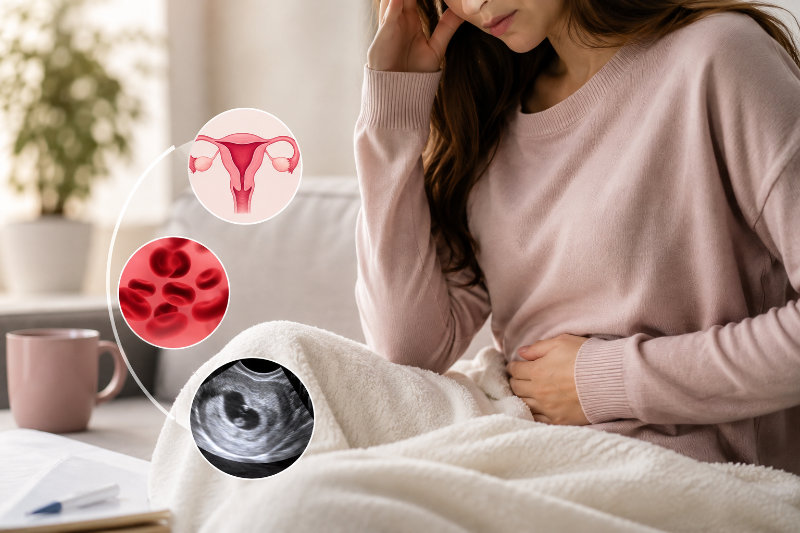
What Are Early Miscarriage Symptoms?
Signs vary from woman to woman, but a few patterns tend to show up consistently in early pregnancy loss.
- Pelvic pain and cramping. The pain usually starts low in the abdomen or pelvis and feels like menstrual cramps at first. Over time, it intensifies and becomes more frequent, a key difference from typical cycle discomfort.
- Lower back pain. A dull to severe ache across the lower back that doesn't go away with rest is another common sign. It can last several hours at a stretch.
- Sudden loss of pregnancy symptoms. If morning sickness or breast tenderness drops off sharply, that can signal falling hormone levels. It's worth paying attention to, especially if other symptoms are present.
- Unusual vaginal discharge. Passing mucus-like discharge or clotted tissue through the vagina is a warning sign that needs medical attention.
What Does Miscarriage Bleeding Look Like?
Vaginal bleeding is the most recognizable sign, but the amount and appearance depend on how far along the pregnancy is.
It often starts as light spotting, then builds into heavier flow that can surpass a heavy period. The blood color ranges from light brown to bright red and frequently contains large clots. The flow typically continues for several days and gets worse as cramping intensifies.
Miscarriage vs. Implantation Bleeding vs. Period: What's the Difference?
- Implantation bleeding is light, shows up as a few drops or very light spotting, and tends to be pink or light brown. There's little to no pain, and it clears up within a day or two.
- Miscarriage bleeding is heavier and increases over time. The blood is dark red or bright red with clots, cramps are significant, and bleeding lasts several days.
- Period bleeding falls somewhere in the middle, moderate to heavy, dark red turning to brown, with cramping that responds to painkillers, and it resolves within 3 to 7 days.
- If you're unsure which you're experiencing, don't wait to find out on your own.
Can a Miscarriage Happen With No Bleeding?
Yes. A missed miscarriage (also called a silent miscarriage) is when the fetus stops growing and the heartbeat stops, but the body doesn't expel the pregnancy right away. There's no obvious bleeding, no dramatic symptoms. A woman often finds out only during a routine ultrasound. The subtle signs beforehand, if any, are a gradual fade in early pregnancy symptoms like fatigue and nausea.
What Is a Threatened Miscarriage?
A threatened miscarriage means vaginal bleeding is happening in early pregnancy, but the cervix is still closed and the embryo is still implanted. It's a warning signal, not a definitive loss. Many threatened miscarriages don't end in pregnancy loss. With adequate rest, close medical monitoring, and any medications your doctor prescribes, many pregnancies continue normally.
What Causes Miscarriage?
Most early miscarriages are caused by chromosomal abnormalities in the embryo. This is biology, not something the mother caused. Other contributing factors include:
- Hormonal issues: low progesterone, thyroid problems, or uncontrolled diabetes
- Uterine abnormalities: fibroids or a weak cervix that can't support a growing pregnancy
- Infections and chronic illness: bacterial or viral infections, or autoimmune conditions
When Should You See a Doctor Immediately?
Don't wait if you notice heavy bleeding that doesn't let up, large blood clots, or severe cramping low in the abdomen or pelvis.
Seek emergency care right away if any of those symptoms come with dizziness, fainting, or fever.
Knowing what's normal and what isn't gives you a real advantage. If something feels wrong, trust that. A quick call to your OB/GYN is always the right move.
If you still need a doctor’s consultation regarding this condition, you can easily book an appointment through Vezeeta
Related Keywords




References
https://www.acog.org/clinical/clinical-guidance/practice-bulletin/articles/2018/11/early-pregnancy-loss
https://www.mayoclinic.org/diseases-conditions/pregnancy-loss-miscarriage/symptoms-causes/syc-20354298
https://my.clevelandclinic.org/health/diseases/9688-miscarriage
https://www.nhs.uk/conditions/miscarriage/
https://www.webmd.com/baby/understanding-miscarriage-symptoms