Mastitis: Symptoms, Causes, and Treatment for Breastfeeding and Non-Breastfeeding Women
What Are the Symptoms of Mastitis?
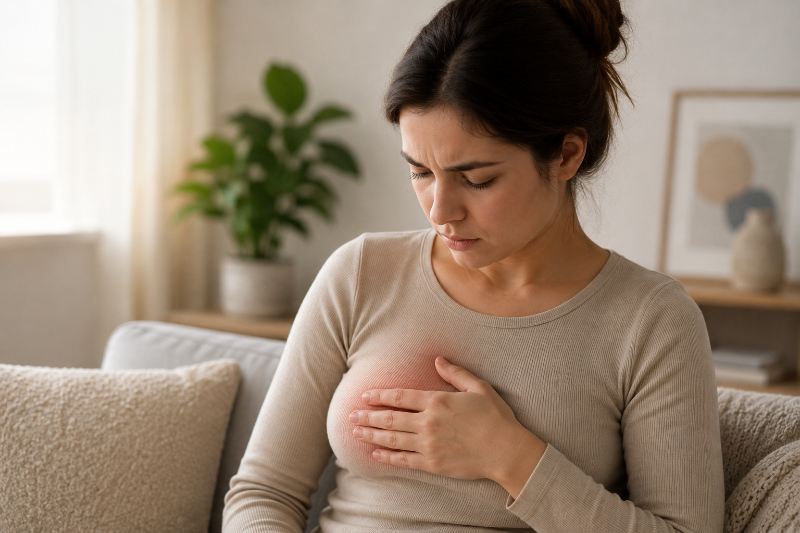
Mastitis symptoms usually develop suddenly and most often affect only one breast. Many women notice a painful lump or a feeling of heaviness in the affected area, along with redness and warmth of the skin over the inflamed tissue.
In some cases, mastitis may also cause flu-like symptoms, including:
- Chills and fever.
- General fatigue and tiredness.
- A burning sensation or persistent breast pain that may become more noticeable during breastfeeding.
What Are the Different Types of Mastitis?
There are several types of mastitis, depending on the underlying cause and a woman's overall health.
- Lactational mastitis is the most common type and typically occurs during the first few weeks after childbirth. It is often caused by milk buildup due to incomplete breast emptying during breastfeeding.
- Non-lactational mastitis can occur in women who are not breastfeeding. It may develop as periductal mastitis, bacterial breast infections unrelated to pregnancy or breastfeeding, or other inflammatory breast conditions. Mastitis can also be classified as acute, with sudden onset, or chronic, where symptoms recur over time if the underlying cause is not properly treated.
What Is Breast Engorgement?
Breast engorgement is a common condition that often occurs before mastitis develops. It happens when the breasts become overly full with milk and fluids, leading to swelling, firmness, pressure, and noticeable discomfort.
If milk is not removed regularly, the milk ducts can become blocked, causing milk stasis inside the breast. This creates an environment where bacteria can multiply, increasing the risk of developing mastitis if left untreated.
What Causes Mastitis?
Mastitis can develop for several reasons, including:
- Blocked milk ducts caused by incomplete breast emptying during breastfeeding.
- Milk accumulation inside the breast, leading to irritation of the surrounding breast tissue.
- Bacteria entering the breast through cracked or damaged nipples.
- The spread of bacteria from the mother's skin or the baby's mouth into the milk ducts.
Mastitis During Breastfeeding
Common causes of breastfeeding-related mastitis include:
- Poor breastfeeding latch or positioning, preventing complete breast emptying.
- Infrequent breastfeeding or skipped feeding sessions.
- Sudden weaning from breastfeeding.
- Wearing tight clothing or poorly fitting bras that place pressure on the breasts.
Mastitis Without Breastfeeding
In women who are not breastfeeding, mastitis may be caused by:
- Dilated milk ducts with trapped secretions beneath the nipple.
- Previous breast injuries or trauma.
- Chronic medical conditions, such as diabetes, which can weaken the immune system.
- Hormonal changes.
- Smoking, which increases the risk of bacterial breast infections.
Mastitis Treatment
Mastitis treatment usually combines medical care with self-care measures to eliminate the infection, relieve symptoms, improve milk flow, and reduce the risk of complications.
Treatment options may include:
- Taking prescribed antibiotics to treat the bacterial infection and completing the full course as directed.
- Using pain relievers or nonsteroidal anti-inflammatory drugs (NSAIDs), such as ibuprofen, to reduce pain and fever.
- Applying warm compresses before breastfeeding to encourage milk flow.
- Using cold compresses after breastfeeding to reduce swelling and discomfort.
- Getting enough rest and staying well hydrated.
How Is Mastitis Treated in Breastfeeding Mothers?
For breastfeeding mothers, treatment typically includes taking prescribed antibiotics, using safe pain relief medications when needed, and continuing to breastfeed or pump regularly to keep the breast empty. Regular milk removal helps prevent milk stasis and supports faster recovery. Warm compresses may also improve milk flow and relieve discomfort.
Can You Continue Breastfeeding with Mastitis?
Yes. In most cases, it is safe to continue breastfeeding while you have mastitis. Breastfeeding does not harm your baby and is actually beneficial because it helps drain the breast, reduces milk blockage, promotes healing, and lowers the risk of complications.
When Does Mastitis Turn Into a Breast Abscess?
Mastitis can progress to a breast abscess if it does not respond to antibiotic treatment or if it is left untreated. Persistent milk retention and ongoing infection increase the likelihood of pus collecting within the breast, which requires prompt medical evaluation and treatment.
Can Non-Breastfeeding Women Get Mastitis?
Yes. Mastitis can affect women who are not breastfeeding. It commonly develops when bacteria enter through cracks in the skin or as a result of chronic inflammation of the milk ducts. Smoking is also a significant risk factor and increases the likelihood of developing non-lactational mastitis.
Conclusion
Mastitis is a common breast condition that can usually be treated successfully when diagnosed early. Understanding the symptoms, causes, and available treatment options can help prevent complications and support a faster recovery. Proper breast care, especially during breastfeeding, along with timely medical attention, plays a key role in maintaining breast health. If you notice persistent breast pain, redness, swelling, or fever, consult your healthcare provider promptly for an accurate diagnosis and appropriate treatment.
If you still need a doctor’s consultation regarding this condition, you can easily book an appointment through Vezeeta
Related Keywords
Specialized Doctors

Maher Elshazly
Consultant in Obstetrics, Gynecology, Infertility, ICSI, Gynecological Surgeries and Endoscopy, Al-Azhar Medicine

Habiba Osama
Specialist in Obstetrics and Gynecology

Tharwat Sherif
Consultant of gynecology and infertility
References
https://my.clevelandclinic.org/health/diseases/15613-mastitis
https://health.clevelandclinic.org/mastitis-without-breastfeeding
https://www.nhs.uk/conditions/mastitis/
https://www.nhs.uk/baby/breastfeeding-and-bottle-feeding/breastfeeding-problems/breast-pain/
https://www.webmd.com/women/breast-infection
https://pmc.ncbi.nlm.nih.gov/articles/PMC7465810/
https://www.ccjm.org/content/91/5/283
Specialized Doctors
Maher Elshazly
Consultant in Obstetrics, Gynecology, Infertility, ICSI, Gynecological Surgeries and Endoscopy, Al-Azhar Medicine
Habiba Osama
Specialist in Obstetrics and Gynecology
Tharwat Sherif
Consultant of gynecology and infertility