Laryngeal Cancer: Early Symptoms and Survival Rate

What Is Laryngeal Cancer?
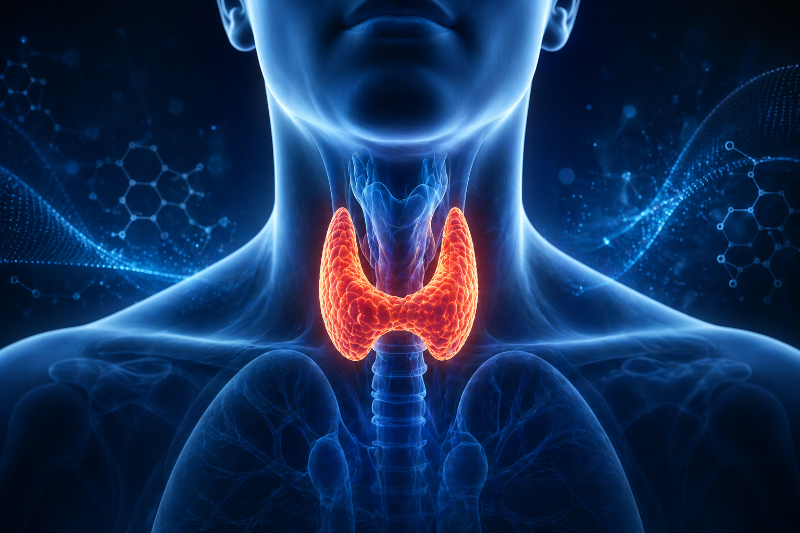
The larynx is an important part of the respiratory and voice systems. It is located in the throat and contains the vocal cords, which help produce sound. The larynx also helps protect the airway during swallowing.
Laryngeal cancer develops when abnormal cells in the larynx grow and divide without control. These cells may form a cancerous tumor.
What Are the Symptoms of Laryngeal Cancer?
Laryngeal cancer usually does not appear suddenly. Its symptoms may develop gradually and initially resemble common problems such as a cold or sore throat.
That can make them easy to ignore. The key concern is not always the symptom itself, but how long it lasts and whether it improves.
Common symptoms include:
Persistent Hoarseness
A change in the voice may be the first sign that someone notices.
The voice may become rough, weak, or hoarse, and its tone may sound different from usual. If hoarseness continues for two to three weeks or longer without an obvious cause or improvement, arrange an assessment with a qualified doctor.
Painful or Difficult Swallowing
As the condition progresses, a person may feel that food or liquids do not pass easily. Swallowing may also become painful.
The sensation may be mild at first, then become more noticeable over time.
Persistent Cough
A cough that does not go away deserves medical attention, especially if it continues for a long time, causes pain, or is accompanied by blood.
Ear Pain Without an Obvious Cause
It may seem unusual for a throat problem to cause ear pain. However, some laryngeal cancers can cause referred pain in the ear even when there is no clear ear infection or other ear problem.
Persistent, unexplained ear pain should be checked, particularly when it occurs with throat or voice symptoms.
A Lump in the Neck
In some cases, cancer may spread to the lymph nodes in the neck. This can cause a swelling or lump that can be seen or felt.
Breathing Difficulties
If a tumor narrows the airway, the patient may experience shortness of breath or difficulty breathing. This requires prompt medical assessment. Severe breathing difficulty is an emergency.
What Are the Early Symptoms of Laryngeal Cancer?
The first sign may be very simple: hoarseness that does not disappear.
Hoarseness is especially significant when a tumor affects the vocal cords. A person may notice a persistent change in the voice without having a cold or another clear explanation.
Other symptoms may occur at the same time, including ongoing throat irritation, a feeling that something is stuck in the throat, or mild difficulty swallowing.
These symptoms do not prove that someone has laryngeal cancer. Many more common conditions can cause them. The practical step is to pay attention to symptoms that persist instead of waiting indefinitely for them to disappear.
Is Laryngeal Cancer Fatal?
This is often the first question that comes to mind after a diagnosis. Laryngeal cancer is not necessarily fatal.
The seriousness of the disease and the chance of successful treatment depend on several factors, including:
- The stage of the cancer when it is diagnosed.
- The location of the tumor and whether it has spread.
- The patient’s general health.
When the tumor is found early and remains limited to the larynx, treatment is usually more manageable and the chance of controlling the disease is better.
If diagnosis is delayed and the cancer spreads to the lymph nodes or other parts of the body, treatment may become more complex. The patient may need a combination of treatments.
What Is the Survival Rate for Laryngeal Cancer?
There is no single survival or cure rate that applies to every patient with laryngeal cancer. Prognosis varies according to the stage, location, type, size, and spread of the tumor, as well as the patient’s general health.
In general, outcomes are better when the cancer is found at an early stage. The chances of successful treatment may decrease as the disease advances or spreads.
A single number cannot predict what will happen to one person. The treating team estimates prognosis using examination findings, imaging results, biopsy results, cancer stage, and the specific characteristics of the tumor.
Who Is More Likely to Develop Laryngeal Cancer?
Some people develop laryngeal cancer while others do not. Several factors can raise the risk, including:
- Smoking cigarettes or using other tobacco products.
- Heavy alcohol use. The risk is higher when smoking and alcohol use occur together.
- Exposure to certain harmful substances at work, such as some chemicals, fumes, or industrial dust.
- Increasing age.
- Sex. Laryngeal cancer is more common in men, although women can also develop it.
- Certain chronic health problems. Long-term acid reflux or gastroesophageal reflux disease may irritate the throat and larynx, but having reflux does not mean that a person has cancer.
Having a risk factor does not guarantee that someone will develop laryngeal cancer. Some people develop the disease without a known risk factor.
How Is Laryngeal Cancer Diagnosed?
When hoarseness continues or concerning symptoms appear, the doctor usually asks about the symptoms, when they started, and how they have changed. The doctor may also examine the throat and neck.
A laryngoscopy may be used to view the larynx and vocal cords directly. This allows the doctor to look for abnormal areas.
If a suspicious area is found, the doctor may take a biopsy. A pathologist examines the tissue under a microscope to determine whether cancer cells are present.
The doctor may also request imaging tests, such as a CT scan or MRI. These tests help assess the tumor’s size, identify possible spread, and determine the cancer stage.
Can Laryngeal Cancer Be Completely Cured?
Yes, laryngeal cancer can be treated and may be cured, particularly when it is diagnosed early.
The outlook differs from one person to another. It depends on the stage of the cancer, the location and spread of the tumor, the tumor’s characteristics, and the patient’s overall health.
How Is Laryngeal Cancer Treated?
Treatment differs from patient to patient. The choice depends on the tumor’s location and size, the cancer stage, whether it has spread, and the patient’s general health.
Treatment may aim to eliminate the cancer while preserving laryngeal functions as much as possible, including speech, swallowing, and breathing.
Main treatment options include:
- Surgery: The surgeon may remove the tumor. Some patients need only part of the larynx removed, while advanced disease may require total laryngectomy.
- Radiation therapy: High-energy radiation is used to destroy cancer cells. It may be the main treatment for some early tumors or may be used after surgery.
- Chemotherapy: This may be given with radiation therapy, especially in selected advanced cases.
- Targeted therapy or immunotherapy: These treatments may be appropriate for some patients, depending on the tumor’s characteristics, stage, and previous treatment.
The treatment team usually discusses the benefits, risks, side effects, and effect on voice and swallowing before recommending a plan.
Persistent or unusual symptoms should not be ignored. Arrange a medical evaluation so the cause can be identified and appropriate treatment can begin.
If you still need a doctor’s consultation regarding this condition, you can easily book an appointment through Vezeeta.
Related Keywords
Specialized Doctors

Mohamed Abd Elhamed Hefny
Consultant in Oncology ,Hematology and Nuclear Medicine, Al-Azhar Medicine

Alaa Abd elaziz
specialist in Oncologist and Radiation Therapist

Moustafa Abbas
Consultant and MD in Oncology and Nuclear Medicine, Cairo University, Kasr Al-Ainy
References
https://www.nhs.uk/conditions/laryngeal-cancer/symptoms/
https://www.nhs.uk/conditions/laryngeal-cancer/what-is-laryngeal-cancer/
https://www.nhs.uk/conditions/laryngeal-cancer/causes/
https://www.nhs.uk/conditions/laryngeal-cancer/tests-and-next-steps/
https://www.cancer.gov/types/head-and-neck/patient/adult/laryngeal-treatment-pdq
https://medlineplus.gov/ency/article/001042.htm
https://www.mayoclinic.org/diseases-conditions/throat-cancer/symptoms-causes/syc-20366462
Specialized Doctors
Mohamed Abd Elhamed Hefny
Consultant in Oncology ,Hematology and Nuclear Medicine, Al-Azhar Medicine
Alaa Abd elaziz
specialist in Oncologist and Radiation Therapist
Moustafa Abbas
Consultant and MD in Oncology and Nuclear Medicine, Cairo University, Kasr Al-Ainy