How to detect thyroid disorders: symptoms and tests.
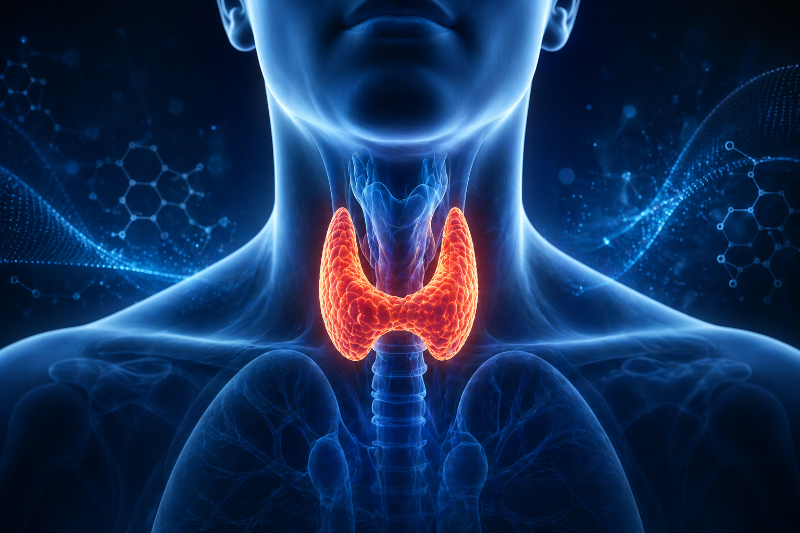
What is the thyroid gland?
The thyroid is like your body’s central power station—a small, butterfly-shaped gland at the front of the neck. Its main role is to release vital hormones into the bloodstream, reaching nearly every cell to regulate metabolism, body temperature, and even mood. When it works properly, you feel energetic and balanced; when it doesn’t, a chain of health issues can follow.
Thyroid symptoms
Symptoms vary widely depending on the type of dysfunction. The gland may be underactive (producing too little hormone) or overactive (producing too much), which can make symptoms seem contradictory and requires accurate medical diagnosis.
Symptoms of hypothyroidism (underactive thyroid)
When the gland doesn’t produce enough hormones, body functions slow down. Symptoms often develop gradually and include:
- Persistent fatigue even after long sleep
- Unexplained weight gain despite eating less
- Dry skin
- Hair loss
- Sensitivity to cold
- Constipation
- Memory issues
Symptoms of hypothyroidism in women
Women are more prone to this condition. Common signs include:
- Irregular or heavy menstrual cycles
- Difficulty getting pregnant due to impaired ovulation
- Brittle nails
- Hoarseness of voice
- Depression and mood swings
Symptoms of hyperthyroidism (overactive thyroid)
An overactive thyroid speeds up body functions. Symptoms include:
- Rapid heartbeat
- Hand tremors
- Severe anxiety
- Rapid weight loss
- Excessive sweating and heat intolerance
- Frequent bowel movements or diarrhea
- In advanced cases: bulging eyes
Advanced hyperthyroidism symptoms
The body stays in a constant “overdrive” state. Patients may experience insomnia and muscle weakness (especially in thighs and arms). The thyroid may enlarge (goiter), often linked to Graves’ disease, which can also cause eye irritation and a gritty sensation.
Goiter (thyroid enlargement)
This is an abnormal increase in thyroid size, appearing as a lump or swelling in the neck. It’s not always cancer—often caused by iodine deficiency, autoimmune conditions, or benign nodules. Large goiters may press on the airway, causing breathing or swallowing difficulty, or persistent cough when lying down.
Thyroid and stress
There’s a strong link between thyroid function and emotional stress. While stress doesn’t directly cause thyroid disease, it raises cortisol levels, which can interfere with hormone activation and worsen symptoms. Thyroid disorders can also affect brain chemistry, increasing the risk of unexplained anxiety and depression.
Thyroid and pregnancy: what to know
Thyroid health is crucial during pregnancy. In early months, the fetus depends entirely on the mother’s hormones for brain development. Women with thyroid issues should monitor levels monthly and adjust treatment, as neglect can lead to complications preeclampsia, premature birth, or developmental issues in the child.
Thyroid tests
Lab tests are key to accurate diagnosis. Doctors usually start with the TSH test (thyroid-stimulating hormone), which signals the thyroid to produce hormones. If abnormal, further tests are done to identify the exact issue.
What are TSH, T3, and T4 tests?
These tests give a full picture of thyroid function:
- TSH increases in hypothyroidism and decreases in hyperthyroidism
- T3 and T4 are the actual thyroid hormones
- High T3/T4 with low TSH indicates hyperthyroidism, while low T3/T4 with high TSH indicates hypothyroidism. These tests also help monitor treatment effectiveness.
Treatment of hypothyroidism
Treatment relies on long-term hormone replacement to restore normal levels. Regular blood tests are needed to adjust dosage, as too little won’t relieve symptoms and too much may harm the heart or bones.
Treatment of hyperthyroidism
Treatment options vary:
- Anti-thyroid medications to reduce hormone production
- Radioactive iodine to shrink the gland
- Surgery in severe or resistant cases
Thyroid medications
Medications depend on the condition:
- Hypothyroidism: hormone replacement (e.g., levothyroxine), usually taken on an empty stomach
- Hyperthyroidism: drugs to reduce hormone production, plus beta-blockers to control heart rate
When is thyroid surgery needed?
Surgery may be necessary in three main cases:
- Suspicion of cancer
- Large goiter causing pressure symptoms
- Hyperthyroidism that doesn’t respond to medication or radioactive iodine
Conclusion
Your health isn’t just about test results—it’s about understanding your body’s signals and acting early. Thyroid disorders may seem mild at first but can significantly impact your quality of life if ignored. Regular check-ups, proper treatment, and a healthy lifestyle are key to maintaining balance. Prioritize your health—every step toward awareness brings you closer to a more active and comfortable life.
If you still need a doctor’s consultation regarding this condition, you can easily book an appointment through Vezeeta.
Related Keywords






References
- https://my.clevelandclinic.org/health/diseases/12120-thyroid-disease
- https://www.mayoclinic.org/diseases-conditions/hyperthyroidism/symptoms-causes/syc-20373659
- https://www.healthline.com/health/hypothyroidism/symptoms-treatments-more
- https://medlineplus.gov/lab-tests/thyroid-function-tests/