Is Pancreatitis Dangerous? Symptoms, Causes, and Treatment
What Are the Symptoms of Pancreatitis?
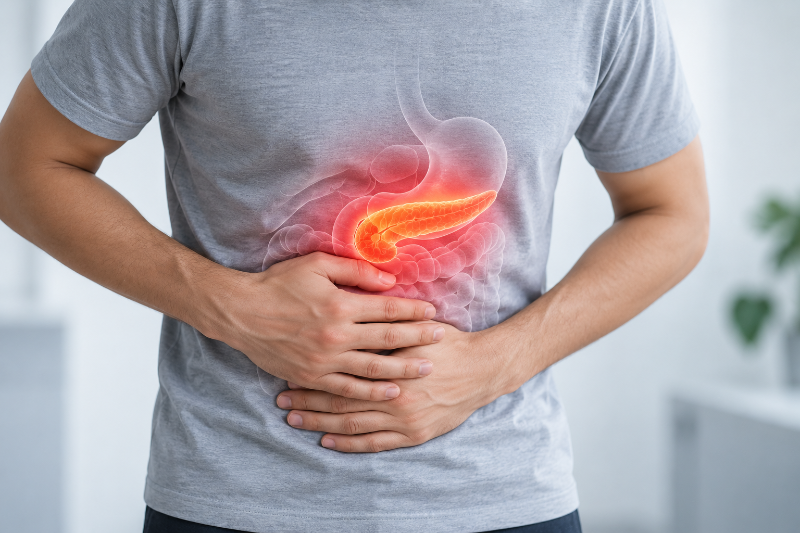
Symptoms depend on how severe the inflammation is and whether it's acute or chronic. The story usually starts with a clear pain in the upper abdomen that can last hours or get worse as time goes on.
The most common symptoms include:
- Pain in the upper abdomen, sometimes radiating to the back
- Pain that gets worse after eating, particularly fatty meals
- Nausea and vomiting
- Abdominal bloating and tenderness to the touch
- Fever
- Rapid heartbeat
- Loss of appetite
- In chronic cases, weight loss or fatty diarrhea from poor digestion
Pancreatic pain is a key warning sign, especially when it's intense, persistent, and doesn't ease up on its own.
Symptoms of Mild Pancreatitis
Not every case of pancreatitis hits hard. Sometimes the inflammation is limited, and symptoms improve with the right treatment. That said, ignoring them isn't a good idea.
A person with mild pancreatitis might notice:
- Mild to moderate pain in the upper abdomen
- Bloating and indigestion
- Nausea
- Loss of appetite
- Feeling full quickly after eating
Symptoms that flare up after heavy, greasy meals. The discomfort tends to show up more clearly after high-fat foods.
What Causes Pancreatitis?
In some cases, it starts with a small gallstone blocking the ducts that carry pancreatic secretions. Other times, elevated triglycerides, certain medications, or other factors are behind it.
The most well-known causes:
- Gallstones: One of the most common triggers for acute pancreatitis. A stone can block the ducts and prevent digestive juices from flowing normally.
- Heavy alcohol consumption: Can damage pancreatic cells and raise the risk of inflammation.
- High triglycerides: Particularly when levels are very elevated.
- Certain medications: A rare side effect of some drugs.
- Abdominal trauma: Direct injury to the abdomen can harm the pancreas.
- Genetic or autoimmune disorders.
- Elevated blood calcium levels in some cases.
And sometimes, no clear cause is found at all. Doctors call this idiopathic pancreatitis.
Is Pancreatitis Dangerous?
It can be. But plenty of cases resolve smoothly with proper treatment.
The real danger comes when the inflammation is severe or complications develop. Pancreatitis can damage part of the pancreatic tissue or affect other organs in the body.
So if you're dealing with severe, persistent upper abdominal pain, especially alongside repeated vomiting, fever, or yellowing of the skin and eyes, don't wait it out or try to handle it at home. Get medical evaluation quickly.
What Is Chronic Pancreatitis?
Picture inflammation that never fully goes away. It comes back again and again, and over the years, the pancreatic tissue starts sustaining permanent damage. That's the reality of chronic pancreatitis.
Unlike the acute form, which strikes suddenly, chronic pancreatitis lingers. Over time, it can gradually weaken how well the pancreas functions.
Symptoms may include:
- Recurring or constant upper abdominal pain
- Unexplained weight loss
- Diarrhea or greasy stools from poor fat absorption
- Difficulty digesting food
- Nutrient and vitamin deficiencies
- Increased risk of diabetes because insulin production is affected
People with chronic pancreatitis need regular follow-up to manage symptoms and preserve whatever pancreatic function remains.
How Is Pancreatitis Treated?
When someone arrives at the hospital with acute pancreatitis, the initial focus is pain relief, fluid replacement, monitoring, and figuring out the cause.
Treatment may include:
- IV fluids to prevent dehydration
- Appropriate pain medication
- Anti-nausea treatment when needed
- Gradual reintroduction of food, depending on how the patient is doing
- Treating the root cause, such as gallstones
- Pancreatic enzyme supplements in chronic cases with pancreatic insufficiency
- Managing diabetes or nutritional problems if they develop from pancreatic damage
Antibiotics aren't given to every patient by default. Doctors prescribe them only if there's a bacterial infection or a clear medical reason.
Managing Pancreatitis at Home
If you're wondering about home treatment, it's important to separate acute flare-ups from the recovery phase after things stabilize.
A severe episode with intense pain or repeated vomiting shouldn't be managed at home. It may need IV fluids and medical supervision.
After things settle down, though, certain habits can support recovery and reduce the chances of symptoms coming back:
- Follow the diet your doctor recommended
- Drink enough fluids
- Eat small, frequent meals
- Avoid high-fat foods
- Cut out alcohol completely
- Stop smoking
- Stick to prescribed medications and follow-up appointments
Don't use herbal remedies or supplements to treat pancreatitis without consulting your doctor. Some of them can interact with medications or simply aren't suitable for the condition.
What Should a Pancreatitis Patient Eat?
Once the condition stabilizes, nutrition becomes a real part of the recovery plan. Food choices depend on how severe the inflammation is, how well the pancreas is working, and the patient's overall health.
Generally speaking, a low-fat diet based on small, frequent meals works well:
- Skinless chicken cooked in a healthy way
- Low-fat fish
- Oats and whole grains, depending on tolerance
- Vegetables and fruits
- Rice and pasta in reasonable portions
- Low-fat dairy
- Lean protein sources
Spreading food across several small meals instead of one large one is a smarter approach, especially if eating triggers pain or bloating.
In chronic pancreatitis with malabsorption, pancreatic enzymes or nutritional supplements might be necessary, based on the doctor's assessment.
What Foods Harm the Pancreas?
After a pancreatitis episode, what you eat matters even more. High-fat foods are at the top of the watch list.
Foods to limit or avoid per your doctor's guidance:
- Fried foods
- Fast food
- Fatty and processed meats
- Foods heavy in butter or ghee
- Full-fat dairy
- Rich, fatty desserts
- Pastries and baked goods loaded with fat
- Alcohol
Very large meals are also a bad idea. Eating a big amount of food all at once can worsen symptoms in some patients.
Can Pancreatitis Be Seen on Ultrasound?
Pancreatitis can sometimes show up on ultrasound, but how clearly depends on the specific case and how visible the pancreas is during imaging.
Ultrasound helps identify certain signs of inflammation, and it's particularly useful for detecting gallstones that may be causing the pancreatitis.
Your doctor may need additional tests for a clearer picture:
- Blood tests, especially amylase and lipase enzymes
- CT scan
- MRI or MRCP (magnetic resonance cholangiopancreatography) in some cases
So if ultrasound doesn't show clear inflammation, that doesn't necessarily mean the pancreas is fine. The doctor chooses the most appropriate test based on symptoms and lab results.
Can You Recover from Pancreatitis?
Recovery depends on the type of pancreatitis, its severity, and what caused it.
In many cases of mild acute pancreatitis, the patient improves and goes back to normal life after proper treatment and addressing the cause, especially if it's something controllable like gallstones or certain dietary habits.
Chronic pancreatitis is a different story. It can cause permanent damage to pancreatic tissue, so the goal shifts from restoring what's lost to controlling pain, improving digestion, reducing complications, and preserving whatever function is left.
Having pancreatitis doesn't automatically mean you're facing something life-threatening. Many acute cases improve with proper treatment, while chronic pancreatitis requires ongoing management to keep symptoms in check and prevent complications. Early diagnosis, identifying the cause, following a proper diet, and avoiding alcohol and smoking are the most important steps for protecting pancreatic health. If severe, persistent upper abdominal pain shows up, especially with vomiting or fever, don't hesitate to seek medical care.
If you still need a doctor’s consultation regarding this condition, you can easily book an appointment through Vezeeta.
Related Keywords


Specialized Doctors

اندرو عاطف ساويرس
استشاري و مدرس امراض الجهاز الهضمى و الكبد و المناظير و الامراض المعديه وفحص الموجات الصوتيه البطن (سونار) الامعاء -كليه الطب (القصر العينى).

احمد المراكبي
استشاري امراض الباطنة و الجهاز الهضمي و الكبد و المناظير

احمد عامر عفيفى
استشارى امراض الجهاز الهضمي و الكبد و المناظير كلية الطب جامعة الأزهر
References
https://www.mayoclinic.org/diseases-conditions/pancreatitis/symptoms-causes/syc-20360227
https://www.niddk.nih.gov/health-information/digestive-diseases/pancreatitis/definition-facts
https://www.niddk.nih.gov/health-information/digestive-diseases/pancreatitis/symptoms-causes
https://www.niddk.nih.gov/health-information/digestive-diseases/pancreatitis/treatment
https://my.clevelandclinic.org/health/diseases/8103-pancreatitis
https://www.nhs.uk/conditions/acute-pancreatitis/
https://www.healthline.com/health/pancreatitis-diet
Specialized Doctors
اندرو عاطف ساويرس
استشاري و مدرس امراض الجهاز الهضمى و الكبد و المناظير و الامراض المعديه وفحص الموجات الصوتيه البطن (سونار) الامعاء -كليه الطب (القصر العينى).
احمد المراكبي
استشاري امراض الباطنة و الجهاز الهضمي و الكبد و المناظير
احمد عامر عفيفى
استشارى امراض الجهاز الهضمي و الكبد و المناظير كلية الطب جامعة الأزهر