

How do I know if it is alopecia? And can it be permanently cured?
What Is Alopecia Areata?
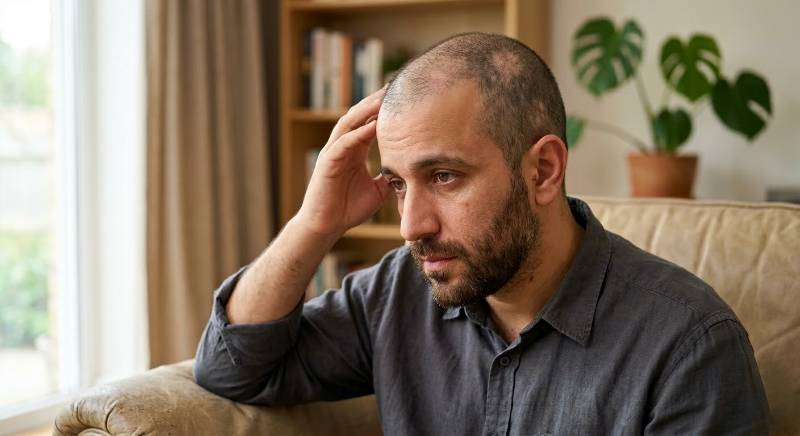
Alopecia areata is an autoimmune disorder that causes hair loss in specific areas of the body. Normally, the immune system protects the body from harmful invaders, but in this condition it mistakenly attacks the hair follicles. This attack weakens the follicles and causes them to stop producing hair, leading to smooth, completely hairless patches that often appear on the scalp or in the beard area.
What Are the Symptoms of Alopecia?
The symptoms of alopecia usually begin with the sudden appearance of a bald patch on the scalp. A person may notice a smooth, round or oval area that is completely free of hair. The skin in this area often looks normal, without redness or scaling.
One distinctive sign is what is known as “exclamation mark hair.” These are very short, broken hairs found around the edges of the bald patch, which are thinner at the base and thicker at the tip.
In some cases, a person may feel mild tingling or slight itching in the affected area before the hair begins to fall out. The condition may also cause changes in the fingernails, such as tiny dents (pitting) or a loss of the nail’s natural shine.
Symptoms of Beard Alopecia
Beard alopecia (Alopecia Barbae) is a specific form of alopecia areata that affects the hair follicles in the beard area in men. Its symptoms include:
- The appearance of one or more small, round bald patches that may gradually enlarge to the size of a coin.
- Smooth and soft skin within the bald areas, usually without scaling or dryness, which helps distinguish it from fungal infections.
- Some hairs around the edges of the patch may turn white or appear as very short “exclamation mark hairs,” which are thicker at the top and thinner at the base.
- Sometimes mild itching, irritation, or a slight tingling sensation occurs before hair loss begins.
- Fine, soft hair (similar to peach fuzz) may grow inside the patch before the normal hair starts to return.
How Do I Know If It’s Alopecia?
To determine whether the hair loss is caused by alopecia, it’s important to observe the characteristics of the bald patch carefully. Alopecia typically has distinct features that differentiate it from dandruff or fungal infections:
- Patch shape: Usually round or oval, clearly defined, and completely hairless.
- Skin texture: The skin inside the patch is very smooth and soft, without scales, redness, or bumps (except in rare cases).
- No pain: Alopecia generally does not cause pain, although mild itching or tingling may occur before the patch appears.
- Exclamation mark hairs: Short hairs that are thinner at the base and thicker at the top may appear around the edges of the patch.
Is Alopecia Contagious?
No, alopecia is not contagious at all. It cannot spread from one person to another through touch, sharing personal items like combs or towels, or even through close contact such as hugging or kissing.
The scientific reason is that alopecia is not caused by a virus, bacteria, or fungus. Instead, it is an autoimmune condition, meaning the immune system mistakenly attacks the body’s own hair follicles. Therefore, there is no risk in interacting with someone who has alopecia.
Can Alopecia Be Permanently Cured?
Although there is currently no treatment that guarantees alopecia will never return (due to its genetic and immune-related nature), there are many effective treatments that can stimulate hair regrowth and control immune attacks. The most common options include:
- Corticosteroids: Often used as injections into bald patches or as topical creams to reduce inflammation around hair follicles.
- Minoxidil: Helps increase blood flow to hair follicles and stimulates new hair growth.
- Topical immunotherapy: Used in more severe cases to create a mild skin reaction that distracts the immune system from attacking the hair follicles.
- JAK inhibitors: A newer treatment that blocks immune pathways responsible for hair loss and is used under careful medical supervision.
Treatment of Alopecia in Children
Treating alopecia in children requires a cautious approach that balances effectiveness and safety due to their sensitive bodies. Dermatologists often recommend the following options:
- Topical corticosteroid creams: Applied directly to bald patches to reduce the local immune response. They are often the first choice because they are simple and painless.
- Anthralin: An ointment applied for a short period and then washed off. It works by mildly irritating the skin to redirect the immune response away from hair follicles.
- Minoxidil: Sometimes used in lower concentrations as a supportive treatment to speed up hair regrowth once inflammation is controlled.
- Psychological support: An essential part of treatment for children, helping them accept their appearance and cope with anxiety or bullying that may worsen the condition.
Conclusion
In conclusion, alopecia areata is a medical condition that requires patience and understanding rather than fear. It is not a dangerous disease and does not affect the body’s overall health. With the remarkable advances in immune therapies and modern treatments, hair regrowth has become possible with very high success rates.
Early diagnosis and following the doctor’s treatment plan are key factors in controlling the immune response and improving hair regrowth. Maintaining good psychological well-being also plays an important role in how quickly the condition responds to treatment and how effectively hair follicles regain their normal activity.
If you still need to consult a doctor about this condition, you can easily book an appointment through Vezeeta.
Related Keywords

Specialized Doctors

Noha Nagy
Consultant in Dermatology, Venereology and Aesthetics – Faculty of Medicine, Ain Shams University

Yousra Hilal
- Specialist in Dermatology, Cosmetology and Laser

Basma Ali gaballah
Consultant in Dermatology, Cosmetic Medicine, and Laser Treatments
References
https://pubmed.ncbi.nlm.nih.gov/31333360/
https://www.webmd.com/skin-problems-and-treatments/guide/alopecia-areata
https://www.healthline.com/health/alopecia-barbae
https://my.clevelandclinic.org/health/diseases/12423-alopecia-areata
https://www.mayoclinic.org/diseases-conditions/hair-loss/symptoms-causes/syc-20372926
Specialized Doctors
Noha Nagy
Consultant in Dermatology, Venereology and Aesthetics – Faculty of Medicine, Ain Shams University
Yousra Hilal
- Specialist in Dermatology, Cosmetology and Laser
Basma Ali gaballah
Consultant in Dermatology, Cosmetic Medicine, and Laser Treatments


