Sciatica vs. Muscle Pull: What's the Difference and How Do You Treat It?
What Is Sciatica?
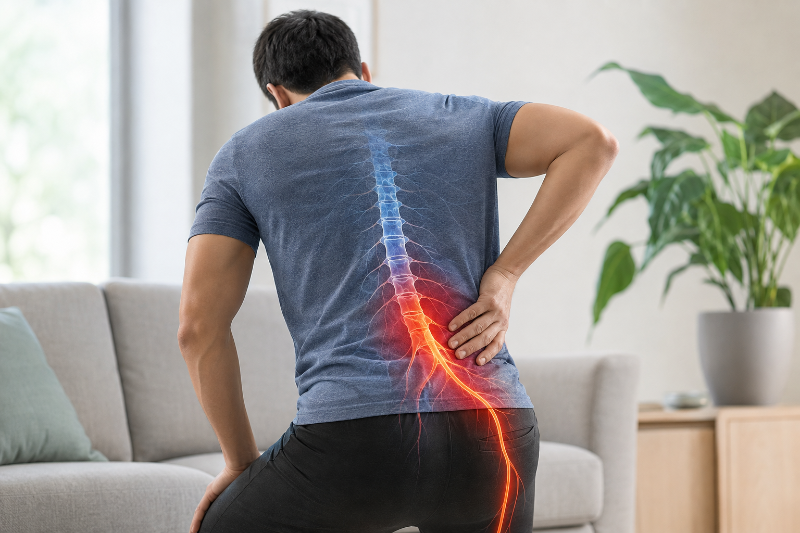
Sciatica is pain that comes from irritation or pressure on the sciatic nerve, which is the largest and longest nerve in the human body. It starts in the lower back, travels through the buttock and hip, and runs all the way down the leg into the foot. The pain usually shows up on just one side of the body.
The intensity can range widely. Some people feel mild tingling or numbness. Others describe it as sharp, burning pain or an electric shock sensation. Sitting for extended periods, coughing, or sneezing can make it worse. Leg or foot weakness sometimes comes along with it.
Where Exactly Does Sciatica Hurt?
The pain typically starts in the lower back, then travels through the buttock, down the back of the thigh and calf, and sometimes into the foot and toes. What sets it apart from ordinary back pain is that it follows the path of the sciatic nerve. Regular back pain usually stays in the lower back region.
Sciatica vs. Muscle Strain: What's the Difference?
You can tell them apart by where the pain is, what it feels like, and what other symptoms come with it:
- Sciatica: Pain typically starts in the lower back and radiates through the buttock, down the back of the thigh and calf, sometimes reaching the foot and toes. It can be sharp, burning, or feel like an electric shock. Tingling, numbness, or leg weakness can accompany it because the sciatic nerve itself is being affected. Prolonged sitting, coughing, sneezing, or certain back movements often make it worse.
- Muscle strain: The pain stays in the injured muscle and the tissue around it. It usually feels like soreness, tightness, or stiffness, and gets worse when you move or use that muscle. It doesn't travel down the leg into the foot, and it doesn't typically cause tingling, numbness, or weakness, since those are signs of nerve involvement.
Symptoms of Sciatica
Symptoms vary from person to person depending on what's pressing on the nerve and how much pressure there is. The most common ones include:
- Radiating pain: Starts in the lower back, runs through the buttock and leg. Can feel like burning or an electric shock.
- Tingling and numbness: A pins-and-needles feeling or loss of sensation in the leg or foot.
- Muscle weakness: The leg may feel weak, or moving the foot becomes difficult.
- Pain that worsens with certain movements: Long periods of sitting, bending forward, or coughing and sneezing can trigger or intensify it.
What Causes Sciatica?
The condition happens when the sciatic nerve gets compressed or irritated. Common causes include:
- Herniated disc: The most frequent cause. When a spinal disc pushes out of place, it can press directly on one of the nerve roots.
- Spinal stenosis: Narrowing of the spinal canal puts pressure on the nerves inside.
- Spondylolisthesis: One vertebra slips forward over another, which can compress the nerve.
- Piriformis syndrome: The piriformis muscle, located deep in the buttock, can spasm or become inflamed and press on the sciatic nerve.
Does Sciatica Affect Men?
It does, yes. Sciatica can develop in both men and women. Certain factors raise the risk, particularly jobs that require repeated heavy lifting or physical strain.
Long hours of sitting, especially in a poor posture, puts extra load on the lower back. Improper lifting technique during exercise or at work can also lead to the kind of spinal injury or disc herniation that triggers sciatica.
Treatment Options
Many sciatica cases improve gradually with conservative treatment. The approach your doctor recommends depends on the cause and severity of your pain. Options typically include:
- Hot and cold compresses: Applied based on your doctor's guidance to reduce pain and inflammation.
- Medications: Your doctor may prescribe pain relievers or anti-inflammatory drugs suited to your situation.
- Physical therapy: Helps improve movement, strengthen the back and abdominal muscles, and correct habits that may be adding pressure on the spine.
- Corticosteroid injections: An option in some cases to reduce inflammation around the nerve and provide temporary relief.
Exercises for Sciatica
Certain stretches and movements can help improve flexibility and reduce symptoms for some people, but the right exercises depend on what's causing the pain and the condition of your spine.
Exercises a doctor or physical therapist might recommend:
- Knee-to-chest stretch: Lie on your back and gently pull one knee toward your chest, holding the position briefly.
- Piriformis stretch: Cross one leg over the other and gently stretch the buttock area.
- Back extension: Lie on your stomach and slowly raise your upper body while keeping your hips on the floor, if this movement is appropriate for your condition.
Stop any exercise that increases pain, tingling, or weakness, and talk to your doctor or physical therapist before starting a routine, especially if your symptoms are severe.
Is Sciatica Dangerous?
In most cases, no. Sciatica isn't a dangerous condition, and symptoms often improve over time with proper care. That said, prolonged severe nerve compression without treatment can, in rare cases, lead to permanent nerve damage.
Don't ignore symptoms that are getting worse, especially if you notice significant weakness in your leg or foot, or changes in bladder or bowel control.
When Does Sciatica Require Surgery?
Surgery isn't needed for most people with sciatica. Your doctor might consider it when severe pain continues despite conservative treatment, or when nerve compression is causing progressive weakness.
Situations that warrant urgent medical evaluation:
- Loss of bladder or bowel control: This can signal severe nerve compression, such as cauda equina syndrome, which is a medical emergency.
- Significant or worsening muscle weakness: Especially if you're having trouble lifting your foot or moving it normally.
- Severe, persistent pain: Pain that doesn't respond to standard treatments and is seriously disrupting sleep, movement, and daily life.
Can Sciatica Fully Heal?
Yes. Many people see significant improvement or complete resolution of symptoms with appropriate treatment, particularly when the underlying cause is temporary and doesn't require surgery. Recovery time varies depending on the cause and how severe the symptoms are.
Is Walking Good for Sciatica?
Light walking can be beneficial for some people. It keeps you moving and avoids the negative effects of prolonged rest. But stay away from activities that make the pain worse, and stick to a level of activity that works for your condition.
Sciatica looks different for everyone depending on its cause and how much pressure is on the nerve. The good news is that most cases do improve with the right treatment, physical therapy, and exercise. Severe or worsening symptoms should never be ignored. Early diagnosis and identifying the root cause are key to choosing the right treatment and preventing complications.
If you still need a doctor’s consultation regarding this condition, you can easily book an appointment through Vezeeta.
Related Keywords

Specialized Doctors

Gamal Diaa
Consultant Neurologist at Armed Forces Hospitals

Aly Gaber
Consultant and Lecturer of Neurology and Cerebral Catheterization at the Faculty of Medicine, Mansoura University

Ahmad Abd Elmordy
Specialist and Assistant Lecturer of Neurology and Spine Medicine at college of medicine.
References
https://www.mayoclinic.org/diseases-conditions/sciatica/symptoms-causes/syc-20377435
https://www.mayoclinic.org/diseases-conditions/sciatica/diagnosis-treatment/drc-20377441
https://my.clevelandclinic.org/health/diseases/12792-sciatica
https://medlineplus.gov/ency/article/000686.htm
https://www.nhs.uk/conditions/sciatica/
https://www.nhs.uk/live-well/exercise/exercises-sciatica-problems/
Specialized Doctors
Gamal Diaa
Consultant Neurologist at Armed Forces Hospitals
Aly Gaber
Consultant and Lecturer of Neurology and Cerebral Catheterization at the Faculty of Medicine, Mansoura University
Ahmad Abd Elmordy
Specialist and Assistant Lecturer of Neurology and Spine Medicine at college of medicine.