Jaundice in Newborns: Causes and Treatment
What Is Jaundice in Newborns?
Neonatal jaundice is the accumulation of bilirubin — a substance produced from the breakdown of red blood cells — in the blood, due to the immature liver being unable to efficiently eliminate excess bilirubin in the first days after birth.
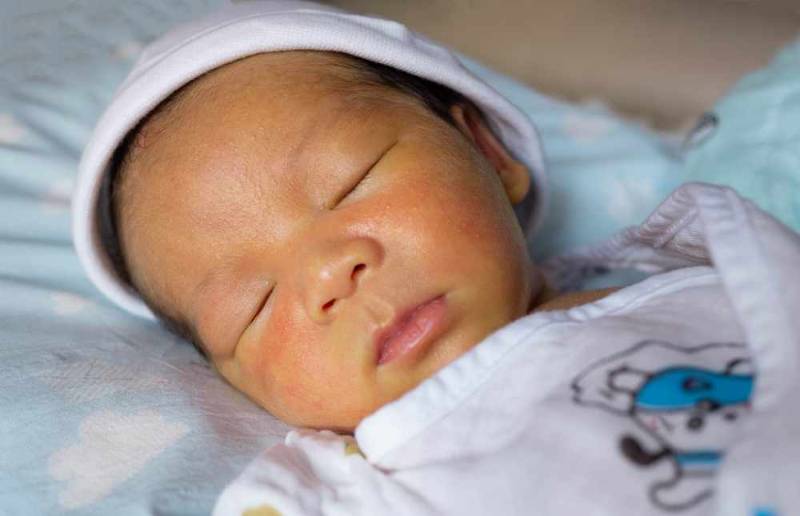
Jaundice causes yellowing of the skin and eyes in newborns. These symptoms often resolve on their own within a few days with proper feeding and liver function.
However, if symptoms persist or bilirubin levels rise, urgent treatment may be necessary to prevent complications.
Symptoms of Jaundice in Newborns
The first sign of jaundice is yellowing of the skin and eyes, which usually starts in the face and spreads across the body.
Other symptoms vary depending on bilirubin levels, and severe cases may lead to complications such as kernicterus (bilirubin-induced brain dysfunction). Symptoms may include:
- Elevated body temperature
- Persistent crying
- Tremors
- Refusal to breastfeed
- Arching of the back and neck
When to Seek Medical Advice
Physiological jaundice typically appears 2–5 days after birth and fades within two weeks with adequate feeding. It is more easily noticeable in light-skinned babies and harder to detect in those with darker skin.
Consult a doctor if:
- Yellowing increases
- Baby’s temperature exceeds 38°C (100.4°F)
- Jaundice spreads significantly across the body
- Baby is extremely lethargic and refuses to feed
- Baby cries uncontrollably or hysterically
Causes of Jaundice in Newborns
Jaundice occurs when bilirubin builds up in the blood faster than the liver can process.
Why does it appear after birth? Because during pregnancy, the mother's liver eliminates bilirubin for the baby. After birth, the baby's liver takes over, and it may not yet be efficient enough.
Also, newborns have more red blood cells than adults, and their lifespan is shorter — leading to more bilirubin production.
Risk Factors for Neonatal Jaundice
Several factors increase the likelihood of jaundice:
- Premature birth (before 37 weeks), making the liver less mature
- Blood type incompatibility between mother and baby, such as:
- Rh incompatibility: mother is Rh-negative, baby is Rh-positive
- ABO incompatibility: mother has blood type O, baby has A or B
- Inadequate feeding — due to low milk supply or breastfeeding issues
- Breast milk jaundice — some breast milk components interfere with bilirubin breakdown
- Breastfeeding jaundice — poor intake of milk in early days
- High red blood cell count or cephalohematoma (head bruising)
- Genetic conditions, e.g., G6PD deficiency (favism)
- Family history of jaundice
- Asian ethnicity
- Larger-than-average birth weight
- Down syndrome
- Liver or bile duct diseases
- Low oxygen levels in the blood
Types of Jaundice in Newborns
There are three main types of jaundice:
- Physiological Jaundice
- Common and natural
- Appears within 2–3 days
- Resolves within 2 weeks as the liver matures
- Breast Milk Jaundice
- Appears after the first week
- Caused by substances in breast milk that affect bilirubin breakdown
- Usually resolves between 3–12 weeks
- Breastfeeding Jaundice
- Occurs when babies don’t get enough milk in the first days
- Less common in formula-fed babies
- Takes longer to resolve
Diagnosing Jaundice in Newborns
Doctors examine the newborn thoroughly and measure bilirubin using a skin sensor.
If levels are high, a blood test confirms the diagnosis and tracks bilirubin trends.
Further tests may be done to identify underlying causes or complications.
Jaundice Level Chart in Newborns
Most cases resolve on their own with good feeding. However, the following bilirubin levels may require treatment:
| Bilirubin Level (mg/dL)Baby’s Age | |
| >10 | Less than 24 hours |
| ≥15 | 24–48 hours old |
| >18 | 49–72 hours old |
| >20 | Older than 72 hours |
Treating Jaundice in Newborns
At Home:
Increase breastfeeding (about 12 times/day) to help remove bilirubin through stools.
Medical Treatment:
If home care is insufficient or bilirubin is high, treatment depends on:
- Bilirubin levels and rate of increase
- Baby’s age
- Birth conditions (e.g., prematurity, complications)
Treatment options include:
- Phototherapy:
- Baby is placed under special blue lights in the NICU
- Eyes are protected
- Stimulates bilirubin breakdown
- IV Immunoglobulin (IVIG):
- Used for blood group incompatibility
- Prevents red blood cell destruction
- Exchange Transfusion:
- For severe cases
- Baby’s blood is replaced with donor blood
- IV Fluids:
- Help flush out bilirubin through urine
Signs of Recovery from Jaundice
- Skin yellowing begins to fade
- Eye whiteness gradually returns to normal
- Liver function improves and bilirubin reaches safe levels
When Is Jaundice Dangerous?
Jaundice becomes dangerous when bilirubin levels rise excessively, leading to:
- Bilirubin encephalopathy — toxic effects on brain cells
- Kernicterus — seizures, hearing or vision loss
- Permanent physical or mental disabilities
- In severe cases, infant death
In Conclusion:
Jaundice in newborns is caused by a buildup of bilirubin in the blood. It shows as yellowing of the skin and eyes and a decline in appetite. While most types resolve on their own, some require urgent treatment to prevent serious complications.
If you still need to consult a doctor regarding this condition, you can easily book an appointment through Vezeeta.
Related Keywords




References
- https://www.ncbi.nlm.nih.gov/books/NBK532930/
- https://emedicine.medscape.com/article/974786-overview
- https://my.clevelandclinic.org/health/diseases/22263-jaundice-in-newborns
- https://www.nice.org.uk/guidance/cg98
- https://www.sahealth.sa.gov.au/wps/wcm/connect/public+content/sa+health+internet/resources/policies/neonatal+jaundice+-+sa+perinatal+practice+guidelines