How Is Conjunctivitis Treated, and Can It Affect Your Vision?
What Is Conjunctivitis?
Conjunctivitis is inflammation of the conjunctiva, the thin clear membrane that covers the white of your eye and lines the inside of your eyelids. A viral infection, a bacterial infection, or an allergy can trigger it.
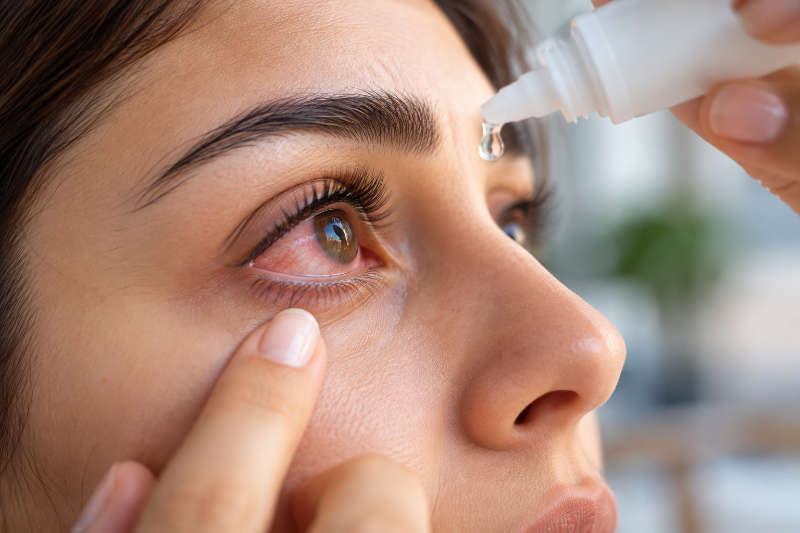
When the conjunctiva gets inflamed, the tiny blood vessels inside it widen. That's why the eye looks red or pink. You might also notice itching, extra tears, or a feeling that something's stuck in your eye.
What Are the Symptoms of Conjunctivitis?
Symptoms vary with the cause, but the most common signs include:
- Eye redness
- Itching or a burning feeling
- More tears than usual
- A gritty feeling, like sand or something foreign in the eye
- Watery or mucus-like discharge
- Thicker yellow or green discharge in some bacterial cases
- Eyelids that stick together, especially when you wake up
- Swollen eyelids
- Sensitivity to light in some cases
- Temporarily blurry vision from discharge or extra tears
Symptoms often start in one eye and then move to the other. That's especially true when a virus or bacteria is behind them.
What Causes Conjunctivitis?
Waking up with a red eye doesn't tell you much. The different types can look alike. Still, most cases come down to one of three causes:
Viral Conjunctivitis
A virus causes this type. It often shows up alongside a cold, a sore throat, or other respiratory symptoms.
The discharge is usually watery, and it can start in one eye before spreading to the other. It's contagious, too. It passes easily from one person to another.
Bacterial Conjunctivitis
This one comes from a bacterial infection. It's often linked to thick yellow or green discharge that can glue your eyelids together.
Bacteria can reach your eye when you touch it with unwashed hands or share towels and personal items with someone who's infected.
Allergic Conjunctivitis
Is itching the thing that bothers you most, and in both eyes? Allergic conjunctivitis may be the reason.
It happens when your eyes react to allergy triggers such as dust, pollen, or pet dander. Sneezing or a runny nose can come with it.
How Is Conjunctivitis Treated?
Treatment depends on the cause. Viral, bacterial, and allergic conjunctivitis each need a different approach.
That's why no single eye drop works for every case. The goal is to deal with the cause when needed and ease symptoms like redness, itching, discharge, and irritation.
For mild cases, a few simple steps at home can keep you comfortable until things improve.
What's the Best Eye Drop for Conjunctivitis?
There's no one best drop for every type of conjunctivitis. The right choice depends on the cause.
If bacteria are to blame, your doctor may prescribe antibiotic eye drops. Antibiotics won't help viral or allergic conjunctivitis, though.
For allergic conjunctivitis, your doctor may suggest anti-allergy drops such as antihistamines to calm the itching and redness.
Viral conjunctivitis is different. Treatment usually focuses on relief, using artificial tears and cold compresses while the infection clears up gradually.
So don't choose eye drops on your own. Knowing the cause gets you the right treatment and helps you avoid medicines you don't need.
How Can You Treat Conjunctivitis at Home?
Home care can ease symptoms, especially in mild cases. These steps help most:
- Cold compresses: Place a clean, cool cloth over your closed eyelids for a few minutes to reduce itching, redness, and swelling.
- Cleaning away discharge: Wipe it gently with clean gauze and lukewarm water, using a fresh piece for each eye.
- Artificial tears: Lubricating drops cut down on dryness, irritation, and that "something's in my eye" feeling.
- No rubbing: Rubbing your eyes makes irritation worse and can spread the infection.
- A break from contact lenses: Wait until your symptoms improve and your eye is ready for them again.
- Skipping eye makeup: Leave it off while the inflammation lasts to reduce irritation and keep the infection from spreading.
Home care isn't right for every case. Severe pain or any change in your vision means a doctor needs to examine your eye.
Does Conjunctivitis Affect Your Vision?
Yes, it can blur your vision for a while. In mild cases, it doesn't usually cause permanent vision loss.
The blurriness mostly comes from discharge or extra tears coating the surface of the eye. Your vision often clears once you clean your eye.
But if the blurriness sticks around, or comes with severe pain or strong light sensitivity, the inflammation may have reached another part of the eye, like the cornea. That needs a medical exam.
So, can pink eye affect your sight? It depends on how severe the inflammation is and whether it has spread beyond the conjunctiva.
Is Conjunctivitis Serious?
Usually not. Mild cases that are handled properly tend to settle without trouble.
How serious it gets depends on the cause and the symptoms that come with it. Many viral cases improve bit by bit, while some bacterial cases need treatment prescribed by a doctor.
Severe pain, reduced vision, or strong sensitivity to light shouldn't be brushed off as simple pink eye.
When Is an Eye Infection Serious?
A red eye might seem minor. Some signs, however, mean you should see an eye doctor quickly:
- Severe eye pain, or pain that keeps getting worse
- Ongoing blurry vision or a clear drop in how well you see
- Strong sensitivity to light (photophobia)
- Intense redness that doesn't improve
- Severe symptoms in only one eye
- Symptoms that started after wearing contact lenses
- Major swelling around the eye
- Symptoms that don't improve, or get worse over time
- Eye inflammation in a newborn baby
An eye exam matters most when you have eye pain or vision changes, since these can point to a different problem that needs different treatment. If you're looking for the best ophthalmologist to check your symptoms, find the cause of your eye inflammation, and choose the right treatment, you can browse specialist doctors and book an available appointment through Vezeeta.
Is Conjunctivitis Contagious?
It can be. Viral and bacterial conjunctivitis are contagious, but allergic conjunctivitis doesn't spread from person to person.
If an infection is the cause, wash your hands often, keep your hands away from your eyes, and don't share towels or eye makeup with anyone.
At the end, find out the cause before treating it, and don't use eye drops or antibiotics without a doctor's advice. If the redness lingers, or you notice severe pain or blurry vision, see an eye doctor.
If you still need a doctor’s consultation regarding this condition, you can easily book an appointment through Vezeeta.
Related Keywords





References
https://www.mayoclinic.org/diseases-conditions/pink-eye/diagnosis-treatment/drc-20376360
https://www.mayoclinic.org/diseases-conditions/pink-eye/symptoms-causes/syc-20376355
https://www.cdc.gov/conjunctivitis/treatment/index.html
https://www.cdc.gov/conjunctivitis/hcp/clinical-overview/index.html
https://www.nhs.uk/conditions/conjunctivitis/
https://my.clevelandclinic.org/health/diseases/pink-eye-conjunctivitis
https://medlineplus.gov/pinkeye.html
https://www.ncbi.nlm.nih.gov/sites/books/NBK546683/