Esophageal Varices: Causes and Their Relationship to Liver Cirrhosis
What Are Esophageal Varices?
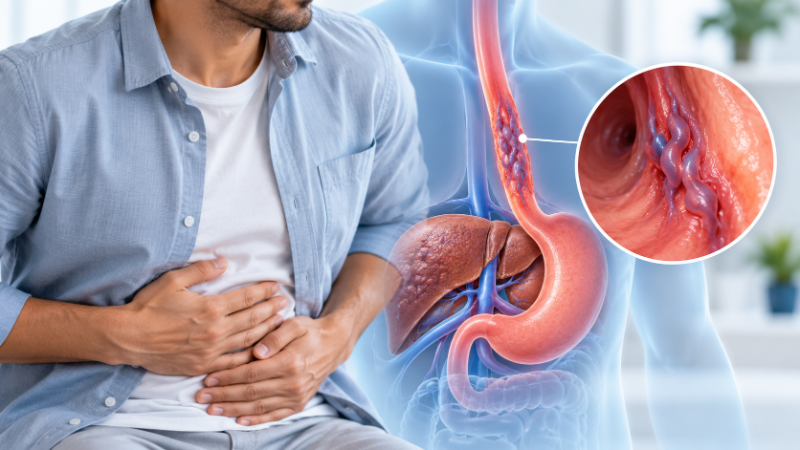
If you are wondering what it means to have varices in the esophagus, they are simply enlarged and abnormal veins, usually found in the lower part of the esophagus, caused by increased pressure in the portal vein.
Imagine that blood coming from the stomach and intestines is trying to pass through the liver, but a cirrhotic liver has become more resistant to blood flow. As a result, pressure rises in the portal vein, and the blood begins looking for alternative routes to reach the general circulation.
Some small veins around the esophagus then become enlarged. As pressure continues, these veins become more fragile and may bleed if they rupture.
What Causes Esophageal Varices?
Esophageal varices develop when the amount of blood or the pressure inside the veins around the esophagus increases, causing the veins to enlarge abnormally. Increased pressure in the portal vein is the most common cause, but it may result from several problems that affect blood flow through the portal venous system, not only from liver cirrhosis.
Possible causes include liver cirrhosis, blood clots or blockages in the portal vein, and certain liver or blood-vessel diseases that interfere with normal blood flow.
What Is the Relationship Between Esophageal Varices and Liver Cirrhosis?
Esophageal varices are associated with liver cirrhosis because the scarring caused by cirrhosis makes it more difficult for blood to pass through the liver. As resistance to blood flow increases, pressure rises in the portal vein. This condition is called portal hypertension.
As this pressure continues, the blood looks for alternative pathways to reach the general circulation. Some of it moves into the veins in the lower esophagus. As pressure increases, these veins enlarge and become esophageal varices in people with liver disease. In more serious cases, they may be at risk of bleeding.
Does Every Person With Liver Cirrhosis Develop Esophageal Varices?
No. Not everyone with liver cirrhosis has esophageal varices, but the risk increases when portal hypertension is present and liver disease has progressed.
For this reason, your liver specialist may ask you to undergo tests or an upper endoscopy to check for varices and assess the risk of bleeding, even if you have no symptoms.
Are Esophageal Varices Dangerous?
Yes. Esophageal varices can be dangerous if bleeding occurs because the bleeding may be sudden and severe and may require urgent medical treatment.
The problem is that varices themselves may not cause symptoms before bleeding begins. Do not wait for pain or obvious symptoms before following up on your condition, especially if you have liver cirrhosis or portal hypertension.
What Are the Symptoms of Esophageal Varices?
In most cases, esophageal varices do not cause symptoms before bleeding occurs. They may therefore be discovered by chance during tests performed by a liver specialist.
If bleeding occurs, you may notice:
- Vomiting blood. The blood may be bright red or look like coffee grounds.
- Black, tarry stools caused by bleeding in the upper digestive tract.
- Dizziness or severe weakness.
- Pale skin, sweating, and a rapid heartbeat after losing a large amount of blood.
- Low blood pressure or fainting in cases of severe bleeding.
Signs related to liver disease may also appear, such as yellowing of the skin and eyes, swelling of the abdomen or legs, and easy bruising, depending on the condition of the liver.
What Are the Grades of Esophageal Varices?
During endoscopy follow-up, you may hear about the grade or size of your esophageal varices. Varices are classified according to the system used by the doctor and the endoscopy findings. It is not accurate to treat grades one through four as a single universal measure of bleeding risk.
Esophageal varices can generally be described as follows:
- Grade 1 esophageal varices: Small varices with minimal bulging.
- Grade 2 esophageal varices: Larger and more visible varices.
- Grade 3 esophageal varices: Large varices that project prominently into the esophagus.
- Grade 4 esophageal varices: Varices with severe enlargement and prominent bulging.
The doctor determines the grade using endoscopy, while also assessing their size, the condition of the liver, and signs of bleeding risk to determine the appropriate follow-up and treatment plan.
How Are Esophageal Varices Treated?
If varices are found, the main goal of treatment is to reduce and prevent the risk of bleeding, or to control the bleeding quickly if it occurs.
The doctor chooses treatment based on the size of the varices, the risk of bleeding, any previous bleeding, and liver function. The treatment plan may include:
Medicines That Lower Portal Vein Pressure
The doctor may prescribe nonselective beta blockers for some patients to reduce blood pressure in the portal system and lower the risk of bleeding.
Do not start or stop these medicines on your own. The choice and dose depend on your health, blood pressure, and heart and liver function.
Esophageal Variceal Banding
If the varices are at risk of bleeding, the doctor may recommend endoscopic band ligation.
During the procedure, the doctor uses an endoscope to reach the varices and places small rubber bands around the enlarged veins. This stops blood flow through them and allows them to shrink over time.
You may need more than one session, depending on the size and number of varices and your response to treatment.
Endoscopic Treatment of Esophageal Varices During Bleeding
If bleeding has already occurred, it is an emergency. The doctor may combine medicines with endoscopic treatment, such as variceal banding, to control the source of bleeding.
Can Esophageal Varices Be Cured?
Esophageal varices can be controlled and the risk of bleeding can be reduced, but treating the varices does not necessarily treat the underlying cause.
If you have liver cirrhosis, treating the underlying cause, monitoring liver function, and controlling portal hypertension are essential parts of the treatment plan.
You may need regular endoscopy or other tests even after the varices have been treated because they may return or develop again.
What Should a Person With Esophageal Varices Eat?
There is no single diet that is suitable for every person with esophageal varices. The diet depends largely on the condition of the liver and any related complications.
In general, if you have liver cirrhosis, your doctor or dietitian may recommend that you:
- Eat balanced meals containing suitable sources of protein.
- Reduce salt if you have fluid retention or ascites.
- Avoid alcohol completely if you have liver disease.
- Choose foods that are easy to chew and swallow if you have difficulty swallowing or your doctor has recommended this.
- Eat small, frequent meals if this helps you meet your nutritional needs.
Esophageal varices may be a complication of portal hypertension associated with liver cirrhosis, and they often cause no symptoms before bleeding occurs. Regular follow-up and treatment when the risk of bleeding is high, together with management of the underlying liver disease, are the most important steps for reducing complications.
If you still need a doctor’s consultation regarding this condition, you can easily book an appointment through Vezeeta.
Related Keywords
Specialized Doctors

Andre atef Saweras
consultant of Gastrointestinal Diseases, Liver Diseases, Endoscopy, and Infectious Diseases - Faculty of Medicine (Kasr El Aini).

Ahmed Almarakby
Consultant in internal medicine, digestive system, liver and endoscopy

Ahmed Amer Afifi
Consultant of Gastroenterology , Endoscopy And Hepatology Faculty of medicine Al Azhar University
References
https://www.mayoclinic.org/diseases-conditions/esophageal-varices/symptoms-causes/syc-20351538
https://www.mayoclinic.org/diseases-conditions/esophageal-varices/diagnosis-treatment/drc-20351544
https://my.clevelandclinic.org/health/diseases/15429-esophageal-varices
https://www.medlineplus.gov/ency/article/000268.htm
https://www.mayoclinic.org/diseases-conditions/portal-hypertension/symptoms-causes/syc-20599670
https://www.cuh.nhs.uk/patient-information/screening-for-varices/
Specialized Doctors
Andre atef Saweras
consultant of Gastrointestinal Diseases, Liver Diseases, Endoscopy, and Infectious Diseases - Faculty of Medicine (Kasr El Aini).
Ahmed Almarakby
Consultant in internal medicine, digestive system, liver and endoscopy
Ahmed Amer Afifi
Consultant of Gastroenterology , Endoscopy And Hepatology Faculty of medicine Al Azhar University