Can Gangrene Be Cured, or Does It Always End in Amputation?
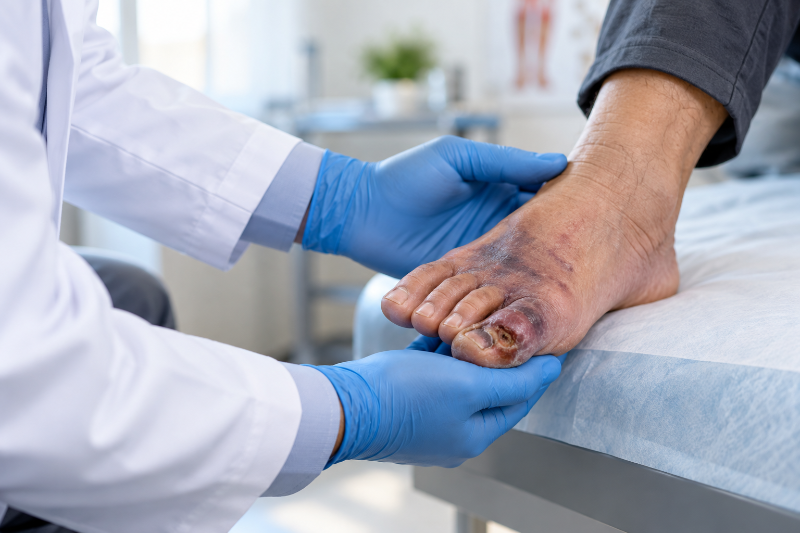
What Is Gangrene?
Gangrene is the death of part of the body's tissue. It happens when blood flow to that area is cut off or drops sharply, and in some cases it's caused by a severe bacterial infection. It needs urgent medical assessment and treatment, because dead tissue and infection can spread to nearby tissue or into the bloodstream.
It most often shows up in the limbs, particularly the feet, but it can affect other parts of the body too.
What Are the Early Symptoms of Gangrene?
Early warning signs include skin discoloration, pain or loss of feeling, coldness in the affected area, swelling, and wounds or discharge. Symptoms vary depending on the type of gangrene and what caused it.
The most common symptoms of gangrene are:
- Skin that turns red, blue, or purple, and may turn black as tissue damage progresses
- An area that feels colder than the skin around it
- Severe or sudden pain
- Numbness or loss of sensation
- Swelling in the affected area
- Sores or blisters
- Foul-smelling discharge, in some cases
- Dry, shrunken skin in dry gangrene
If your skin changes color quickly or you have a wound that isn't healing, see a doctor soon. That's especially true if you have diabetes.
What Does Gangrene Look Like at First?
It may start with a change in skin color, a cold patch of skin, or a wound that won't heal. As tissue damage increases, the color can shift gradually. Skin appearance alone isn't enough to diagnose gangrene, since symptoms differ by cause and type.
So don't wait for the skin to turn black before asking for medical help.
What Causes Gangrene?
Gangrene mainly develops when blood flow to tissue drops severely, or when a serious bacterial infection damages the tissue.
The main causes include:
- Peripheral artery disease
- Atherosclerosis (hardening of the arteries)
- Poor circulation
- Deep wounds and injuries
- Severe bacterial infections
- Complications of diabetes
- Certain conditions that damage blood vessels or tissue
How Is Diabetes Linked to Gangrene?
Diabetes raises the risk of gangrene, especially in the feet. Over time, high blood sugar can damage nerves and blood vessels. The result? Less feeling in the feet, reduced blood flow, and wounds that heal slowly.
That's why diabetic foot gangrene can start with a small cut the person doesn't even feel. If it isn't treated early, infection can set in or poor blood flow can get worse.
If you have diabetes, watch for:
- Any cut or ulcer on your foot
- Changes in skin color
- Swelling or redness
- A toe that feels cold
- Loss of feeling
- Discharge or an unusual smell coming from a wound
What Is the Most Dangerous Type of Gangrene?
Wet gangrene and gas gangrene can progress quickly and cause serious complications, especially once infection spreads. The types of gangrene include:
Dry gangrene: Usually caused by poor blood flow. The affected area becomes dry, and its color may gradually darken to brown or black.
Wet gangrene: Happens when tissue damage comes with an infection. You may see swelling, discharge, and a bad smell. It can spread fast, so it needs urgent medical care.
Gas gangrene: Caused by certain bacteria that produce gas and toxins inside the tissue. It can destroy tissue very quickly.
Can Gangrene Cause Blood Poisoning?
Yes. Some cases of gangrene can lead to sepsis (blood poisoning) if the infection reaches the bloodstream. Sepsis can then progress to septic shock, which affects blood pressure and how vital organs work.
This is why gangrene with a severe infection calls for fast action.
Can Gangrene Be Treated Without Amputation?
Yes, some cases can, as long as the tissue is still viable and the cause and infection are brought under control in time.
Depending on the patient's condition, gangrene treatment may include:
- Antibiotics if there's an infection
- Cleaning the wound and removing dead tissue
- Blood vessel procedures to improve blood flow
- Treating underlying or related conditions, such as diabetes and artery disease
- Hyperbaric oxygen therapy in specific cases, as decided by the doctor
But if the tissue has died completely, or the infection is severe and can't be controlled, removing the affected part or amputating may be necessary. This stops the infection from spreading and protects the patient's life.
Does Treating Gangrene Always Mean Amputation?
No. Amputation isn't inevitable in every case. Treatment aims to save healthy tissue, control infection, and improve blood flow whenever possible.
Whether amputation can be avoided depends on:
- How quickly the condition is detected
- How much tissue is damaged
- How well blood is reaching the affected area
- Whether there's an infection, and how far it has spread
- The patient's overall health
- How they respond to treatment
You can't tell if amputation is needed just by looking at a wound. That decision comes after a medical evaluation and the right tests.
Can Gangrene Be Treated at Home?
No. Home treatment isn't a safe option for gangrene. Depending on the cause and how severe it is, you may need antibiotics, surgical removal of dead tissue, or treatment to improve blood flow.
Home remedies, or putting off a medical visit, can give the infection or tissue damage time to get worse.
When Is Gangrene an Emergency?
Gangrene always needs urgent medical assessment. It becomes more dangerous with rapid changes in skin color, severe pain, growing swelling, foul-smelling discharge, or whole-body symptoms like fever, chills, and extreme weakness.
Don't wait if you notice these signs. This matters most for people with diabetes or poor circulation.
Is Gangrene Contagious?
Gangrene itself isn't contagious and doesn't pass from person to person. Some bacterial infections linked to gangrene, however, can spread through contact with discharge or infected wounds. Follow your doctor's instructions on wound care.
When Can Gangrene Be Fatal?
Gangrene turns life-threatening when infection spreads to the bloodstream and causes sepsis or septic shock, which can disrupt vital organ function.
The more severe the infection, or the faster tissue is being damaged, the more critical quick treatment becomes.
Some cases of gangrene can heal without amputation, especially when they're caught early and treated promptly. When tissue damage is extensive or the infection is severe, removing dead tissue or amputation may be needed to stop the infection from spreading.
Noticed a change in skin color, a wound that won't heal, or pain or numbness in your foot? Don't wait for things to get worse. An early medical evaluation can make a real difference in saving tissue and lowering the risk of complications.
If you still need a doctor’s consultation regarding this condition, you can easily book an appointment through Vezeeta.
Related Keywords





References
https://www.mayoclinic.org/diseases-conditions/gangrene/symptoms-causes/syc-20352567
https://www.mayoclinic.org/diseases-conditions/gangrene/diagnosis-treatment/drc-20352573
https://my.clevelandclinic.org/health/diseases/21070-gangrene
https://my.clevelandclinic.org/health/diseases/24739-gas-gangrene
https://www.nhs.uk/conditions/gangrene/
https://medlineplus.gov/gangrene.html
https://diabetes.org/about-diabetes/complications/foot-complications