Are Spider Veins Dangerous? How to Treat Them Effectively

What Are Spider Veins?
Spider veins are small, dilated blood vessels that sit near the skin's surface. They appear as thin lines or branching networks in red, blue, or purple, which is where the "web" comparison comes from.
They're different from varicose veins. Varicose veins are larger and more raised, often looking twisted or swollen beneath the skin. Spider veins are smaller and more superficial — closer to the surface and generally flat.
They're most common on the legs but can also appear on the face, particularly around the nose and cheeks.
What Causes Spider Veins?
There's no single cause. Spider veins typically result from a combination of factors that affect blood vessels and circulation:
- Genetics: If someone in your family has varicose or spider veins, you're more likely to develop them.
- Age: Vein walls and valves weaken over time, making dilated vessels more likely to appear.
- Hormonal changes: Hormonal shifts, especially in women, can affect vein structure.
- Pregnancy: Pregnancy increases blood volume and puts pressure on leg veins, combined with the hormonal changes that come with it.
- Prolonged sitting or standing: Staying in one position for long stretches raises pressure in leg veins.
- Excess weight: Extra body weight puts additional pressure on the veins in the lower limbs.
Why Do Spider Veins Appear at a Young Age?
Spider veins in younger people don't necessarily signal a serious health problem. Genetics often plays a significant role here, especially when a family member has a history of varicose or spider veins.
Other contributing factors include:
- Sitting or standing for extended periods
- Low physical activity levels
- Being overweight
- Hormonal shifts in women
Their appearance at a young age is usually the result of multiple factors overlapping, not age on its own.
Do Birth Control Pills Make Spider Veins Worse?
Some hormonal contraceptives can affect blood vessels, but it's not accurate to say that birth control pills directly cause spider veins in all women. People respond to hormones differently. Pregnancy itself is associated with hormonal changes and increased pressure on leg veins, which can raise the chances of developing spider or varicose veins.
If you notice a clear increase in visible veins after starting a hormonal contraceptive, it's worth discussing this with your doctor to evaluate the situation and find the right option for you.
Does Walking Make Varicose Veins Worse?
No, it's actually the opposite. Walking is beneficial for leg circulation. When calf muscles contract during movement, they help push venous blood back toward the heart. Regular movement is recommended over prolonged sitting or standing without breaks.
Are Spider Veins Dangerous?
In most cases, spider veins don't pose a significant health risk. They're more of a cosmetic concern than a medical one.
That said, some people do experience symptoms: itching, a sense of heaviness, or mild pain, particularly when there's an underlying issue with venous circulation.
A large number of spider veins appearing together, or veins accompanied by other symptoms, may warrant a closer look at venous health to rule out associated venous insufficiency.
See a doctor if spider veins appear suddenly, or if they come with noticeable swelling, significant pain, skin changes, or any unusual symptoms.
Do Spider Veins Go Away on Their Own?
Existing spider veins typically don't disappear without treatment. Certain healthy habits may help reduce the chance of new ones forming and can ease existing symptoms, but removing the veins that are already there requires a medical procedure, either injections or laser treatment.
Spider Vein Treatment in Women
Women are more prone to spider veins because of hormonal changes that occur at different life stages: pregnancy, certain phases of the menstrual cycle, and menopause.
Treatment depends on the size and location of the veins and whether there are accompanying symptoms.
For milder cases, lifestyle adjustments like staying active and avoiding prolonged sitting or standing can help manage symptoms and prevent the condition from worsening.
When the goal is actually removing the visible veins, a doctor may recommend sclerotherapy (injection treatment) or laser therapy, depending on the vessel characteristics and location.
Can Spider Veins Be Treated at Home?
No home method can reliably remove existing spider veins. But certain steps may support better circulation, ease symptoms, and reduce the likelihood of new veins forming:
- Exercise regularly, particularly walking, to activate calf muscles and improve venous return.
- Avoid staying in one position too long. Change positions and move around throughout the day.
- Elevate your legs when resting to reduce pressure on leg veins.
- Maintain a healthy weight to lower pressure on the veins.
- Compression stockings can be helpful in some cases, particularly when symptoms are tied to poor venous circulation, but use them after consulting a doctor.
Home Management of Spider Veins in the Legs
Home approaches focus on improving circulation and reducing pressure on the veins. Avoiding prolonged static positions, staying physically active, and elevating the legs during rest are the main tools available.
Losing excess weight, if applicable, can also help reduce the load on leg veins.
But it's important to understand what these measures actually do: they may ease symptoms and slow the development of new veins, but they won't remove the ones already there.
Laser Treatment for Spider Veins
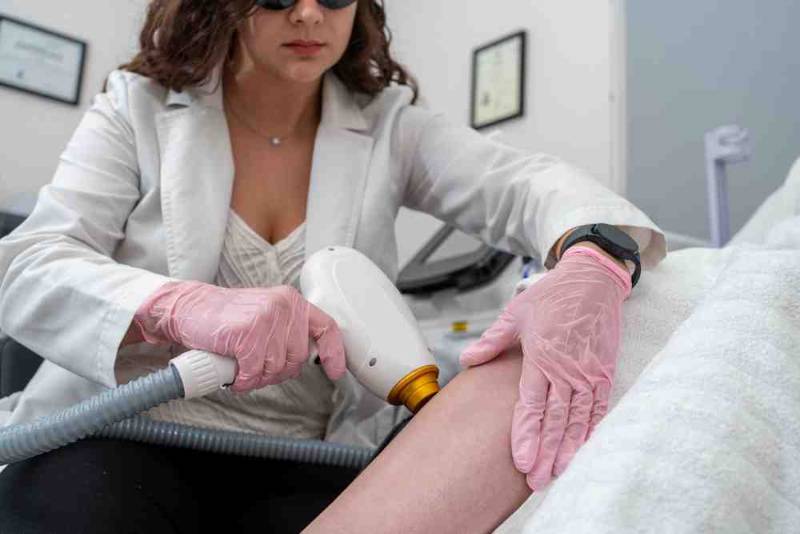
Laser therapy is one option for removing certain types of spider veins, particularly small, superficial ones.
The treatment works by directing laser energy at the target vessel. The vein walls gradually respond, the vessel closes, and the body processes it over time.
The number of sessions needed depends on the size, number, and location of the veins. Some people need more than one session to get the result they're looking for.
Laser isn't right for every case. A doctor evaluates the veins and determines which technique fits best before proceeding.
What About Spider Veins Behind the Knee?
Veins, either spider veins or varicose, can appear behind the knee. Treatment depends on the type and size of the vessels and whether there's involvement of deeper veins.
Sclerotherapy is a common approach here, where a substance is injected directly into the target vein to help close it. Laser may also be appropriate in some suitable cases.
If the veins are larger or if symptoms suggest a deeper venous circulation issue, further testing may be needed before a treatment plan is decided.
Which Doctor Treats Spider Veins?
Spider veins can be evaluated by a vascular surgeon or vascular medicine specialist. A dermatologist can also assess certain cases, particularly superficial veins on the face.
The doctor determines whether the spider veins are purely cosmetic or whether the pattern suggests a need for a deeper look at venous health. From there, they select the appropriate treatment based on the location, size, and the patient's overall condition.
Injections or Laser: Which Is Better for Spider Veins?
There's no universally better option. The choice depends on the size, location, and color of the veins. Sclerotherapy is commonly used for spider veins on the legs, while laser may be better suited to certain small, superficial veins, including some on the face.
Do Spider Veins Come Back After Treatment?
A vein that's successfully closed or treated doesn't typically return. New spider veins can appear in other areas, though, because treatment doesn't address the underlying factors that make someone prone to them: genetics, hormonal changes, and age.
Spider veins may not be a serious health threat, but they can be a signal worth paying attention to, especially if they come with symptoms. Treatment varies from case to case. Some situations only call for preventive lifestyle advice; others benefit from laser or injection therapy to remove the visible vessels. A medical evaluation is the most reliable way to figure out which approach is right for you.
If you still need a doctor’s consultation regarding this condition, you can easily book an appointment through Vezeeta.
Related Keywords



References
https://www.mayoclinic.org/diseases-conditions/varicose-veins/symptoms-causes/syc-20350643
https://my.clevelandclinic.org/health/diseases/16855-spider-veins
https://www.nhs.uk/conditions/varicose-veins/
https://medlineplus.gov/varicoseveins.html
https://www.healthline.com/health/telangiectasia
https://www.webmd.com/skin-problems-and-treatments/cosmetic-procedures-spider-veins