When Are Swollen Lymph Nodes a Warning Sign?
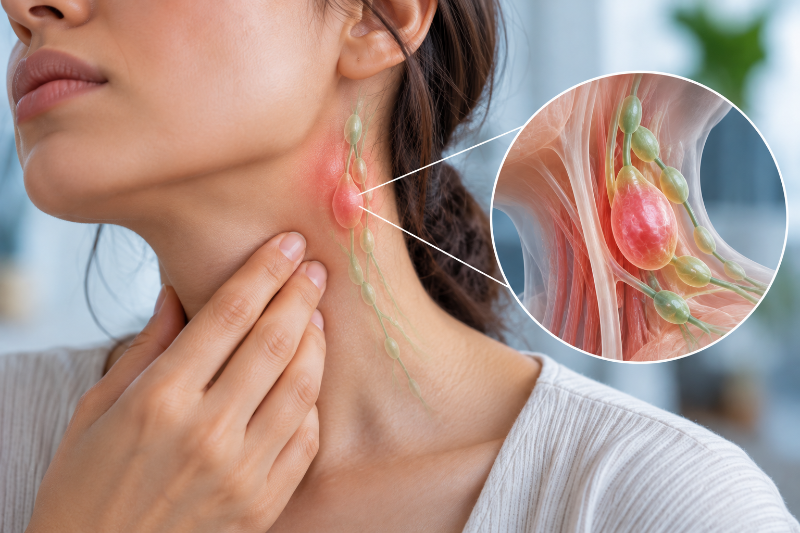
What Are Lymph Nodes, and Why Do They Swell?
Lymph nodes, also called lymph glands, are small parts of your immune system. They're spread throughout the body, and they help fight infection and deal with foreign substances and abnormal cells.
When an infection or inflammation starts in one area, the nodes closest to it can become more active and grow in size. Doctors call this lymphadenopathy, or simply swollen lymph nodes.
So a swollen node doesn't automatically mean something serious is going on. Most of the time, it's tied to a common infection and gets better as that infection clears.
What Causes Swollen Lymph Nodes?
The cause depends on where the swelling is and what other health issues come with it.
Common causes include:
- Viral infections, such as colds, the flu, and other viral illnesses.
- A sore throat or tonsillitis, including some bacterial infections.
- Tooth and gum infections.
- Ear or skin infections.
- Some autoimmune diseases, like lupus and rheumatoid arthritis.
- Less commonly, certain types of cancer.
Your other symptoms, where the swelling is, and how long it lasts usually point toward the cause. If it's still unclear, your doctor may order more tests.
Swollen Lymph Nodes in the Neck and Other Areas
Swollen nodes don't always turn up in the same place. You might notice them in your neck, behind your ear, or under your jaw. They can also appear in the armpit or groin, or sit deep inside the body where you can't feel them at all. The likely cause changes with the location and the symptoms that come along with it, so pinpointing where the swelling is helps narrow down the source.
Here's what's most common in each area.
Swollen Lymph Nodes in the Neck
The neck is one of the most common spots, especially with upper respiratory infections.
If you have a sore throat or tonsillitis, a cold, or a tooth or gum problem, you may notice swelling under your jaw or on either side of your neck.
Symptoms of inflamed lymph nodes in the neck can include:
- A lump or swelling you can feel in your neck.
- Pain or tenderness when you touch the area.
- A sore throat or trouble swallowing, if there's a throat infection.
- Fever, in some cases.
Swollen Lymph Nodes Behind the Ear
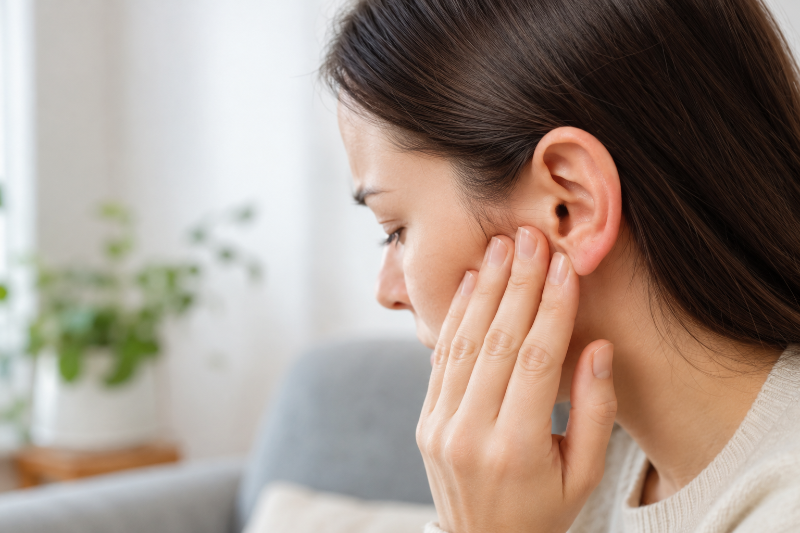
Swollen lymph nodes behind the ear can show up with infections close to that area, such as some ear or scalp infections.
The cause varies from person to person, though. Location alone isn't enough to pin it down.
Swollen Lymph Nodes Above the Collarbone
A swollen node above the collarbone needs a medical evaluation, especially if there's no obvious infection to explain it or it's been there for a while.
There are several possible causes. Your doctor will rely on a physical exam and your medical history, and may order more tests if needed.
Swollen Lymph Nodes in the Abdomen
Lymph nodes in the abdomen can swell with certain infections, particularly in children and teenagers. Belly pain or a fever may come with it.
You usually can't feel these nodes from the outside. They're often found through tests or imaging your doctor orders.
When Should You Worry About Swollen Lymph Nodes?
"Are swollen lymph nodes dangerous?" isn't the only question to ask. The more useful one is this: are there signs that call for a medical exam?
It's a good idea to see a doctor if:
- The swelling hasn't gone away or isn't starting to improve.
- The node keeps getting bigger.
- It appeared for no clear reason, like a recent infection.
- The node feels noticeably hard or doesn't move.
- You have swollen nodes in more than one part of your body.
- The swelling comes with unexplained weight loss, heavy night sweats, or a fever that won't go away.
- You're having trouble breathing or swallowing.
None of these signs means you definitely have cancer. But they do mean the cause should be checked properly instead of guessed at.
Is Lymph Node Inflammation Dangerous?
In most cases, it comes down to the cause. When a mild viral infection is behind it, the nodes may shrink gradually as you recover. If the cause is bacterial, your doctor may prescribe the right treatment once they've confirmed what kind of infection it is.
Swelling that lingers, or shows up with unusual symptoms, needs a medical evaluation to find out why.
That's why there's no single best treatment for swollen lymph nodes that works for everyone. Treatment targets the underlying cause, not the swollen node itself.
How Long Does It Take for Swollen Lymph Nodes to Go Away?
It depends on the cause. Nodes may start returning to their normal size once the infection improves, but some swelling can hang around for a while after your other symptoms are gone.
If the swelling isn't improving, sticks around, or gets bigger, see your doctor rather than waiting longer.
Finding a small lump in your neck can be scary, but a swollen lymph node doesn't always mean something serious. Often, your body is just reacting to a nearby infection. Still, if the swelling persists, grows, has no clear cause, or comes with unexplained weight loss, night sweats, or an ongoing fever, talk to a doctor so you can get the right diagnosis and start the right treatment.
If you still need a doctor’s consultation regarding this condition, you can easily book an appointment through Vezeeta.
Related Keywords


Specialized Doctors

Amira Gamea
Consultant in general internal medicine, diabetes and gastroenterology at Police Authority Hospitals

Ahmed El Gammal
Consultant of Internal Medicine and Diabetology

Saeed Mohamed Aid
Consultant And Professor of internal medicine,and nephrology-Faculty Of Medicine- Zagazig University.
References
https://www.mayoclinic.org/diseases-conditions/swollen-lymph-nodes/symptoms-causes/syc-20353902
https://www.nhs.uk/symptoms/swollen-glands/
https://my.clevelandclinic.org/health/symptoms/15219-swollen-lymph-nodes
https://my.clevelandclinic.org/health/symptoms/25248-cervical-lymphadenopathy
https://medlineplus.gov/ency/article/003097.htm
https://medlineplus.gov/ency/article/001301.htm
https://www.mayoclinic.org/diseases-conditions/mesenteric-lymphadenitis/symptoms-causes/syc-20353799
https://pmc.ncbi.nlm.nih.gov/articles/PMC3993046/
Specialized Doctors
Amira Gamea
Consultant in general internal medicine, diabetes and gastroenterology at Police Authority Hospitals
Ahmed El Gammal
Consultant of Internal Medicine and Diabetology
Saeed Mohamed Aid
Consultant And Professor of internal medicine,and nephrology-Faculty Of Medicine- Zagazig University.