What's the Treatment for Varicocele? And When Is Surgery Needed?
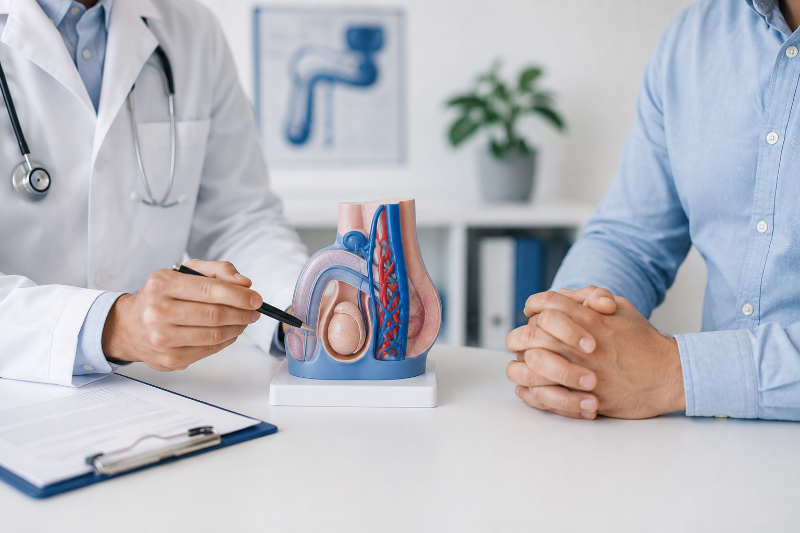
What Is a Varicocele?
A varicocele is basically a swelling of the veins that drain blood away from the testicles. Think of it like varicose veins in the legs, except it happens in the scrotum. It tends to show up more often on the left side because of the way the testicular vein connects and drains on that side.
What's the Most Serious Type of Varicocele?
Varicoceles are graded by severity, and grade 4 (or advanced grade 3) is the most concerning. At that stage, the enlarged veins are clearly visible without even touching the area. These higher grades carry the greatest risk of heat damage to the testicle, which can affect sperm production and testicular growth.
Varicocele Symptoms
A lot of varicoceles don't cause any symptoms at all, especially early on. But as things progress, you might notice some of the following:
- Pain or a heavy feeling in the scrotum: this usually gets worse after standing for a long time or physical effort, and it tends to ease up when you lie down.
- Visible swollen veins: the dilated veins around the testicle can become prominent enough to see or feel. Some describe it as feeling like a bag of worms.
- Difference in testicle size: the affected testicle might become noticeably smaller than the other one.
- Difficulty conceiving: in some men, varicocele is linked to lower sperm count or quality, which can make getting pregnant harder.
What Causes Varicocele?
The veins around the testicle carry blood back up toward the heart. Inside those veins, small valves keep the blood moving in the right direction. When those valves weaken or stop working properly, blood starts flowing backward and pools inside the veins. That's what makes them swell up.
The left side is more commonly affected because of how the left testicular vein connects to the renal vein at a steeper angle, which makes backflow more likely. In rare cases, a varicocele can develop because something is pressing on the vein or blocking its drainage higher up in the abdomen.
Can You Fully Recover from Varicocele?
Yes. The goal of treatment is to shut down the swollen veins so blood gets rerouted through healthy ones nearby. And with the options available today, most men see real improvement after treatment.
Can Medication Treat Varicocele?
There's no pill that can shrink or close off varicocele veins. So medication isn't really a fix for the varicocele itself. But your doctor might prescribe something to manage symptoms or support fertility while you weigh your options:
- Pain relievers: over-the-counter options like ibuprofen can help take the edge off the aching and heaviness, as directed by your doctor.
- Antioxidants and supplements: your doctor might recommend these in certain cases to help improve some markers of sperm quality, especially if fertility is a concern. But they won't make the varicocele go away.
How Is Varicocele Treated Without Surgery?
If the varicocele isn't causing much trouble and your fertility looks fine, your doctor might suggest conservative management instead of jumping straight to a procedure. That could include:
- Avoiding long periods of standing or activities that make the pain worse.
- Wearing supportive underwear to reduce the heaviness and discomfort.
- Using pain medication when needed, following your doctor's advice.
Varicocele Treatment with Embolization
Embolization is a catheter-based procedure that can work well for grade 2 or 3 varicoceles, particularly when there's ongoing pain, fertility concerns, or changes in testicle size. That said, the decision doesn't rest on the grade alone. Your doctor will look at the full picture, including your symptoms, physical exam findings, and semen analysis results.
Here's how it works: under local anesthesia, an interventional radiologist threads a thin catheter through a vein, using imaging guidance to reach the swollen testicular vein. Once in position, tiny metal coils or special blocking agents are placed inside the vein to seal it off and stop blood from pooling there.
After the vein is blocked, blood naturally reroutes to healthy veins nearby. Your doctor decides whether this approach fits your situation based on the grade of the varicocele and your overall condition.
Treating Grade 1 Varicocele
Grade 1 usually doesn't need any intervention. If there's no pain and no fertility issue, periodic checkups and the occasional pain reliever are typically enough.
Treating Grade 2 Varicocele
When a grade 2 varicocele starts causing persistent pain or shows up on a semen analysis as affecting sperm numbers, surgery or interventional radiology becomes the better option for fixing the vein.
Treating Grade 4 Varicocele
At grade 4, treatment is pretty much necessary to protect the testicle's function. Microsurgery is the most common and most successful approach for advanced cases like this.
Varicocele Surgery
Your doctor might recommend surgery when conservative treatment hasn't helped with the pain, when the testicle is shrinking, or when there's a clear problem on the semen analysis. The whole point of the operation is to tie off or seal the swollen veins so blood stops pooling around the testicle, while leaving the arteries, lymphatic vessels, and healthy veins intact.
Microsurgical varicocelectomy is considered the most precise technique. The surgeon works under a microscope to identify and tie off only the affected veins, sparing the important surrounding structures. This precision lowers the chances of complications and reduces the likelihood of the varicocele coming back.
Every case is different. Not every varicocele needs to be treated, and your doctor will choose the best approach based on your specific symptoms, the grade of the varicocele, and how it's affecting your fertility or testicle size. Getting a proper diagnosis and staying on top of follow-ups is what leads to the best outcome.
If you still need a doctor’s consultation regarding this condition, you can easily book an appointment through Vezeeta.
Related Keywords





References
https://my.clevelandclinic.org/health/diseases/15239-varicocele
https://my.clevelandclinic.org/health/treatments/24234-varicocelectomy
https://www.mayoclinic.org/diseases-conditions/varicocele/diagnosis-treatment/drc-20378772
https://medlineplus.gov/ency/article/001284.htm
https://www.healthline.com/health/mens-health/varicocelectomy
https://www.guysandstthomas.nhs.uk/health-information/varicocele-embolisation
https://www.urologyhealth.org/urology-a-z/v/varicoceles