Sudden Testicular Pain: Causes, When It’s Dangerous, and What to Do Immediately?
What Are the Symptoms of Sudden Testicular Pain?
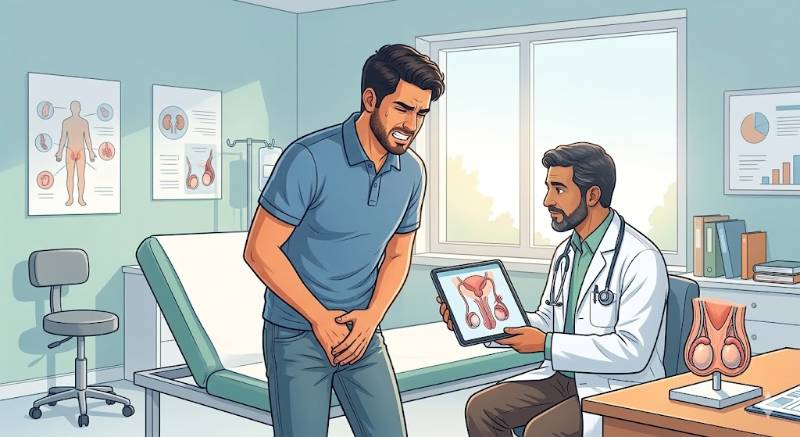
The main and most obvious symptom is sudden, severe pain, which often wakes a person from sleep or occurs during simple physical activity. The issue is not limited to pain alone; it may also include noticeable swelling in the scrotum and a change in skin color to red or darker shades. The affected person may also notice that one testicle is positioned higher than usual or tilted at an unusual angle. This intense pain is often accompanied by nausea or persistent vomiting as the body reacts to the severe discomfort.
Causes of Sudden Testicular Pain
The causes can vary between emergency conditions and others resulting from chronic diseases or accidental injuries, including:
Testicular torsion: Twisting of the spermatic cord around itself, which immediately cuts off blood supply to the testicle and causes sudden, severe pain.
Epididymitis or orchitis: Often caused by a bacterial infection (including sexually transmitted infections), and the pain usually develops gradually.
Direct injuries: Such as bruises during sports or accidents, which may lead to internal bleeding or swelling.
Varicocele: Enlargement of the veins (often on the left side), causing a feeling of heaviness or pain that worsens after long periods of standing.
Inguinal hernia: When part of the intestine pushes through weakened abdominal muscles into the scrotum, causing pressure and pain.
Ureteral stones and salt deposits: Pain may extend from the urinary system (kidneys or ureter) and be felt in the testicle as referred pain.
Diabetic neuropathy: Poorly controlled diabetes can damage the nerves supplying the area, leading to tingling or chronic pain.
Hydrocele: A buildup of fluid around the testicle that causes heaviness and discomfort.
What Does Testicular Torsion Mean and How Does It Happen?
Testicular torsion occurs when the testicle rotates around the spermatic cord that supplies it with blood from the body. This rotation twists the cord, cutting off the essential blood flow to the tissues. Once blood supply is interrupted, testicular cells begin to suffer damage rapidly due to lack of oxygen.
This condition most commonly occurs in adolescents between the ages of 12 and 18, but it can affect males at any age, including newborns. For this reason, it is considered a medical emergency that requires immediate examination.
Can Ureteral Stones Cause Testicular Pain?
Yes. Pain from ureteral stones can extend to the testicular area due to shared nerve pathways. However, it is usually accompanied by pain in the side or back and typically does not cause swelling in the testicle.
Can Diabetes Cause Testicular Pain?
Chronic diabetes can lead to nerve damage affecting the pelvic region, which may cause tingling or a feeling of heaviness. However, this type of discomfort is very different from the sudden and severe pain associated with testicular torsion.
What Is the Relationship Between Testicular Pain and Lower Abdominal Pain?
Pain in the left testicle along with lower abdominal pain may often indicate a varicocele, which is more common on the left side, or the presence of an inguinal hernia that presses on the nerves extending between the abdomen and the scrotum.
The urinary system can also play a hidden role. Many people ask whether salt deposits can cause testicular pain. In fact, salt deposits or ureteral stones may cause referred pain, where the person feels pain in the testicle even though the actual problem originates in the urinary tract.
How Is Sudden Testicular Pain Diagnosed?
Diagnosis depends on speed and accuracy to distinguish between minor conditions and medical emergencies that may threaten the testicle. The process usually includes:
Careful physical examination:
The doctor begins by examining the scrotum and testicles manually to look for swelling, redness, or abnormal masses, and to check the position of the testicle in the scrotum.
Doppler ultrasound:
This is the most important diagnostic tool for sudden pain. It measures blood flow to the testicle, helping confirm whether there is torsion or a blockage in the blood vessels.
Laboratory tests:
The doctor may request a urine test to detect urinary tract infections that could be the primary cause of pain and inflammation.
Treatment of Sudden Testicular Pain
Management depends on the diagnosis and must not be delayed:
Emergency surgery:
If the pain is caused by testicular torsion, the only treatment is urgent surgery to untwist the spermatic cord and restore blood flow. Home remedies or painkillers alone will not solve this condition.
Medication:
If the pain results from epididymitis or orchitis caused by bacterial infection, doctors prescribe strong antibiotics under medical supervision, along with pain relievers and anti-inflammatory medications.
First aid for minor cases:
If the pain results from a mild bruise or strain, treatment may start with rest, cold compresses to reduce swelling, and wearing supportive underwear to reduce pressure on the area.
Immediate medical follow-up:
You should go to the emergency room immediately if the pain is sudden and extremely severe, because time is a critical factor in saving the testicular tissue from permanent damage.
Treating Left Testicular Pain at Home
Many people ask: What should I do when my testicle hurts?
Home treatment for left or right testicular pain depends on the severity of the symptoms. If the pain results from a mild bruise or physical strain, simple steps may help:
- Complete rest
- Slightly elevating the scrotal area to reduce pressure
- Applying cold compresses for about 15 minutes several times a day to reduce swelling
- Wearing supportive underwear to prevent excessive movement and strain on the ligaments and spermatic cord
These steps may help relieve mild, chronic discomfort.
How Can Testicular Pain Be Prevented?
Preventing testicular pain largely involves protecting the area from direct injuries, especially during intense sports, by wearing athletic support gear.
Drinking adequate amounts of water also helps reduce the risk of salt buildup and urinary stones that may cause referred pain to the testicles. Maintaining good hygiene and avoiding behaviors that may lead to bacterial infections can also reduce the risk of chronic epididymitis, which often causes recurring and uncomfortable pain.
Conclusion
Testicular pain is a signal from the body that should not be ignored. Distinguishing between temporary discomfort and a medical emergency is key to protecting your health. While rest at home may be enough for minor injuries, rapid medical intervention is the only lifesaving solution in critical cases such as testicular torsion.
Always remember that consulting a medical specialist when experiencing sudden symptoms ensures an accurate diagnosis and effective treatment, helping you recover safely and avoid future complications.
If you still need medical advice regarding this condition, you can easily book an appointment through Vezeeta.
Related Keywords
Specialized Doctors

essam abdelwahab
Consultant of Urology, Nephrology, Andrology and Infertility - Ain Shams Medicine

Medhat Omar Mahmoud
Senior Consultant in Urological Surgery, Endoscopy, and Andrology

Peter Samir
Consultant of urology and Endoscopy
References
https://www.google.com/search?q=https://www.healthline.com/health/testicular-pain
https://www.google.com/search?q=https://www.mayoclinic.org/diseases-conditions/testicular-pain/symptoms-causes/syc-20375952
https://www.google.com/search?q=https://my.clevelandclinic.org/health/diseases/12101-testicular-torsion
https://medlineplus.gov/ency/article/003160.htm
https://www.google.com/search?q=https://www.who.int/news-room/fact-sheets/detail/testicular-health
https://www.google.com/search?q=https://www.medicalnewstoday.com/articles/318981
https://www.google.com/search?q=https://www.medscape.com/viewarticle/testicular-pain-management
Specialized Doctors
essam abdelwahab
Consultant of Urology, Nephrology, Andrology and Infertility - Ain Shams Medicine
Medhat Omar Mahmoud
Senior Consultant in Urological Surgery, Endoscopy, and Andrology
Peter Samir
Consultant of urology and Endoscopy