“What Are the Types of Skin Cancer and Their Treatment?”
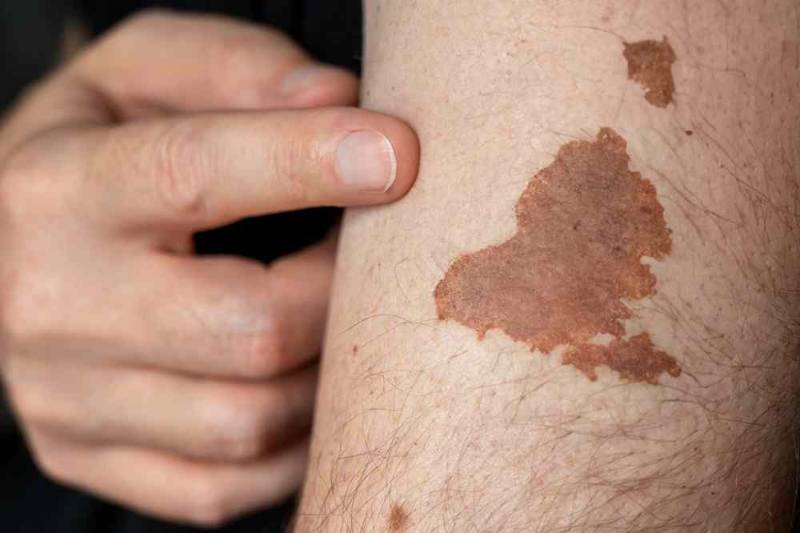
Skin is exposed daily to many harmful factors, especially ultraviolet (UV) rays from sunlight, which are considered the primary cause of skin cancer, one of the most aggressive and dangerous types of cancer.
In this article, we’ll explore the causes, types, complications, and most effective treatments for skin cancer.
What Is Skin Cancer?
Skin cancer is the most common and widespread type of cancer, resulting from the uncontrolled and abnormal growth of skin cells, forming unusual moles or skin lesions of varying shapes, colors, and sizes.
Several environmental and genetic triggers can cause mutations in skin cells, making them harder to control and increasing the risk of cancer.
Age and gender influence cancer prevalence—more common in women under 50 and in men over 50.
Despite its severity, early diagnosis and treatment of skin cancer significantly improve survival rates.
What are Symptoms of Skin Cancer?
Symptoms vary depending on the type of cancer and the affected cells, but one of the key warning signs is the appearance of abnormally shaped or discolored patches on the skin.
Common symptoms include:
- New moles that differ in color or features from existing ones
- Changes in existing moles in color, size, or shape
- Scaly or ulcerated skin patches
- Raised bumps with unusual texture or color
- Itchy, rough, or peeling areas of skin
What are Types of Skin Cancer?
1. Melanoma
- Most dangerous type (about 1% of skin cancers)
- Easily spreads to other parts of the body
- Arises from melanin-producing cells
- Common on chest and back in men, and on the legs in women
- Melanin gives skin its color and protects against UV rays
2. Basal Cell Carcinoma (BCC)
- Most common (about 80%)
- Originates in basal cells that replace old skin cells
- Appears on skin surface and rarely spreads to other tissues
3. Squamous Cell Carcinoma (SCC)
- Second most common type
- Usually occurs in sun-exposed areas
- Arises in squamous cells on the skin’s outer layer
- May also affect mucous membranes and lungs
- Highly treatable if diagnosed early
4. Cutaneous Lymphoma
- Caused by excessive growth of lymphocytes on the skin
5. Kaposi Sarcoma
- Appears as red, purple, or brown spots
- Affects the legs, face, feet, lymph nodes, genitals, and mouth
- May spread to internal organs like the stomach or throat, causing bleeding
6. Actinic Keratosis
- Precancerous or benign form
- Appears as small pink or red patches
- May develop into squamous cell carcinoma if left untreated
7. Merkel Cell Carcinoma
- Rare but extremely aggressive
- Originates in Merkel cells in the epidermis
- More common in fair-skinned older men
What are Characteristics of Cancerous Moles?
Although cancerous moles vary by type and location, they share common features:
- Irregular borders
- Asymmetrical shape
- Multiple colors in one mole
- Diameter larger than 6 mm
- Rapid growth with ongoing changes in shape and color
What are Causes of Skin Cancer?
Excessive UV exposure damages cellular DNA, leading to abnormal cell growth. Additional risk factors include:
- Jobs requiring prolonged sun exposure
- Tanning (natural or artificial)
- Living in hot or high-altitude regions
- Sun-sensitive skin prone to burns
- Having many moles
- Family history of skin cancer
- Weakened immune system (due to illness or medication)
- History of organ transplant
- Phototherapy treatments for skin conditions
- Low melanin levels (e.g., albinism)
- Repeated exposure to chemicals in cosmetics or cleaning products
How Is Skin Cancer Diagnosed?
Doctors examine suspicious moles and other areas using a dermatoscope and other diagnostic tools. Key methods include:
- Medical history review
- Skin biopsy: A tissue sample is analyzed under a microscope
- Imaging scans to assess lymph node involvement and cancer spread
What are Stages of Skin Cancer?
Skin cancer is categorized into two main types, each with its own stages:
Melanoma Stages:
- Stage 0: Confined to the epidermis
- Stage I: Invades the dermis; remains small
- Stage II: Larger tumor with symptoms (e.g., bleeding, crusting)
- Stage III: Spread to nearby tissues and lymph nodes
- Stage IV: Spread to distant organs
Non-Melanoma Stages:
- Stage 0: Confined to the outer epidermis
- Stage I: Reaches dermis; ≤2 cm
- Stage II: >2 cm but still localized
- Stage III: >3 cm with local tissue or bone invasion
- Stage IV: Spread to distant organs and tissues
Can Skin Cancer Be Cured?
Yes—most skin cancers are curable when detected early before they spread.
Late diagnosis or untreated cancer can spread quickly and become difficult to manage.
Survival rates for melanoma vary:
- 99% if caught early before reaching lymph nodes
- 66% after lymph node involvement
- 27% after spreading to distant organs
What are Skin Cancer Treatments?
Treatment depends on the cancer’s type, stage, size, and location, and may involve:
- Cryotherapy: Freezing cancer cells with liquid nitrogen
- Surgical removal: Including Mohs surgery for cosmetic areas
- Topical or intravenous chemotherapy
- Radiation therapy
- Immunotherapy / Biologic therapy to boost immune response
- Photodynamic therapy (PDT): Light-activated drugs to kill cancer cells
- Curettage and electrodesiccation: Scraping and burning cancerous tissue
What are the Benefits of Early Detection?
- Prevents malignant transformation of benign skin lesions
- Limits spread to lymph nodes or internal organs
- Increases treatment success and survival rates
Can Skin Cancer Be Prevented?
While full prevention isn’t guaranteed, risk can be reduced by:
- Avoiding sun exposure during peak hours
- Using sunscreen with SPF 30+, reapplying every 2 hours
- Avoiding tanning beds
- Wearing wide-brimmed hats, sunglasses, and long-sleeved clothing
- Regularly checking skin and visiting a dermatologist
Conclusion
Skin cancer is among the most common cancers, yet it is highly treatable in its early stages. Cancerous moles vary in appearance depending on type and location, but many risk factors are preventable. Early treatment is key to avoiding cancer spread and improving outcomes.
If you still need to consult a doctor regarding this condition, you can easily book an appointment through Vezeeta
Related Keywords
Specialized Doctors



References
American Cancer Society (ACS). Skin cancer – Types, causes, and treatment.
Retrieved from: https://www.cancer.org/cancer/skin-cancer.html
Mayo Clinic. Skin cancer – Symptoms and causes.
Retrieved from: https://www.mayoclinic.org/diseases-conditions/skin-cancer/symptoms-causes/syc-20377605
Skin Cancer Foundation. Types of skin cancer.
Retrieved from: https://www.skincancer.org/skin-cancer-information/
Rigel, D. S., et al. (2010). Cutaneous melanoma: Epidemiology, risk factors, pathogenesis, diagnosis, and treatment. Clinics in Dermatology, 28(5), 461–471.
Retrieved from: https://pubmed.ncbi.nlm.nih.gov/20920804/
National Cancer Institute (NCI). Skin cancer treatment (PDQ®) – Patient version.
Retrieved from: https://www.cancer.gov/types/skin/patient/skin-treatment-pdq
Specialized Doctors