Types of Skin Tinea and Their Treatment
Tinea is a skin condition caused by a fungal infection. It is divided into several types based on its characteristics and location. But what exactly is tinea? What causes it, and what are its complications? Can it be treated, or is it a chronic condition? Let’s explore the answers together.
What is Tinea?
Tinea (also known as ringworm) is a highly contagious fungal infection that affects the skin. It commonly appears on the feet, scalp, groin area, and under the breasts.
The fungi responsible for tinea thrive and multiply in warm, humid environments, which explains why it often affects the warmest areas of the body.
Is Tinea Contagious?
Yes, tinea is one of the most contagious skin conditions and can spread through:
- Direct contact with an infected person’s skin
- Sharing personal items
- Touching objects or surfaces that an infected person has come into contact with
What Are the Symptoms of Tinea?
The symptoms vary depending on the type and location of the infection. Each type has its own distinguishing features.
What are Types of Tinea?
Tinea is classified into several types based on where it appears:
1. Tinea Versicolor (White Tinea)
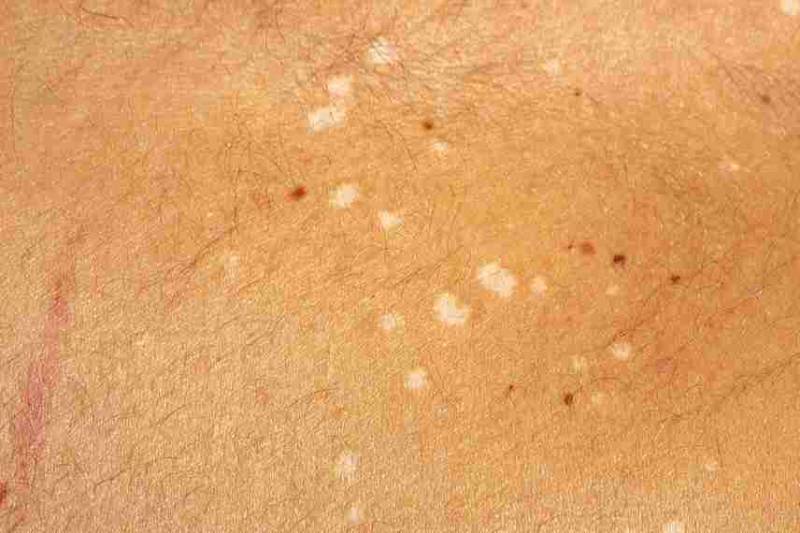
Also known as pityriasis versicolor or colored tinea, this is one of the most common types of fungal skin infections. It usually appears on oily skin, so it's more frequent in teenagers and young adults.
It appears as white patches on dark skin or darker patches on light skin, typically on the back and chest.
This type is not contagious, as it results from the overgrowth of Malassezia, a fungus that normally lives on the skin.
2. Tinea Capitis (Scalp Ringworm)
Presents as bald patches or red, scaly rashes. It mainly affects children aged 2–10 and is rare in adults.
It is highly contagious and can cause intense itching. In some cases, it spreads to other parts of the body or causes swollen lymph nodes in the neck due to an exaggerated immune response.
3. Tinea Imbricata
Common in developing countries, it presents as red-brown scaly bumps that gradually form concentric, ring-like patterns.
4. Tinea Corporis (Body Ringworm)
The most common tinea in children. It appears as circular, ring-shaped rashes anywhere on the skin and is more common in warm weather.
The rings are red with raised edges and a clearer center, often accompanied by itching.
5. Tinea Barbae (Beard Ringworm)
A fungal infection affecting the skin and hair follicles of the beard and mustache area.
It appears as red, painful, pus-filled nodules or plaques. Hair in the affected area becomes fragile and may fall out easily.
6. Tinea Nigra (Black Tinea)
This rare infection occurs when fungi enter through a wound, commonly found in tropical and subtropical regions.
It appears as brown or black spots, usually on the palms or soles, and is linked to contact with sewage water, soil, or decaying vegetation.
7. Tinea Pedis (Athlete’s Foot)
Occurs when feet remain moist for long periods — such as after bathing, swimming, or wearing tight shoes.
It presents as white patches between the toes, possibly with rashes, scaling, or blisters.
More common in teens and adults; less so in children.
8. Tinea Unguium (Nail Fungus)
Mainly affects adults and the elderly. It typically involves toenails, causing them to thicken, deform, and turn yellow.
9. Tinea Cruris (Jock Itch)
More common in men than women, especially in warm climates, and can be difficult to treat.
It presents as red, ring-like patches on the inner thighs or groin, causing pain and itching.
What are Causes of Tinea Infection?
Everyone is susceptible, as many fungi naturally live on the skin. However, they can overgrow in the presence of heat and moisture.
Risk factors include:
- Weakened immunity (due to illness or immunosuppressive medications)
- Poor nutrition
- Using closed, damp spaces or public pools
- Contact sports
- Poor personal hygiene
- Contact with infected individuals or animals
- Living in hot or humid environments
How is Tinea Diagnosed?
Diagnosis is typically based on:
- Medical history
- Visual examination of the rash, which often points to a specific tinea type
In some cases, the doctor may take a skin scraping for lab testing to confirm the diagnosis.
What are theTreatment Options for Tinea?
Treatment depends on:
- Location of the infection
- Severity
- Patient’s age
- Preferences and response to treatment
- Patient expectations
Topical antifungals (creams, gels, liquids, or medicated nail polish) are commonly prescribed.
Scalp and nail infections are the most difficult to treat and may require oral antifungal medications for several weeks.
When the infection is widespread or doesn’t respond to topical treatment, oral medications may be necessary.
Antifungal shampoos may be recommended for scalp tinea, while steroids may be used in cases with inflammation or secondary infection.
Success depends on:
- Following the prescribed dosage
- Not stopping treatment early
- Keeping the infected area clean and dry
How is “Red Tinea” Treated?
“Red tinea” often refers to tinea versicolor (white tinea) and is treated as follows:
- Mild cases: Topical antifungal creams such as clotrimazole, miconazole, selenium sulfide, or ketoconazole
- Severe cases: Oral antifungal medications such as fluconazole or itraconazole
How to Prevent Tinea?
To reduce the risk of infection in hot and humid conditions:
- Wear cotton socks and breathable shoes, and change socks daily
- Keep skin dry in areas with poor ventilation (groin folds, between toes)
- Use antiperspirants to reduce moisture in the armpits
- Air out your skin whenever possible
- Avoid wearing closed shoes in hot/humid areas like gyms or pools; opt for sandals
- Wash hands after touching shared surfaces
- Don’t share personal items
Conclusion
Tinea is a contagious skin condition that flourishes in heat and moisture and can affect nearly any part of the body.
Treatment depends on the location and severity, with most cases treatable using topical medications.
Proper hygiene and environmental precautions are key to preventing recurrence.
If you still need to consult a doctor regarding this condition, you can easily book an appointment through Vezeeta
Related Keywords
Specialized Doctors



References
Mayo Clinic. Ringworm (tinea) – Symptoms and causes. Retrieved from: https://www.mayoclinic.org/diseases-conditions/ringworm/symptoms-causes/syc-20353780
Centers for Disease Control and Prevention (CDC). Fungal diseases: Ringworm. Retrieved from: https://www.cdc.gov/fungal/diseases/ringworm/index.html
American Academy of Dermatology (AAD). Tinea (ringworm) of the skin. Retrieved from: https://www.aad.org/public/diseases/a-z/ringworm-skin
Wolff, K., Johnson, R., & Saavedra, A. (2014). Fitzpatrick’s Color Atlas and Synopsis of Clinical Dermatology. 7th Edition. McGraw-Hill Education.
Gupta, A. K., & Cooper, E. A. (2008). Update in antifungal therapy of dermatophytosis. Mycopathologia, 166(5-6), 353–367.
Retrieved from: https://link.springer.com/article/10.1007/s11046-008-9122-6
Specialized Doctors