

Selgon 20 mg tablets: uses, dosage, side effects and price
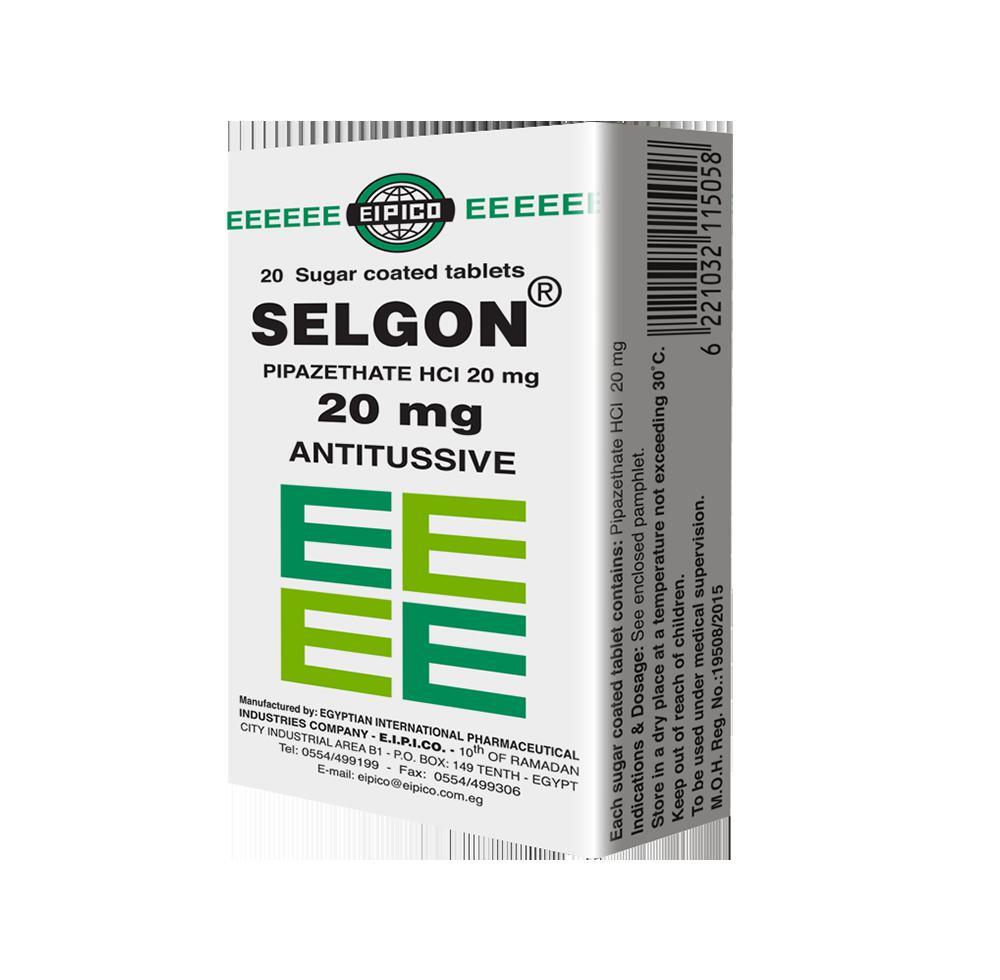
What is Selgon and what does it contain
Selgon is a cough suppressant medicine used mainly for dry, non-productive cough. The Selgon 20 mg tablet page on Vezeeta Pharmacy lists pipazethate as the active ingredient. Pipazethate, also written as pipazetate in some references, belongs to antitussive medicines, which means it helps reduce the urge to cough when the cough is dry, irritating, or spasmodic.
Selgon is not an antibiotic, not a bronchodilator, and not a mucolytic. This difference is important because cough treatment depends on the cause and type of cough. A dry cough may sometimes benefit from a cough suppressant, while cough with thick phlegm may need a different approach. If cough is associated with fever, wheezing, chest pain, shortness of breath, blood in sputum, or repeated attacks, the cause should be assessed rather than relying only on a cough medicine.
Local forms include Selgon 20 mg tablets, Selgon suppositories, and Selgon oral drops. The tablet pack contains 20 mg pipazethate per tablet. Suppositories and drops are different dosage forms and should not be interchanged without medical or pharmacist guidance, especially in children.
What is Selgon used for
Selgon is used to relieve dry cough, irritating cough, and spasmodic cough when suppressing the cough reflex is appropriate. It may be helpful when dry cough disturbs sleep, causes throat irritation, or becomes frequent after a cold. It does not treat the underlying cause by itself.
For persistent cough, recurrent cough, cough linked to asthma or allergy, smoker’s cough, or cough after a chest infection, identifying the cause is safer than repeated self-treatment. You can book a chest and respiratory doctor through Vezeeta if cough continues, returns often, or is associated with breathing difficulty.
Selgon should not be used to hide warning symptoms. Seek urgent care for cough with severe shortness of breath, blue lips, severe chest tightness, coughing blood, high persistent fever, dehydration, repeated vomiting, or noisy breathing.
Selgon dosage and how to use it
For Selgon tablets, adult dosing should follow the leaflet or the doctor’s or pharmacist’s instructions. A commonly listed adult regimen is 1 to 2 tablets up to 3 times daily when needed, but the right dose depends on age, symptom severity, other medicines, and medical history. Do not exceed the prescribed or leaflet dose.
Children should not be given adult Selgon tablets unless a doctor or pharmacist confirms that the form and dose are suitable. For younger children, suppositories or oral drops may be considered only when appropriate and according to age-specific instructions.
Before or after food
Selgon tablets may be taken with or without food. If stomach upset or heartburn occurs, taking the tablet after food may be easier on the stomach. Swallow the tablet with water unless the leaflet gives different instructions.
Missed dose
If you miss a dose and still need cough relief, take it when remembered unless it is almost time for the next dose. Do not double doses to compensate for a missed dose.
How long does Selgon take to work
Cough suppressants usually start helping within a relatively short time, but the exact onset of Selgon varies by dosage form, cough severity, and individual response. Some people feel improvement on the same day, while cough caused by allergy, asthma, bronchitis, reflux, smoking, or infection may continue until the cause is treated.
If Selgon does not reduce cough, or if symptoms worsen, medical reassessment is needed. Do not keep increasing the dose to get a stronger effect.
What are the side effects of Selgon
Selgon may cause side effects in some people. Reported effects include drowsiness, dizziness, nausea, vomiting, stomach discomfort, heartburn, and sometimes insomnia. Drowsiness matters for people who drive, operate machinery, study, or work in roles that require alertness.
Stop using the medicine and seek medical advice if you develop rash, swelling of the face or throat, breathing difficulty, severe dizziness, fainting, unusual agitation, or clearly worsening cough.
Urgent symptoms
Urgent assessment is needed if cough is accompanied by shortness of breath, wheezing, chest pain, blood in sputum, high persistent fever, severe weakness, dehydration, bluish lips, or severe symptoms in a young child.
Contraindications and precautions
Do not use Selgon if you are allergic to pipazethate or any component of the product. If a previous dose caused swelling, rash, severe dizziness, or breathing difficulty, do not take it again unless a doctor evaluates the reaction.
Use caution and ask a doctor before taking Selgon if you have asthma, COPD, chronic lung disease, liver disease, kidney disease, a history of severe drug allergy, or cough with a large amount of mucus. Suppressing a productive cough may be unsuitable in some chest infections because mucus may need to be cleared.
Avoid alcohol and other sedating substances while taking Selgon if it makes you sleepy. Do not drive until you know how it affects you.
Selgon drug interactions
Specific interaction data for pipazethate are limited, so tell your doctor or pharmacist about all medicines, supplements, and herbal products you use. Extra caution is needed with sleeping pills, sedatives, opioid pain medicines, anti-anxiety medicines, sedating antihistamines, alcohol, and other cough or cold products.
Do not combine several cough medicines at the same time unless a healthcare professional advises you. Some combinations may duplicate ingredients, increase drowsiness, or be unsuitable if mucus is present.
Selgon during pregnancy and breastfeeding
There is not enough reassuring clinical information to consider Selgon automatically safe during pregnancy or breastfeeding. Pregnant or breastfeeding women should use it only after medical advice, especially during the first trimester or when breastfeeding a newborn or premature infant.
Depending on the cause of cough, non-medicine measures such as fluids, humidified air, avoiding smoke, and treating nasal drip or reflux may be safer starting points.
Can Selgon be taken every day and long term
Selgon is usually intended for short-term relief of dry cough, not daily long-term treatment. A cough that needs a suppressant every day may be related to asthma, allergy, chronic bronchitis, reflux, smoking-related airway irritation, medication side effects, or another condition that needs diagnosis.
If cough lasts more than a few days, repeatedly returns, or often affects sleep, consult a chest specialist rather than using Selgon continuously.
What are the alternatives to Selgon
Alternatives depend on the type and cause of cough. For dry cough, a doctor or pharmacist may suggest another antitussive such as a dextromethorphan-containing product or another local cough suppressant. For cough with phlegm, an expectorant or mucolytic may be more suitable. Allergic cough may need allergy treatment, while asthma-related cough may require inhaled medicines.
Do not choose an alternative only by brand name. The right option depends on whether cough is dry or productive, the patient’s age, pregnancy or breastfeeding status, other diseases, and warning symptoms.
Selgon price in Egypt
The price of Selgon 20 mg tablets in Egypt may change according to official pricing updates and pharmacy availability. Check the current availability of Selgon 20 mg 20 tablets on Vezeeta Pharmacy before ordering.
Frequently asked questions
What is Selgon?
Selgon is an antitussive medicine containing pipazethate. It is used to calm dry, irritating cough.
What are Selgon tablets used for?
Selgon tablets are used mainly for dry cough in adults or older patients when a cough suppressant is appropriate.
What is the adult dose of Selgon tablets?
A commonly listed adult regimen is 1 to 2 tablets up to 3 times daily, but you should follow the leaflet, doctor, or pharmacist instructions.
Can Selgon tablets be taken before food?
Yes. They may be taken with or without food. Taking them after food may reduce stomach discomfort.
Does Selgon cause drowsiness?
Yes, Selgon may cause drowsiness or dizziness in some people. Avoid driving and alcohol if you feel sleepy.
Is Selgon a mucolytic?
No. Selgon calms dry cough; it does not dissolve mucus. Productive cough may need a different medicine.
Is Selgon a bronchodilator?
No. It does not open the airways like asthma inhalers. Wheezing or shortness of breath needs medical assessment.
Selgon suppository from what age?
Local pharmacy information commonly describes Selgon suppositories for children older than 2 years, but the child’s doctor or pharmacist should confirm suitability and dose.
When does Selgon suppository start working?
The onset varies. Relief may occur within a short time, but persistent symptoms need medical review.
What is the difference between Selgon suppository and Coughsed?
Selgon suppository contains pipazethate for dry cough suppression. Coughsed products contain different ingredients for cold and cough symptoms, so they are not identical substitutes.
Can pregnant women take Selgon?
Pregnant women should not take Selgon unless a doctor recommends it after weighing benefits and risks.
Can Selgon be used for children?
Children need age-appropriate forms and doses. Do not give adult tablets to a child without professional guidance.
Medical disclaimer
This article is for medical education only and does not replace consultation with a doctor or pharmacist. Do not start, stop, or change any medicine based only on online information. Seek urgent care for severe or worsening symptoms.
Specialized Doctors



References
- https://www.vezeeta.com/en-eg/pharmacy/selgon-20-mg-20-tablet
- https://www.drugs.com/international/selgon.html
- https://altibbi.com/%D8%A7%D9%84%D8%A7%D8%AF%D9%88%D9%8A%D8%A9/%D8%B3%D9%8A%D9%84%D8%BA%D9%88%D9%86
- https://chefaa.com/blog/%D8%B3%D9%8A%D9%84%D8%AC%D9%88%D9%86-selgon/
Specialized Doctors


