Is Alopecia Areata Contagious? What Are Its Symptoms and Treatment?
Hair is a gateway to beauty and plays a major role in improving mental health and boosting self-confidence.
Therefore, developing alopecia can cause significant psychological complications in addition to the physical symptoms.
In this article, we explore the causes, symptoms, and treatments of alopecia — and whether laser therapy can really treat it, as some claim.
What Is Alopecia Areata?
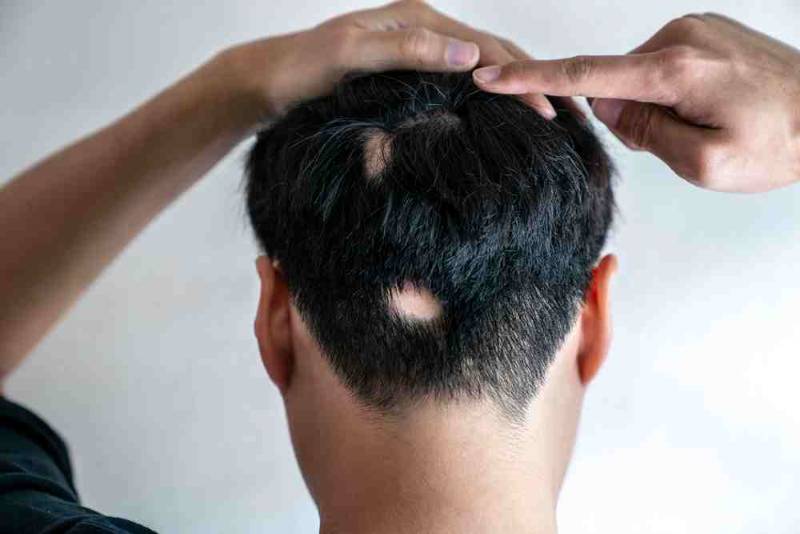
Alopecia areata is an autoimmune disease in which the body’s immune system attacks hair follicles, leading to the appearance of hairless patches.
It can affect both genders and any area of the body, though it’s most common on the scalp.
The severity of the condition varies widely:
- Some people develop small bald spots.
- Others experience large, noticeable patches.
- In rare cases, complete loss of hair may occur on the scalp or entire body.
What are Types of Alopecia?
The classic form presents as bald patches surrounded by healthy hair. Less common types include:
- Alopecia Totalis – Total hair loss on the scalp.
- Alopecia Universalis – Complete hair loss across the body and scalp.
- Ophiasis Pattern – Hair loss along the lower sides and back of the scalp.
- Diffuse Alopecia – Widespread thinning without distinct patches.
What are Symptoms of Alopecia?
Alopecia areata often begins between ages 25–36. Common symptoms include:
- Small, smooth bald patches.
- Gradual enlargement of the affected area.
- Cyclical regrowth and loss in different areas.
- Rapid hair loss over a short period.
Additional signs may include:
- Nail brittleness or pitting.
- Itching or burning sensation on the scalp.
- Regrowth of gray or white hair in bald patches.
What are Causes of Alopecia?
The condition occurs when the immune system mistakenly identifies hair follicles as foreign, attacking them and causing hair to fall out.
While the exact cause is unknown, several risk factors are linked to its development:
- Genetics – A family history of alopecia or other autoimmune diseases increases risk.
- Severe emotional stress – Can trigger an episode within 3–5 months.
- Underlying health issues – Such as vitiligo, thyroid disease, Down syndrome, or seasonal allergies.
- Nutritional deficiencies – Especially in iron, biotin, or vitamin D.
- Certain medications – Like nivolumab used in cancer treatment.
Is Alopecia Contagious?
No. Alopecia is not contagious and cannot be transmitted from one person to another.
It results from an individual’s immune dysfunction, not from infection.
How Is Alopecia Diagnosed?
A dermatologist typically diagnoses the condition through a clinical examination of the affected areas, noting the pattern and extent of hair loss.
Sometimes, additional tests may be needed to rule out other causes of hair loss, such as:
- Blood tests
- Scalp biopsy
What are Treatment Options for Alopecia Areata?
While alopecia cannot be permanently cured, treatments can stimulate regrowth and slow down hair loss.
Topical Treatments
- Anthralin – Induces skin irritation to promote regrowth.
- Minoxidil – Often shows results in 4–6 months.
- Topical corticosteroids – Reduce inflammation; available in cream, lotion, or ointment forms.
- Topical immunotherapy – Uses specific chemicals to trigger a mild allergic reaction and stimulate hair regrowth. Results may take up to 6 months.
Oral Medications
Used for more severe cases, but may cause side effects:
- Immunosuppressants
- Corticosteroids
- JAK inhibitors (Janus kinase inhibitors)
Steroid Injections
Corticosteroids can be injected directly into bald areas every 1–2 months to promote regrowth.
Laser Therapy for Alopecia
Low-level laser therapy (LLLT) has shown effectiveness in stimulating hair follicles and accelerating regrowth, making it one of the fastest options for treating alopecia.
It works by targeting affected areas with specific wavelengths of ultraviolet light, promoting healing and regeneration.
Can Alopecia Be Treated at Home?
While not proven to cure the condition, some home remedies may support medical treatments:
- Eat a balanced diet rich in vitamins and minerals.
- Take supplements like biotin and zinc.
- Massage onion juice into affected areas.
- Use essential oils (e.g., castor, coconut, tea tree oil).
- Avoid emotional stress.
- Stay away from chemical-based hair products.
- Wear a hat outdoors to protect bald areas from sun exposure.
- Try probiotics or acupuncture.
Conclusion
If you suffer from alopecia, several treatment options are available depending on the severity of your condition and personal preferences.
Early intervention increases the chances of slowing the disease’s progression and restoring your hair’s appearance.
If you still need to consult a doctor regarding this condition, you can easily book an appointment through Vezeeta
Related Keywords


References
Mayo Clinic. Alopecia Areata: Symptoms & Causes.
Available at: https://www.mayoclinic.org
American Academy of Dermatology (AAD). Alopecia Areata: Diagnosis and Treatment.
Available at: https://www.aad.org
Cleveland Clinic. Alopecia Areata Overview.
Available at: https://my.clevelandclinic.org
MedlinePlus. Alopecia Areata.
Available at: https://medlineplus.gov
National Health Service (NHS). Alopecia Areata.
Available at: https://www.nhs.uk