Symptoms of Thyroid Disorders in Children and Newborns | Causes and Treatment of Hypothyroidism
What are the functions of the thyroid gland?
The thyroid gland plays an important role in regulating the body’s metabolic process by secreting a group of hormones responsible for this function, in order to produce the energy needed for the body’s various processes.
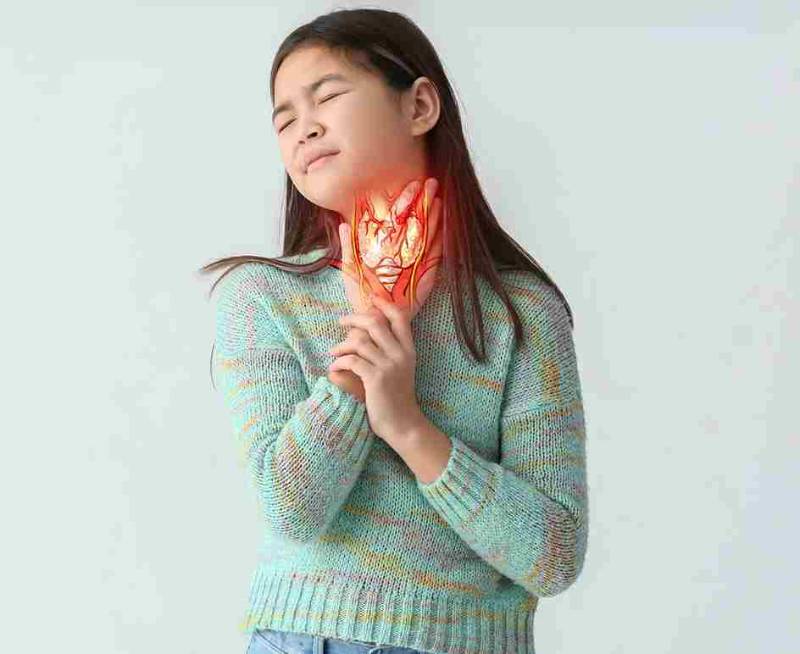
The gland is located in the front of the neck, directly under the skin, and extends on both sides of the trachea in a shape resembling butterfly wings. When it becomes enlarged, this is noticeable.
The function of the thyroid gland is completed with the help of the pituitary gland, which monitors the level of thyroid hormones in the blood and alerts it by releasing thyroid-stimulating hormone (TSH) when it detects any hormonal imbalance.
What are the symptoms of thyroid disorders in children?
Symptoms vary depending on the type of disorder, but common signs include:
- Slow physical growth (short stature)
- Persistent fatigue and excessive sleepiness
- Dry skin and brittle nails
- Chronic constipation
- Difficulty concentrating and poor academic performance
What are the symptoms of thyroid disorders in infants?
Some parents become anxious after childbirth, especially when they learn that the reason for taking a blood sample from the newborn’s heel is to screen vital functions and detect thyroid disorders. This raises urgent questions: When do thyroid symptoms appear in infants? And what if the test confirms that the baby is affected?
In fact, symptoms of thyroid disorders (both underactive and overactive) vary from one infant to another. However, cases of hypothyroidism are more common and widespread than cases of hyperthyroidism.
Symptoms may not be clearly evident in the first few days, but the following signs should be monitored:
- Prolonged jaundice: Yellowing of the skin and eyes lasting longer than usual
- Poor feeding: Reduced desire to feed
- Lethargy: The infant sleeps excessively and does not cry for feeding
- Abdominal distension: Often accompanied by an umbilical hernia
- Hoarse crying voice
What are the symptoms of hyperthyroidism in newborns and children?
As mentioned earlier, hyperthyroidism is rare and may cause one of the following symptoms:
- Increased heart rate
- Excessive irritability and restlessness
- Weight loss despite a good appetite
- Bulging eyes or enlargement of the neck
- Frequent diarrhea
What are the causes of thyroid disorders?
Hypothyroidism is uncommon and may be present at birth (a congenital problem) or acquired over time. Its causes include:
- Hashimoto’s disease: An autoimmune disease that affects thyroid tissue, causing inflammation and damage over time. It is one of the most common causes of thyroid disorders in children.
- Absence of the thyroid gland or failure of normal thyroid development
- Disorders or damage to the pituitary gland in the brain, which affects its role in monitoring thyroid activity and hormone levels in the blood, as well as the secretion of thyroid-stimulating hormone when these levels are abnormal
- Taking certain medications such as lithium
- Treating the child with radiation or exposure to radioactive iodine, which damages the thyroid gland
- Temporary thyroiditis associated with viral infections
- Low or high iodine levels
- Surgical removal of the thyroid gland
What is a thyroid test and what is its role in diagnosing thyroid disorders?
A thyroid test aims to measure the levels of hormones secreted by the thyroid gland (thyroxine and triiodothyronine), as well as thyroid-stimulating hormone (TSH), which is secreted by the pituitary gland as a way to increase or decrease thyroid hormone levels to bring them back to normal.
What is thyroid-stimulating hormone (TSH)?
TSH is secreted by the pituitary gland when thyroid hormone levels in the blood are low, stimulating the thyroid gland to produce more hormones to reach normal levels.
The pituitary gland may fail to secrete TSH due to certain problems such as brain injury or the use of some medications, despite the thyroid gland being healthy. This leads to central hypothyroidism and low TSH levels in thyroid test results.
What is a thyroxine (T4) test?
A thyroxine test helps determine its blood levels, which indicate hypothyroidism when low and hyperthyroidism when elevated.
Measuring the level of antibodies produced by the immune system against thyroid cells also helps in diagnosing Hashimoto’s disease.
How can thyroid disorders in children be treated?
The doctor prescribes medications to treat thyroid disorders after identifying the problem and determining the cause of thyroid symptoms in children.
What is the treatment for hyperthyroidism in newborns and children?
Some medications help treat the causes and symptoms of thyroid disorders in children, such as:
- Anti-thyroid medications to regulate and reduce thyroid activity and hormone levels; treatment may last up to two years
- Administration of radioactive iodine solution, which helps shrink the thyroid gland and reduce its activity over time
- Treating thyroid symptoms in children using beta-blockers
- Surgical removal of the thyroid gland as a permanent solution for hyperthyroidism, followed by giving the patient tablets containing thyroid hormone
What medications are used to treat hypothyroidism?
Treatment aims to regulate hormone levels in the blood and restore normal body functions. Therefore, the doctor recommends taking tablets containing these hormones. The dose is usually one tablet daily, taken about 30 minutes before eating.
The doctor also advises not to skip doses and to take the medication as soon as it is remembered, along with regular testing of hormone levels to determine whether the dose needs adjustment.
In addition, taking iron supplements, vitamins, and calcium is prohibited while using thyroid hormone tablets.
What are the complications of thyroid diseases in children?
Many permanent complications may appear if the thyroid disorder is not properly treated. The most prominent include:
- Delayed puberty and delayed onset of menstruation
- Slow growth and failure to reach normal height, sometimes resulting in dwarfism
- Permanent heart problems, including high blood pressure, heart rhythm disorders, and sometimes heart failure
- Impaired fertility
- Development of myxedema and skin swelling
- Thyroid cancer in some cases
In conclusion, early diagnosis of the signs and symptoms of thyroid disorders in children is essential to avoid complications that may affect the child’s quality of life or prevent them from keeping up with their peers. Adhering to medication doses according to the doctor’s recommendations also helps your child reach a safe outcome.
If you still need to consult a doctor about this condition, you can easily book an appointment through Vezeeta.
Related Keywords
Specialized Doctors

Hesham Elborolossy
Professor of Internal Medicine, Diabetes, Endocrinology and Vascular Medicineat Kasr Al-Ainy - Cairo University

Mohamed Hassan
Consultant in general internal medicine, diabetes, endocrinology and digestive system diseases - Ain Shams Medicine

Amal Nada
Professor And Senior Consultant For Diabetes And Endocrinology At The Faculty Of Medicine/Fellow of the Royal College of Physicians in Ednera - holds a British certificate in Endocrinology and Diabetes
References
- https://www.mayoclinic.org/diseases-conditions/hypothyroidism/symptoms-causes/syc-20350284
- https://my.clevelandclinic.org/health/diseases/8541-thyroid-disease
- https://www.healthychildren.org/English/health-issues/conditions/Glands-Growth-Disorders/Pages/Acquired-Hypothyroidism-in-Children.aspx
- https://www.nhs.uk/baby/newborn-screening/blood-spot-test/
- https://www.thyroid.org/hypothyroidism-children-adolescents/
Specialized Doctors
Hesham Elborolossy
Professor of Internal Medicine, Diabetes, Endocrinology and Vascular Medicineat Kasr Al-Ainy - Cairo University
Mohamed Hassan
Consultant in general internal medicine, diabetes, endocrinology and digestive system diseases - Ain Shams Medicine
Amal Nada
Professor And Senior Consultant For Diabetes And Endocrinology At The Faculty Of Medicine/Fellow of the Royal College of Physicians in Ednera - holds a British certificate in Endocrinology and Diabetes