Endometrial Thickening: When Does It Become a Warning Sign for Your Gynecological Health?
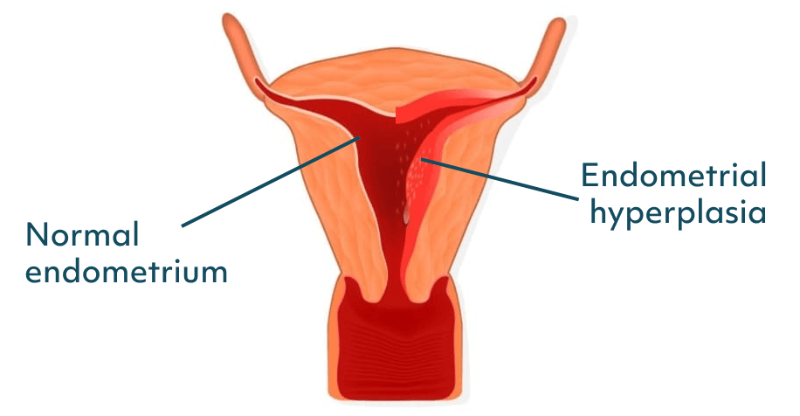
The endometrium is the inner lining of the uterus, and its thickness naturally changes throughout the menstrual cycle in preparation for pregnancy. However, in some cases, the endometrium may become abnormally thick—a condition known medically as endometrial hyperplasia. This can be either benign or, in some cases, a warning sign of a more serious condition like uterine cancer.
In this article, we’ll explore the causes, symptoms, risk factors, diagnostic methods, and treatment options for endometrial thickening.
What Is Endometrial Thickening?
It’s an abnormal increase in the thickness of the uterine lining due to excessive growth of endometrial cells caused by elevated estrogen levels without sufficient progesterone to balance it.
What Are the Causes of Endometrial Thickening?
- Hormonal imbalance: especially between estrogen and progesterone.
- Polycystic ovary syndrome (PCOS).
- Obesity: excess fat increases estrogen levels.
- Hormone replacement therapy without progesterone.
- Menopause or perimenopause.
- Certain medications like Tamoxifen.
- Ovarian tumors that affect hormone secretion.
What Are the Symptoms of Endometrial Thickening?
- Abnormal vaginal bleeding (heavy, prolonged, or frequent periods).
- Bleeding between menstrual cycles.
- Pelvic pain.
- Delayed or difficult conception (infertility in some cases).
- Irregular menstrual cycles.
What Are the Types of Endometrial Thickening?
- Without abnormal cells (non-atypical): usually benign.
- With abnormal cells (atypical hyperplasia): may indicate a risk of developing cancer later.
When Should You Be Concerned About Endometrial Thickening?
If you experience:
- Postmenopausal bleeding.
- Persistent or irregular bleeding.
- Detection of abnormal cells in a biopsy.
How Is Endometrial Thickening Diagnosed?
- Transvaginal ultrasound: to measure endometrial thickness.
- Endometrial biopsy.
- Hysteroscopy.
- Hormone level testing.
What Are the Treatment Options?
Treatment depends on the type of thickening, age, and pregnancy plans:
- Hormonal therapy: e.g., progesterone to regulate endometrial growth.
- Hormonal IUD (intrauterine device).
- Dilation and curettage (D&C): to remove excess tissue.
- Surgery: in cases with atypical cells or suspected cancer.
- Lifestyle changes: weight loss and managing blood sugar.
Does Endometrial Thickening Affect Fertility?
Yes, it may prevent the implantation of the fertilized egg, making it difficult to achieve pregnancy.
Prevention Tips and Recommendations
- Maintain a healthy weight.
- Have regular medical check-ups, especially if you have irregular periods.
- Use hormonal therapies only under medical supervision.
- Get regular endometrial screenings, particularly after age 40.
Conclusion:
Endometrial thickening is a common condition that can affect women at any age. While it may result from natural hormonal changes, it can also indicate underlying health concerns requiring attention. Being aware of symptoms like heavy or irregular bleeding and seeking early medical advice are key to avoiding complications. Diagnosis typically involves clinical evaluation and ultrasound, and some cases may require a biopsy. Treatment ranges from lifestyle changes to hormone therapy or surgery, depending on the severity and cause.
If you still need to consult a doctor regarding this condition, you can easily book an appointment through Vezeeta
Related Keywords



References
American College of Obstetricians and Gynecologists (ACOG)
Practice Bulletin on endometrial hyperplasia and cancer risk.
Website: https://www.acog.org/clinical/clinical-guidance/practice-bulletin/articles/2015/02/endometrial-hyperplasia
Mayo Clinic – Endometrial Hyperplasia
Overview of causes, symptoms, diagnosis, and treatment of endometrial thickening.
Website: https://www.mayoclinic.org/diseases-conditions/endometrial-hyperplasia/symptoms-causes/syc-20352077
National Health Service (NHS) UK
Information on endometrial hyperplasia and abnormal uterine bleeding.
Website: https://www.nhs.uk/conditions/endometrial-hyperplasia/
UpToDate – Endometrial Hyperplasia
Detailed clinical resource covering diagnosis, pathology, and management.
Website: https://www.uptodate.com/contents/endometrial-hyperplasia
World Health Organization (WHO) Classification of Endometrial Hyperplasia
Guidance on histopathological classification of endometrial hyperplasia.
Website: https://www.who.int/reproductivehealth/publications/cancers/endometrial-hyperplasia/en/
Journal Article: "Endometrial Hyperplasia: Diagnosis, Classification and Clinical Management"
Human Pathology, 2019; Volume 88, Pages 31-41.
DOI: 10.1016/j.humpath.2019.02.004