Restless Legs Syndrome
Description
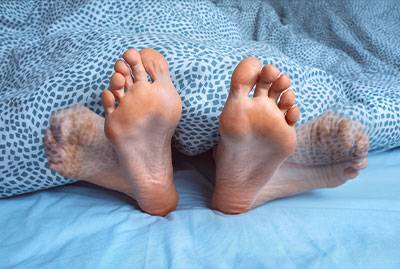
Restless legs syndrome is a neurological disorder that causes irresistible argue to move legs due to uncomfortable sensations. Symptoms usually occur at night which causes sleep disturbance and affects daily performance and quality of life. It’s a common condition that affects 5-15% of people. This disorder affects more women than men, particularly pregnant women who have a disease incidence that is three times higher than non-pregnant ones.
Symptoms
Symptoms vary from one person to another in severity and frequency. They get worse at night and may include :
- Uncomfortable sensations in the legs (ex: aching, throbbing, itching, crawling, pulling)
- Extension of uncomfortable sensations to other parts such as arms, head, and chest
- Sleep disturbance
- Daytime sleepiness that affects the daily performance
- Worsening symptoms during rest
- Relief of symptoms by moving legs or other affected parts
Visit a Neurologist to be diagnosed and treated properly, If you or one of your family have any of these symptoms
Recommended Doctors
View MoreCauses
The cause of this condition is still unknown, but it’s related to genetic factors and can be inherited in some families.
Many medical problems are associated with the development of restless legs syndrome such as:
- Iron deficiency
- Pregnancy
- End-stage kidney disease
- Diabetes
- Hyperthyroidism
- Rheumatoid arthritis
- Fibromyalgia
- Inflammation of nerves
- Spinal cord diseases
- Certain medications (ex: Some antidepressants)
- Alcohol
- Caffeine
Diagnostics
Diagnosis depends on the symptoms and medical history and knowing the history of sleep patterns in addition to other diagnostic tools such as :
- Physical examination: To exclude any other condition causing these symptoms.
- Actigraphy: Using a small electronic device to monitor the sleep parameters and motor activity during sleep and wakefulness.
- Polysomnography: A type of sleep study in which several parameters such as brain waves, heart rate, and oxygen levels are monitored during sleep to help in diagnosis.
Treatment
Treatment is not recommended in patients with mild symptoms. Treating the underlying disease that causes this condition relieves the symptoms (ex: giving iron supplementations to patients suffering from iron deficiency). Other pharmacological and non-pharmacological treatment methods can be used to relieve the symptoms.
Lifestyle modifications :
- Avoid using tobacco and alcohol
- Maintaining a regular sleep pattern
- Doing exercise
- Massaging the legs
- Taking warm bath
- Using ice packs or heating pads
Medications :
- IRON : For patients with iron deficiency.
- Antiseizure medications (ex : Gabapentin, Pregabalin) : To relieve the sensory symptoms due to neuropathy.
- Dopamine agonists (ex : Ropinirole, Pramipexol) : To increase the dopamine level.
- Benzodiazepines (ex : Clonazepam, Lorazepam) : To relieve anxiety and help in sleeping.
- Opioids (ex : Oxycodone, Methadone) : To relieve the pain.