Esophageal cancer
Description
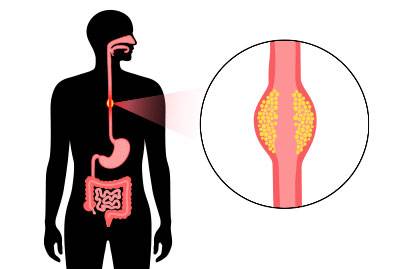
Esophageal cancer is a disease in which the lining of the esophagus develops malignant cancer cells.
It is the eighth most prevalent cancer type in the world and the sixth most common cause of cancer-related deaths.
Men experience it more frequently than women do. In comparison to women, men are two to eight times more affected.
Symptoms
Affected people may experience:
- Difficult or painful swallowing
- Cough
- Hoarseness
- Weight loss
- Nausea
- Vomiting
- Loss of appetite
- Fatigue
- Chest pain
- Vomiting blood
- Bloody stool
If you experienced symptoms of esophageal cancer,
visit your gastroenterologist who may direct you to an oncologist.
Recommended Doctors
View MoreCauses
There’s no exact known cause for the development of esophageal cancer, but several risk factors are associated with the disease development.
- Family history
- Male gender
- Obesity
- Gastro-esophageal reflux
- Barret’s esophagus- due to irritation of the lower esophagus which converts normal cells to malignant ones
- Smoking
- Alcohol
Diagnostics
Different tests and procedures may be used to diagnose and determine the stage of esophageal cancer such as:
Barium swallow test: A liquid containing barium is ingested to line the esophagus, and then a series of X-ray photographs are obtained to show the hollow route inside the esophagus.
Endoscopy and biopsy: This procedure includes inserting a tiny tube-shaped tool with a camera into the esophagus to extract part of the tissue and test it in a laboratory to diagnose the cancer.
Imaging tests and procedures: This includes different types and techniques of scans and procedures to know if cancer has spread to other organs or not (ex: Computed tomography “CT- scan” and Positron emission tomography “PET scan” in addition to other procedures that uses a camera to check for the chest and abdomen).
Staging
The staging of esophageal cancer depends on the tumor size, involvement of lymph nodes, and spreading to other parts of the body. It has stages from zero to 4, with stage 4 being the most severe stage and which indicates the spreading of cancer to different organs.
Treatment
Esophageal cancer is difficult to treat however, survival rates are improving. choosing the appropriate treatment depends on the size of the tumor, location, spreading, and the patient's general health.
Treatment options are:
Endoscopic resection: Removing the tumor by using the endoscope when the tumor is small and in its early stages and confined in the mucosa only. This can be combined by using radiation to kill cancer cells.
Surgery: Removing the tumor by removing part of the esophagus only or with part of the upper stomach as well.
Chemotherapy: A type of medicine that kills cancer cells. It is used before surgery to make cancer smaller, prevent cancer recurrence, or relieve the symptoms of the disease in advanced stages. It may be used in combination with radiation therapy, especially if doing the surgery is not applicable (ex: Fluorouracil, Cisplatin, Epirubicin, Capecitabine).
Radiotherapy: It is using radiation to kill cancer cells. This procedure is usually used in combination with chemotherapy in the early stages or to relieve symptoms in advanced stages.
Targeted therapy: medicines that target a specific gene in case of esophageal cancer (ex: Trastuzumab).
Palliative therapy: This includes chemotherapy and radiotherapy and is used to relieve the symptoms and improve the quality of life when there’s no hope for curing cancer (ex: Irinotecan, Capecitabine).