Allergic and Environmental Asthma
Description
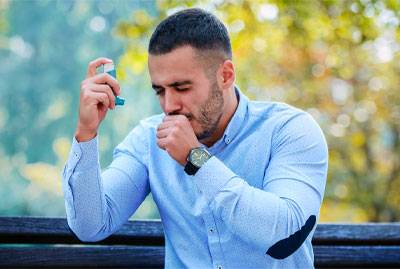
Asthma is a major chronic noncommunicable disease in which the small airways in the lungs become inflamed and narrow causing a variety of symptoms.
It affects 8.4% of adults and 5.8% of children around the world, and it's more common among females.
Allergic asthma is the most common type of asthma, its frequently developed in children and coexists with other comorbidities such as allergic rhinitis and atopic dermatitis.
In this type, airway inflammation and asthma symptoms are caused by sensitization to aeroallergens.
Symptoms
Asthma patients suffer from repeated episodes of :
- Coughing
- Wheezes
- Breathlessness
- Chest tightness
These symptoms increase at night or early morning and are usually reversible. but they can suddenly get worse which is defined as an asthma attack.
Visit your Chest and Respiratory doctor if you or your child has symptoms of asthma to be diagnosed properly
Recommended Doctors
View MoreCauses
The likelihood of having asthma has been linked to a variety of factors.
- Family history of asthma or other atopic diseases- especially if a close relative has asthma.
- Having other allergic conditions- such as urticaria and allergic rhinitis.
- Environmental allergens and irritants.
It's important to identify the triggers for the symptoms as :
- Cockroaches
- Animal dander
- Molds
- Pollen
- Exposure to tobacco smoke
- Exposure to chemicals
- Dust
Diagnostics
Check with your doctor if you notice symptoms. The following tests and procedures may be used:
Spirometry : The patient blows air into a machine that measures the amount the patient can inhale and how rapidly he can exhale it.
FeNO test : The patient breathes into a machine that measures nitric oxide, which is a marker for lung inflammation.
Peak-flow test : It may be done multiple times over a few weeks to evaluate if the ability to exhale quickly changes. The patient blows into a handheld gadget that measures this.
Skin prick test : An allergen is applied to your skin in a little amount to check if it causes a reaction.
Blood tests : A blood sample is tested to know allergens that trigger asthma symptoms.
Treatment
There’s no cure for asthma but symptoms can be controlled by different measures.
The patient should avoid the cause that triggers his asthma symptoms, for example closing the windows, using an air conditioner, and limiting outdoor time in pollen season for patients triggered by pollens.
Your doctor may prescribe you :
Inhalers : The type of inhaler may differ according to the case.
- Reliever inhaler: Used for acute symptoms as salbutamol.
- Controller inhaler: It contains corticosteroids and is considered the mainstay for asthma control (ex: Fluticasone propionate). Or it can be a combination of inhaled corticosteroids with another type of medication (ex: Salmeterol & fluticasone, Formoterol & mometasone, and Budesonide & formoterol).
- Combination: Contains both reliever and corticosteroids (ex: Salbutamol & beclomethasone).
Tablets : May be used as add-on therapy if the patient is not well controlled (ex: Montelukast, Zafirlukast, Theophylline).
Biologic therapy : Reserved for uncontrolled patients with documented allergies (ex: Omalizumab).