Huntington's disease
Description
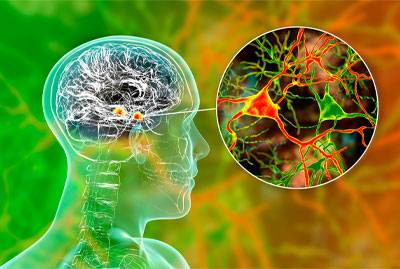
Huntington’s disease is a rare progressive inherited disease that causes degeneration of the brain’s nerve cells. It results in motor, behavioral, cognitive, and psychiatric disturbances, and dementia. It affects middle-aged people (30-50 years). It’s a rare disease with an incidence of 2.7 per 100,000 only worldwide. The disease incidence is equal between men and women, but women usually experience more severe symptoms than men.
Symptoms
- Involuntary movements especially in fingers, toes, and face
- Impaired walking and balance
- Difficulty in talking and swallowing
- Muscle rigidity
- Difficulty in standing and starting movements
- Frequent falls
- Depression
- Loss of interest in almost all activities
- Low self-esteem
- Feeling guilty
- Suicide
- Anxiety and irritability
- Difficulty in organizing or planning tasks
- Misjudgment that leads to complicated situations
- Loss of flexibility in thinking
- Language problems
- Memory impairment
- Sleep disturbances
- Weight loss
Visit a Neurologist to be diagnosed and treated properly, If you or one of your family have any of these symptoms
Recommended Doctors
View MoreCauses
It’s caused by an inherited gene mutation that is transferred from the parents to their children. It’s a genetic disease that is caused by having only one copy of the mutated gene.
Diagnostics
Diagnosis depends on the presenting symptoms and a parent who has the disease.
- Magnetic resonance imaging (a procedure in which magnetic fields are used to produce an image of the brain).
- Genetic testing) A test that examines the genes to detect the presence of any abnormal mutations.
Treatment
There is no cure for this condition until now, but some treatment methods can be used to improve the symptoms and quality of life :
- Speech therapy : Treatment of people with speech and communication problems by training, to help them to speak more clearly.
- Occupational therapy : Treatment that helps patients to improve their motor skills and adapt to their illness by teaching them to do the tasks that are important to their daily lives through special exercises.
- Psychotherapy : It’s called talk therapy and encompasses different methods to help in mental illness treatment.
- Cognitive behavioral therapy : A type of psychotherapy that teaches the patients how to deal with negative thoughts and behaviors.
Medications :
- To control the movement (ex : Tetrabenazone, Amantadine, Riluzole, Clonazepam).
- Antipsychotics (ex : Aripiprazole, Clozapine, Quetapine, Olanzapine, Risperidone).