Permanent treatment for plantar warts on the foot
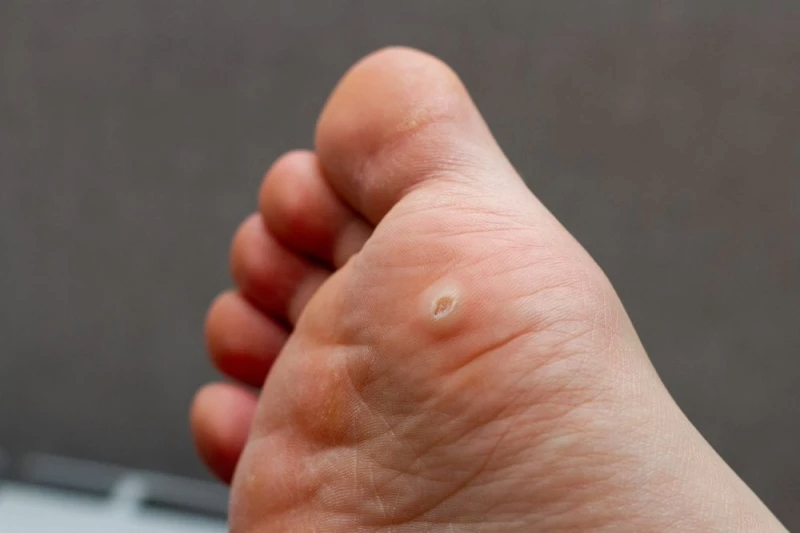
Plantar warts are one of the most common types of warts. They are non-cancerous growths caused by an infection of the skin with the human papillomavirus (HPV). These warts appear as rough, flat bumps on the sole of the foot and often resemble raised lesions on the skin.
What makes plantar warts tricky is their ability to hide beneath layers of skin, sometimes making them invisible to the naked eye. Despite this, they can cause pain and discomfort while walking and negatively impact the aesthetic appearance of the feet.
Let’s explore together the most effective and permanent methods to treat plantar warts.
What Are Plantar Warts?
Plantar warts are small, rough bumps that appear on the feet, particularly in pressure-bearing areas. The pressure can cause them to grow inward beneath a hard, thick layer of skin known as a callus.
Most warts are harmless and may disappear without treatment, and they can affect people of all ages. However, they are especially common in children due to weaker immune systems.
What are Treatments Plantar Warts?
Plantar warts often disappear on their own within one to two years as the immune system fights off the virus. However, due to their contagious nature, associated pain, and embarrassment, medical treatment may be recommended. Common treatment options include:
1. Cryotherapy (Freezing)
This involves applying liquid nitrogen to the wart to destroy it. It may take about a week for the wart to fall off completely.
2. Immunotherapy
Used when cryotherapy is ineffective, this method helps stimulate the immune system to fight HPV. It may involve applying a chemical agent like diphencyprone (DPCP), which causes the wart to disappear over time.
3. Laser Treatment
A laser is used to heat and destroy the small blood vessels feeding the wart, effectively cutting off its blood supply until it dies.
4. Salicylic Acid
A potent exfoliant that helps remove the wart layer by layer. It is widely available in over-the-counter treatments.
5. Electrocautery
In this procedure, the doctor uses an electric current to burn and remove the wart completely.
6. Topical Treatments
Several medicated creams and solutions can help eliminate plantar warts, such as:
- Colomack drops
- Diprosalic cream
- Acretin cream
- Cryla ointment
7. Surgical Removal
The wart may be surgically excised under local anesthesia using a scalpel to cut it out completely.
Home Remedies for Plantar Warts
Home treatments are often effective for managing plantar warts, including:
Apple Cider Vinegar
Rich in acetic acid (a natural antibacterial) and malic acid (an alpha hydroxy acid that exfoliates skin), applying it two or more times daily can help eliminate warts over a few weeks.
Duct Tape
Covering the wart with duct tape for several weeks can suffocate it and aid in its removal.
Lemon
Apply lemon slices to the wart overnight and repeat daily until it disappears.
Tea Tree Oil
Mixing tea tree oil with coconut oil and applying it regularly to the wart has shown antiviral benefits.
Garlic
Garlic has strong antiviral properties and can be used to treat and prevent the spread of plantar warts.
What are Causes of Plantar Warts?
The primary cause is HPV. The virus enters through small cuts or breaks in the skin and leads to a localized skin infection.
It may take 2–6 months after exposure to HPV for a wart to appear.
What are Risk Factors for Developing Plantar Warts?
Plantar warts can affect anyone, but they are more common in:
- Children and teenagers
- Seniors over 65
- People taking immunosuppressive medications
- Individuals with weakened immune systems
What are Symptoms of Plantar Warts?
Key symptoms include:
- Rough, thickened surface on the foot
- Presence of a callus or hard skin
- Skin discoloration
- Small brown or black dots
- Pain while standing or walking
- Discomfort and occasional bleeding
What are Complications of Plantar Warts?
If left untreated, plantar warts may cause:
- Changes in posture or gait
- Muscle fatigue in the legs
- Joint pain
- Embarrassment due to appearance
- Need to wear specific footwear
- Deformities in the foot due to recurrence
Plantar Wart vs. Callus: What’s the Difference?
- Plantar wart: Caused by a viral infection (HPV), contagious, rough and often painful.
- Callus: Caused by repeated friction or pressure, non-contagious, round, hard, and generally painless.
What are Tips to Prevent Plantar Warts?
- Avoid touching your own or others’ warts.
- Cover warts with a bandage.
- Wash hands thoroughly after contact.
- Keep your feet dry and clean.
- Dry your feet well after swimming or bathing.
- Don’t share personal items like towels or nail clippers.
- Wear cotton socks to absorb moisture.
- Use flip-flops in public showers, saunas, and pool areas.
- Consider getting the HPV vaccine.
- Start treatment at the first sign of a wart.
Conclusion
Treating and overcoming plantar warts is very achievable. There are multiple medical and home remedies available that can eliminate them in a relatively short time. However, early intervention is essential to prevent spreading the infection to others.
If you still need to consult a doctor regarding this condition, you can easily book an appointment through Vezeeta
Related Keywords
Specialized Doctors



References
Mayo Clinic. Plantar warts: Diagnosis and treatment.
Available at: https://www.mayoclinic.org/diseases-conditions/plantar-warts/diagnosis-treatment/drc-20352697
Mayo Clinic. Plantar warts: Symptoms and causes.
Available at: https://www.mayoclinic.org/diseases-conditions/plantar-warts/symptoms-causes/syc-20352691
Cleveland Clinic. Plantar Warts: Symptoms, Causes, Treatment & Removal.
Available at: https://my.clevelandclinic.org/health/diseases/24899-plantar-warts
WebMD. Plantar Wart Treatments.
Available at: https://www.webmd.com/skin-problems-and-treatments/understanding-plantar-warts-treatment
Healthline. Plantar Wart: What it is, Symptoms, Treatment, and More.
Available at: https://www.healthline.com/health/skin-disorders/plantar-wart
PubMed. Topical treatment for plantar warts: A systematic review (2021).
Available at: https://pubmed.ncbi.nlm.nih.gov/33810638
Specialized Doctors