What is sleep paralysis, what are its symptoms, and how can it be prevented?
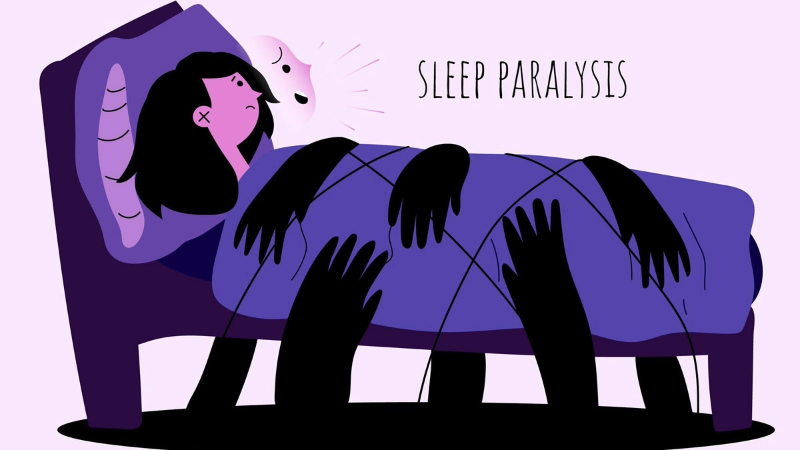
Imagine yourself in the middle of the night, lying in your warm bed, and suddenly you realize you can’t move a single muscle. You try to get up, move your hands or feet, but it’s useless. Panic sets in, you try to scream but no sound comes out. This terrifying and mysterious experience is known as sleep paralysis, or Al-Jathoom in Arabic.
Although it poses no direct threat to physical health, the symptoms of sleep paralysis can have a significant psychological impact. Feeling trapped in a body that won’t move creates intense fear and helplessness. When it happens repeatedly, it can negatively affect sleep quality and daily life.
What is Sleep Paralysis (Al-Jathoom)?
Sleep paralysis is a condition that occurs between wakefulness and sleep, where a person is unable to move or speak for a few seconds to up to two minutes. It may be accompanied by a sensation of pressure or choking.
It can also be linked to other sleep disorders like narcolepsy, and is more common during teenage years or early adulthood.
How Common Is It?
Studies show that 1 in 3 people may experience sleep paralysis at least once in their lifetime. Around 20–30% of people have had episodes that often disappear with age.
What are Types of Sleep Paralysis?
There are two main types:
- Isolated Sleep Paralysis: A one-time episode not related to narcolepsy.
- Recurrent Sleep Paralysis: Multiple episodes over time, often linked to narcolepsy.
What Causes Sleep Paralysis?
Scientifically, it’s related to the natural sleep cycle, especially the transition between two phases:
- Non-REM sleep (about 75% of the night): A deep, relaxing phase.
- REM sleep: Where dreaming occurs, and eye movement speeds up.
If a person wakes up during REM sleep, the brain might still inhibit muscle movement (a protective mechanism during dreams), causing temporary paralysis.
What are Risk Factors of Sleep Paralysis?
You may be more likely to experience sleep paralysis if you:
- Are a teenager or young adult
- Have high blood pressure
- Suffer from anxiety, PTSD, or bipolar disorder
- Experience sleep apnea or narcolepsy
- Use drugs or alcohol
- Have irregular sleep patterns
- Have a family history of sleep paralysis
- Sleep on your back
- Take medications like those for ADHD
What are Common Symptoms of of Sleep Paralysis?
The main symptom is inability to move, typically lasting up to 2 minutes. Other symptoms include:
- Paralysis of the limbs
- Inability to speak
- Headaches and body aches
- A choking sensation
- Hallucinations (visual or auditory)
- Intense fear and panic
- Feeling of helplessness
- Daytime sleepiness
How is Sleep Paralysis Diagnosed?
If a patient reports symptoms of sleep paralysis, the doctor may ask about:
- Frequency and duration of the episodes
- Sleep quality and daytime fatigue
- Medical history, medications, and substance use
- Family history and mental health
Diagnostic tests may include:
- Polysomnography (sleep study): Measures brain activity, breathing, and heart rate during sleep.
- MSLT (Multiple Sleep Latency Test): Assesses how quickly one falls asleep and if REM sleep occurs unusually early, useful in diagnosing narcolepsy.
Is Sleep Paralysis Caused by Magic or Jinn?
Contrary to some cultural myths, sleep paralysis is not caused by black magic or possession by jinn. It is a neurological and physiological sleep disorder, where the brain wakes up but the body remains paralyzed temporarily.
Can Sleep Paralysis Be Fatal?
No, sleep paralysis is not life-threatening. While it can be disturbing and stressful, it does not cause death. In rare cases, it might lead to accidents like falling from bed.
Is It a Psychological Illness?
Sleep paralysis is not necessarily a mental illness. However, it can be linked to:
- Genetic factors
- Environmental stressors
- Underlying mental health issues like anxiety or trauma
How Is It Treated?
Most cases don’t require treatment. But managing underlying causes and triggers can help reduce episodes:
- Treat narcolepsy if present
- Reduce stress and anxiety
- Practice relaxation and meditation
- Get 6–8 hours of quality sleep
- Take antidepressants if prescribed to regulate REM sleep
- Address mental health conditions if present
What are Prevention Tips of Sleep Paralysis?
To reduce your risk of sleep paralysis:
- Get enough restful sleep
- Stick to a consistent sleep schedule
- Avoid caffeine and stimulants, especially in the evening
- Exercise regularly
- Avoid alcohol and smoking
- Avoid heavy meals before bedtime
- Manage stress levels
- Create a calm, quiet sleep environment
- Avoid screen time before sleep
Conclusion
Sleep paralysis is a strange and unsettling condition where the body becomes frozen during sleep. Understanding its causes, symptoms, and prevention methods can help you take control and avoid going through this frightening experience again.
If you still need to consult a doctor regarding this condition, you can easily book an appointment through Vezeeta
Related Keywords



References
American Academy of Sleep Medicine. (2014). International Classification of Sleep Disorders (3rd ed.). Darien, IL: American Academy of Sleep Medicine.
Denis, D., French, C. C., & Gregory, A. M. (2018). A systematic review of variables associated with sleep paralysis. Sleep Medicine Reviews, 38, 141–157. https://doi.org/10.1016/j.smrv.2017.05.005
Denis, D., & Poerio, G. L. (2017). Terror and bliss? Commonalities and distinctions between sleep paralysis, lucid dreaming, and their associations with waking life experiences. Journal of Sleep Research, 26(1), 38–47. https://doi.org/10.1111/jsr.12441
Jalal, B. (2018). Sleep paralysis: Epidemiology, phenomenology, and treatment. Neuropsychiatric Disease and Treatment, 14, 165–177. https://doi.org/10.2147/NDT.S144466
Jalal, B., & Hinton, D. E. (2013). Sleep paralysis among Egyptian college students: Association with anxiety symptoms (PTSD, trait anxiety, pathological worry). Journal of Nervous and Mental Disease, 201(11), 871–877. https://doi.org/10.1097/NMD.0b013e3182a214a6
Jalal, B., & Ramachandran, V. S. (2017). Sleep paralysis, “the ghostly bedroom intruder” and out-of-body experiences: The role of mirror neurons. Frontiers in Human Neuroscience, 11, 92. https://doi.org/10.3389/fnhum.2017.00092
Sharpless, B. A., & Barber, J. P. (2011). Lifetime prevalence rates of sleep paralysis: A systematic review. Sleep Medicine Reviews, 15(5), 311–315. https://doi.org/10.1016/j.smrv.2011.01.007
Sharpless, B. A. (2016). A clinician’s guide to recurrent isolated sleep paralysis. Neuropsychiatric Disease and Treatment, 12, 1761–1767. https://doi.org/10.2147/NDT.S108199
Sharpless, B. A., & Doghramji, K. (2015). Sleep paralysis: Historical, psychological, and medical perspectives. Oxford University Press. https://doi.org/10.1093/med:psych/9780199998138.001.0001
StatPearls. (2023). Sleep paralysis. In StatPearls [Internet]. Treasure Island (FL): StatPearls Publishing. Available from https://www.ncbi.nlm.nih.gov/books/NBK562322/