The Importance of Hearing Tests for Children and Adults and How They Are Conducted
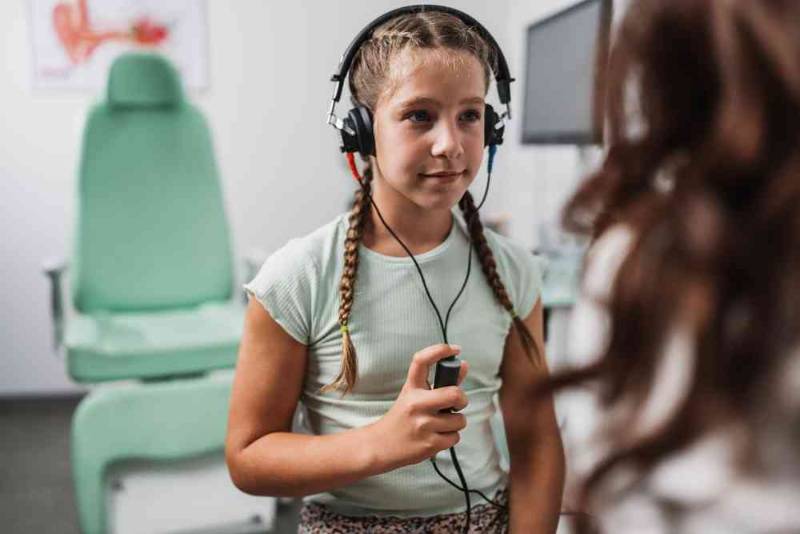
Hearing tests are among the essential assessments now routinely performed on all newborns to ensure their hearing health and detect any issues that may affect their ability to interact and respond to others.
In this article, we’ll explore the different types and methods of hearing tests for infants and adults, their importance, cost, and how to check your hearing at home.
What Is a Hearing Test?
Hearing tests are conducted to determine whether a person is experiencing hearing loss or impairment. These tests are painless and typically take only a short time to complete.
There are several types of hearing tests, and the need for one depends on how much the hearing is affected. The more impaired a person’s hearing is, the harder it becomes to communicate and respond quickly—making early testing crucial.
Hearing loss often develops gradually, which means many people may be unaware that they are experiencing a decline in their hearing ability.
Why Are Hearing Tests Important?
Hearing tests help identify the severity and cause of hearing loss, which allows doctors to determine the best treatment options, including:
- Hearing aids: Worn behind or inside the ear, these devices amplify sound and come in various styles. Some can be bought over the counter for mild to moderate hearing loss, while others are custom-made.
- Cochlear implants: Used in cases of severe hearing loss and surgically implanted for improved auditory function.
When Should You Get a Hearing Test?
You should consider a hearing test if you or your child show signs of hearing loss, which may result from:
- Earwax buildup
- Exposure to loud noises
- Head trauma
- Certain medications
- Ear infections
- Genetic factors
- Sudden exposure to loud sounds (e.g., firearms, electrical devices)
At-Home Hearing Check
Many people wonder, “How do I know if I have hearing loss?” Here are signs that may indicate a hearing issue:
In Adults:
- Frequently needing others to repeat themselves
- Missing the doorbell or phone ringing
- Difficulty hearing in noisy environments
- Increasing the volume on the TV or phone
- Tinnitus (ringing in the ears)
In Children:
- Trouble understanding spoken instructions
- Lack of response to loud sounds
- Speech delays
- Failing to react when called by name
- Frequently asking for things to be repeated
- Complaints about not hearing teachers at school
If you or your child exhibit these symptoms, online hearing tests may provide an initial assessment—but visiting a doctor for a full diagnosis is crucial.
Hearing Tests for Infants and Newborns
Several hearing tests can be performed depending on the child’s age:
Behavioral Tests:
- Newborns (under 6 months): Look for startling or waking up in response to sounds.
- Infants (6+ months): Turn their heads toward the sound source.
- Children (around 3 years): Follow verbal instructions or respond to familiar sounds.
Objective Tests:
These rely on measurable data to assess hearing function in the ears and auditory nerves. Infants may be tested while asleep to ensure stillness.
Types of Hearing Tests
1. Pure-Tone Audiometry
Used for both children and adults to determine the softest sound a person can hear:
- Air conduction test: Sounds are delivered through headphones; the person raises their hand or presses a button when they hear a sound.
- Bone conduction test: A small vibrating device is placed behind the ear to evaluate the inner ear via bone vibration.
2. Tympanometry (Middle Ear Test)
Used to evaluate:
- Eardrum movement
- Earwax blockages
- Fluid behind the eardrum
- A soft probe emits sound and air pressure to measure eardrum response.
3. Speech Audiometry
Measures how well a person can hear and repeat spoken words, helping determine whether the issue lies in hearing or speech/language processing.
4. Otoacoustic Emissions (OAE)
Mainly used in infants:
- A tiny probe in the ear emits sounds and records how the cochlea responds.
If the results are unclear, a full hearing assessment is recommended.
5. Auditory Brainstem Response (ABR)
Assesses how sound signals travel from the ear to the brain:
- Electrodes are placed on the head
- Sounds are played through earphones
- Brainwave responses are recorded
Used in newborns and those unable to take behavioral tests.
6. Middle Ear Muscle Reflex (MEMR)
Tests whether the middle ear muscles contract in response to loud sounds—important for ear protection.
7. Auditory Steady-State Response (ASSR)
Used with ABR to evaluate the degree of hearing loss, particularly in sleeping children.
8. Cortical Auditory Evoked Potentials (CAEP)
Assesses pathways from the auditory nerve to the brain’s hearing centers by measuring electrical activity in response to clicking or tone bursts.
How to Read Hearing Test Results
Results are measured in decibels (dB):
- Normal conversation: 60 dB
- Whisper: 30 dB
- Yelling in the ear: 80+ dB
Hearing loss is classified as:
- Mild: 26–40 dB
- Moderate: 41–55 dB
- Moderately severe: 56–70 dB
- Severe: 71–90 dB
- Profound: 91+ dB
Where Can I Get a Hearing Test?
Visit an ENT (Ear, Nose, and Throat) specialist first. They will:
- Ask about your medical and family history
- Check for infections, earwax, or inflammation
- Refer you to an audiologist for full testing if needed
Cost of a Hearing Test
The cost depends on:
- Number of tests required
- Specialist’s expertise
- Equipment used
Other costs may include:
- ENT consultation fees
- Earwax removal or infection treatment
In Conclusion
A hearing test is one of the most important diagnostic tools to identify hearing issues and guide treatment. Whether for newborns, children, or adults, a timely test can ensure the appropriate hearing support and improve quality of life.
If you still need to consult a doctor regarding this condition, you can easily book an appointment through Vezeeta
Related Keywords



References
Mayo Clinic — Hearing Tests: Why They Are Done
https://www.mayoclinic.org/tests-procedures/hearing-tests/about/pac-20394964
American Speech-Language-Hearing Association (ASHA) — Hearing Assessment
https://www.asha.org/public/hearing/Hearing-Assessment/
National Institute on Deafness and Other Communication Disorders (NIDCD) — Hearing Tests
https://www.nidcd.nih.gov/health/hearing-tests
Johns Hopkins Medicine — Hearing Tests for Adults and Children
https://www.hopkinsmedicine.org/health/wellness-and-prevention/hearing-tests
MedlinePlus — Hearing Tests
https://medlineplus.gov/hearingtests.html