

Suprax 400 mg 5 Capsules: uses, dosage guidance, side effects, and price
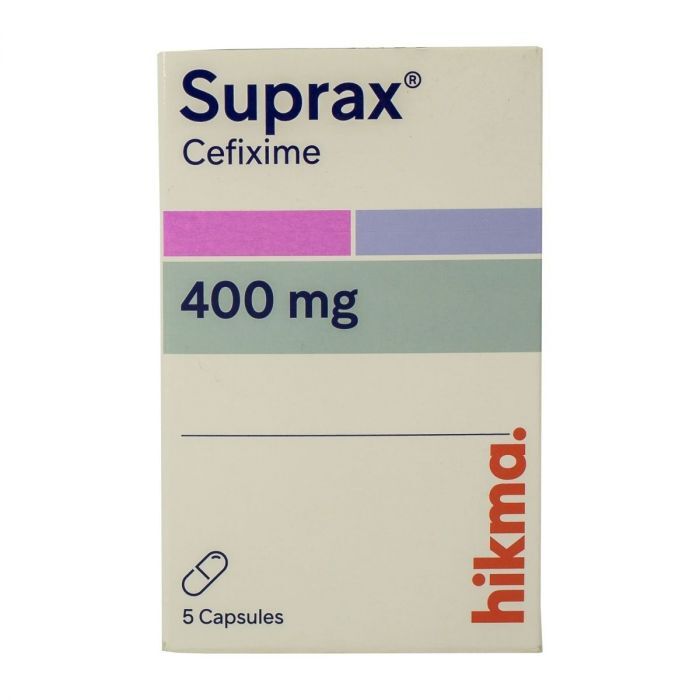
What is Suprax 400 mg 5 Capsules and what does it contain
Suprax 400 mg 5 Capsules is a prescription antibiotic product. Each capsule contains cefixime, known in Arabic as سيفيكسيم. Cefixime belongs to the third-generation cephalosporin antibiotic class.
Suprax works by interfering with bacterial cell wall formation. Without a strong cell wall, susceptible bacteria cannot survive normally, helping the body clear the infection. This action is useful against bacteria only, not viruses.
Suprax may be available as 400 mg capsules or tablets, 200 mg forms, and oral suspension strengths such as Suprax 100 for children. Availability varies by country and pharmacy stock.
Difference between strengths and forms
Suprax 400 is usually used for adults or patients who can safely swallow capsules. Suprax syrup or suspension is often preferred for children because the dose can be measured by weight. Parents should not replace a child’s prescribed syrup with capsules unless a pediatrician approves it.
What is Suprax 400 mg 5 Capsules used for
Doctors may prescribe Suprax for infections caused by susceptible bacteria, including some uncomplicated urinary tract infections, middle ear infections, bacterial throat or tonsil infections, acute bacterial worsening of chronic bronchitis, and certain uncomplicated gonorrhea infections.
Fever, sore throat, cough, sinus symptoms, or ear pain do not automatically mean that Suprax is needed. Many respiratory infections are viral. A doctor decides whether an antibiotic is appropriate based on symptoms, examination, age, risk factors, and sometimes tests. If a child has fever, ear pain, sore throat, or urinary symptoms, you can book with a pediatrician through Vezeeta for proper assessment.
For more context, Vezeeta also explains otitis media and when antibiotics may be needed.
Suprax 400 mg 5 Capsules dosage and how to use it
Use Suprax exactly as prescribed. The dose and duration depend on the infection type, severity, age, kidney function, body weight in children, local resistance patterns, and other medicines. Do not use leftover antibiotics and do not share Suprax with another person.
For adults, doctors may prescribe cefixime once daily or in divided dosing depending on the condition. For children, the dose is calculated by body weight, so Suprax suspension should be measured with an oral syringe or dosing cup, not a household spoon. A pediatrician determines whether Suprax syrup for children, Suprax 100, or another form is suitable.
Complete the course prescribed by your doctor unless you are told otherwise. Stopping early can allow bacteria to remain and may increase relapse or antibiotic resistance. Taking extra capsules does not speed recovery and may increase side effects.
Before or after food
Suprax can generally be taken with or without food. If it causes stomach upset, taking it with food may help.
Missed dose
If you miss a dose, take it when you remember unless it is almost time for the next dose. Do not take two doses together. If you miss more than one dose, ask your doctor or pharmacist.
How long does Suprax 400 mg 5 Capsules take to work
Some symptoms may improve within 48 to 72 hours after starting the right antibiotic, but this varies. Fever, pain, urinary burning, or throat symptoms should gradually improve if the bacteria are sensitive and the diagnosis is correct.
Contact your doctor if symptoms worsen, fever persists, a rash appears, diarrhea becomes severe, or there is no improvement after the expected period.
What are the side effects of Suprax 400 mg 5 Capsules
Common side effects include diarrhea, loose stools, nausea, stomach pain, indigestion, gas, vomiting, headache, dizziness, rash, itching, and vaginal yeast symptoms. These effects are often mild, but persistent or troublesome symptoms need medical advice.
Antibiotics can disturb normal gut bacteria. Severe, watery, or bloody diarrhea may be a warning sign of antibiotic-associated colitis and needs medical assessment, even if it occurs after finishing the medicine.
Urgent symptoms
Seek urgent medical help if you develop swelling of the face, lips, tongue, or throat; trouble breathing; widespread hives; severe skin peeling or blistering; yellowing of the skin or eyes; seizures; unusual bruising or bleeding; severe weakness; or severe watery or bloody diarrhea.
Contraindications and precautions
Do not use Suprax if you are allergic to cefixime or other cephalosporin antibiotics. It is contraindicated in patients with a known serious hypersensitivity reaction to cefixime.
Tell your doctor if you have had a severe penicillin allergy, because cross-allergy may occur in some patients. Use with caution and medical supervision if you have kidney disease, previous antibiotic-associated diarrhea, colitis, significant gastrointestinal disease, liver problems, poor nutrition, or a history of cephalosporin-associated blood problems.
Safety and effectiveness are not established for infants younger than six months. Suprax may also affect some laboratory tests, including certain urine sugar or ketone tests and Coombs tests, so tell healthcare providers you are taking cefixime.
Suprax 400 mg 5 Capsules drug interactions
Tell your doctor and pharmacist about all medicines, supplements, and vaccines you use. Important interactions include warfarin and other anticoagulants, because cefixime may increase prothrombin time and bleeding risk. Carbamazepine levels may also rise when used with cefixime, so monitoring may be needed.
This does not mean every combination is forbidden, but it does mean professional review is important.
Suprax 400 mg 5 Capsules during pregnancy and breastfeeding
During pregnancy, cefixime should be used only when clearly needed and prescribed after medical assessment. A pregnant patient should not start Suprax 400 for sore throat, urinary symptoms, or sinus symptoms without seeing a doctor.
During breastfeeding, the doctor weighs the mother’s need for treatment against possible infant effects. Temporary breastfeeding interruption may be considered in some cases. Contact a doctor if the baby develops diarrhea, rash, or oral thrush.
Can Suprax 400 mg 5 Capsules be taken every day and long term
Suprax is not a daily long-term medicine for chronic use. It is usually prescribed for a defined course to treat a specific bacterial infection. Long or repeated use without medical need can increase resistant bacteria, fungal overgrowth, antibiotic-associated diarrhea, and avoidable side effects.
If infections keep returning, do not repeat Suprax on your own. A doctor may need to look for recurrent urinary infection, resistant bacteria, sinus or ear disease, immune problems, or another diagnosis.
What are the alternatives to Suprax 400 mg 5 Capsules
Alternatives depend on the infection, likely bacteria, allergy history, pregnancy status, kidney function, age, and local resistance. Options may include other cephalosporins, penicillins, macrolides, nitrofurantoin for selected urinary infections, or other antibiotics.
The best alternative is not the strongest antibiotic; it is the most appropriate antibiotic for the confirmed or suspected infection. For children, alternatives must be chosen by a pediatrician because dosing and formulation differ.
Suprax 400 mg 5 Capsules price in Egypt
The price of Suprax 400 mg 5 Capsules in Egypt may change according to pharmacy stock, official pricing updates, offers, and availability. To check the current price, visit the verified Suprax 400 mg product page on Vezeeta Pharmacy.
Frequently asked questions
What is Suprax?
Suprax is a brand of cefixime, an oral cephalosporin antibiotic used for certain bacterial infections.
What is Suprax 400?
Suprax 400 usually refers to a 400 mg cefixime capsule or tablet strength used by prescription.
Is Suprax an antibiotic?
Yes. Suprax is a third-generation cephalosporin antibiotic. It treats bacterial infections, not viral colds or flu.
What is Suprax 400 used for?
It may be prescribed for selected bacterial urinary, throat, tonsil, ear, bronchial, or gonorrhea infections.
Can Suprax be used for children?
Yes, cefixime may be used in children from certain ages when prescribed. Children often need suspension rather than capsules.
What is the dose of Suprax for children?
The pediatric dose is determined by the doctor according to weight, age, infection, and kidney function. Do not estimate it at home.
Is Suprax syrup for children the same as Suprax 400?
They contain the same active ingredient, cefixime, but the strength and form differ. Syrup allows more accurate weight-based dosing.
Can pregnant women take Suprax 400?
It may be used in pregnancy only if clearly needed and prescribed after medical assessment.
Should Suprax be taken before or after food?
It can generally be taken with or without food. Taking it with food may reduce stomach upset.
Does Suprax treat sore throat?
It may treat bacterial strep throat when prescribed, but many sore throats are viral and do not need antibiotics.
Does Suprax treat urinary tract infection?
It may be prescribed for certain uncomplicated urinary tract infections caused by susceptible bacteria.
What should I do if diarrhea occurs?
Mild loose stools can occur, but severe, watery, or bloody diarrhea needs medical advice. Do not use anti-diarrhea medicine unless a doctor approves.
Medical disclaimer
This article is for general medical education only and does not replace consultation with a qualified doctor or pharmacist. Medicines should be used only as prescribed, and antibiotic choice, dose, and duration must be determined by a healthcare professional based on the patient’s condition.
Specialized Doctors

Amira Gamea
Consultant in general internal medicine, diabetes and gastroenterology at Police Authority Hospitals

Ahmed El Gammal
Consultant of Internal Medicine and Diabetology

Saeed Mohamed Aid
Consultant And Professor of internal medicine,and nephrology-Faculty Of Medicine- Zagazig University.
References
- https://www.drugs.com/cefixime.html
- https://www.drugs.com/pro/suprax.html
- https://www.drugs.com/pregnancy/cefixime.html
Specialized Doctors
Amira Gamea
Consultant in general internal medicine, diabetes and gastroenterology at Police Authority Hospitals
Ahmed El Gammal
Consultant of Internal Medicine and Diabetology
Saeed Mohamed Aid
Consultant And Professor of internal medicine,and nephrology-Faculty Of Medicine- Zagazig University.


