Oxitan 50 mg/25 ml Vial: Uses, Dosage, Side Effects and Price
What is Oxitan and what does it contain
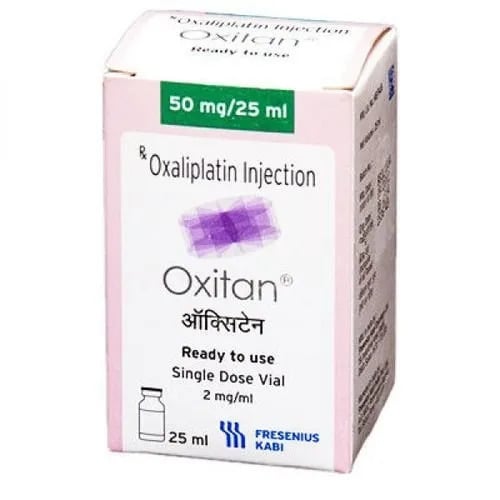
Oxitan is a brand of oxaliplatin, a platinum-based chemotherapy medicine. It damages cancer-cell DNA and helps stop cancer cells from multiplying. Oxitan 50 mg/25 ml vial is prepared for intravenous use in a chemotherapy unit and should be handled only by trained healthcare professionals.
| FeatureDetails | |
| Brand | Oxitan |
| Active ingredient | Oxaliplatin |
| Strength discussed | 50 mg/25 ml vial, listed as 2 mg/ml |
| Form | Vial for reconstitution/preparation and intravenous infusion |
| Main use | Part of chemotherapy regimens for colorectal cancer |
The verified Vezeeta product page for Oxitan 2 mg/ml 25 ml vial on Vezeeta lists oxaliplatin as the active ingredient.
Difference between strengths/variants
Oxaliplatin products may come in different vial sizes or formulations. The prescribed dose is not based on vial size alone; it depends on body surface area, kidney function, treatment protocol, previous side effects and the oncologist’s treatment goal.
What is Oxitan used for
Oxitan is used in combination chemotherapy for colorectal cancer, including adjuvant treatment of stage III colon cancer after complete tumor removal and treatment of advanced colorectal cancer. It is commonly combined with fluorouracil and leucovorin in regimens such as FOLFOX.
It is not a pain medicine, vitamin or self-treatment for cancer symptoms. Patients with suspected or confirmed cancer should follow an oncology specialist’s plan; Vezeeta can help patients book an oncologist for assessment and follow-up.
Oxitan dosage and how to use it
The usual adult oxaliplatin dose for colorectal cancer is 85 mg/m² by intravenous infusion over about 120 minutes every 2 weeks, in combination with infusional fluorouracil and leucovorin. In adjuvant stage III colon cancer, treatment may continue for a total of 12 cycles, about 6 months, unless unacceptable toxicity occurs. In advanced colorectal cancer, treatment usually continues until disease progression or side effects become unacceptable.
The oncologist may delay, reduce or stop treatment if there is severe neuropathy, low white blood cells, low platelets, severe diarrhea, vomiting, kidney impairment or a serious allergic reaction. Blood counts, kidney function, liver tests and neurological symptoms are usually checked before cycles. Patients should attend all scheduled tests because dose changes depend on clinical assessment, not symptoms alone.
Before or after food
Oxitan is not taken by mouth, so food does not directly affect administration. It is given as an IV infusion in a chemotherapy unit. However, nausea is common, so the team may prescribe antiemetic medicines and advise small meals and hydration around treatment days.
Missed dose
If a chemotherapy appointment is missed, the patient should call the oncology clinic immediately. Do not try to compensate with another medicine or change the next cycle date without the treating doctor’s plan.
How long does Oxitan take to work
Oxitan starts acting on cancer cells after infusion, but the benefit is not felt right away. The oncology team judges response over several cycles using scans, symptoms and the treatment plan. Side effects can start during infusion, within hours, or in the following days.
What are the side effects of Oxitan
Common side effects include tingling, numbness, burning or pain in the hands and feet, cold sensitivity, nausea, vomiting, diarrhea, mouth sores, tiredness, low white blood cells, anemia, low platelets and changes in liver tests. Hair loss can occur with chemotherapy regimens, but the degree depends on the medicines used with oxaliplatin.
Cold sensitivity is a characteristic oxaliplatin effect. Acute nerve symptoms may appear during infusion or within 1 to 2 days afterward and often improve before the next cycle. Persistent neuropathy can last months or longer and may require dose reduction, treatment delay or stopping oxaliplatin.
Urgent symptoms
Seek urgent medical help for trouble breathing, throat tightness, chest pain, fainting, facial or tongue swelling, severe rash, fever, chills, uncontrolled diarrhea or vomiting, blood in stool or urine, black stools, severe weakness, confusion, seizures, sudden vision changes, severe muscle pain with dark urine, or worsening shortness of breath.
Contraindications and precautions
Oxitan must not be used in patients with hypersensitivity to oxaliplatin or other platinum-based medicines. Extra caution is needed in patients with kidney disease, heart rhythm problems, electrolyte abnormalities, lung symptoms, liver problems, severe neuropathy, low blood counts or previous serious chemotherapy reactions.
Patients should avoid cold drinks, ice cubes, ice packs and direct contact with cold objects during and shortly after treatment because cold can worsen nerve symptoms. Wear gloves when handling refrigerated items and cover the mouth and nose in cold air if cold air triggers throat or breathing discomfort.
Oxitan drug interactions
Tell the oncology team about all prescription medicines, over-the-counter medicines, supplements and herbal products. Important concerns include medicines that prolong the QT interval, drugs that can affect kidney or hearing toxicity, anticoagulants such as warfarin, immunosuppressive therapies and live vaccines. Oxaliplatin should not be mixed with alkaline solutions or chloride-containing solutions such as normal saline during preparation.
Oxitan during pregnancy and breastfeeding
Oxitan may harm an unborn baby and is generally avoided during pregnancy unless the specialist decides the potential benefit outweighs the risk. Pregnancy testing may be required before treatment. Females who can become pregnant should use effective contraception during treatment and for 9 months after the final dose. Males with partners who can become pregnant should use contraception during treatment and for 6 months after the final dose. Breastfeeding is not recommended during treatment and for 3 months after the final dose.
Can Oxitan be taken every day and long term
No. Oxitan is not taken daily. It is usually given in cycles, often every 2 weeks, depending on the chemotherapy protocol. Long-term use is limited by benefit, cancer response and toxicity, especially neuropathy and low blood counts. In adjuvant colon cancer, treatment is usually for a defined course; in advanced disease, it continues only while benefit outweighs side effects.
What are the alternatives to Oxitan
Alternatives depend on the cancer, its stage, previous treatment, biomarkers, general health and treatment goals. Options may include other oxaliplatin brands, irinotecan-based regimens, fluorouracil/leucovorin, capecitabine-based regimens, targeted therapy such as bevacizumab or anti-EGFR medicines in selected patients, or immunotherapy for suitable biomarker profiles. Never substitute chemotherapy without the oncologist’s approval.
Oxitan price in Egypt
The price of Oxitan in Egypt can change with availability, vial strength and pharmacy updates. For current availability and ordering information, check the verified Oxitan vial page on Vezeeta Pharmacy or contact a licensed pharmacy. Chemotherapy should be dispensed and used only with a specialist prescription.
Frequently asked questions
What is oxaliplatin?
Oxaliplatin is a platinum-based chemotherapy medicine used mainly with fluorouracil and leucovorin for colorectal cancer.
What is oxaliplatin used for?
It is used for stage III colon cancer after surgery and for advanced colorectal cancer as part of combination chemotherapy.
How does oxaliplatin work?
It damages cancer-cell DNA, which disrupts cell division and can lead to cancer-cell death. It is often combined with medicines that work in different ways.
How is oxaliplatin administered?
It is given by intravenous infusion, usually over about 120 minutes, in a chemotherapy unit. It is not a tablet or home injection.
How long do oxaliplatin side effects last?
Some side effects improve within days, while acute nerve symptoms often settle before the next cycle. Persistent neuropathy can last months or longer in some patients.
How can side effects of oxaliplatin be reduced?
Use anti-nausea medicines as prescribed, stay hydrated as advised, avoid cold exposure, report nerve symptoms early, and attend scheduled blood tests. Any dose change should be made only by the oncology team.
How long does oxaliplatin cold sensitivity last?
Cold sensitivity often starts during or soon after infusion and may last several days. If it persists, worsens or affects daily activities, the oncology team should review the dose.
How effective is oxaliplatin?
Effectiveness depends on cancer stage, regimen and patient factors. Oxaliplatin-containing regimens such as FOLFOX are established treatments for colorectal cancer, but individual response varies.
Why give leucovorin with oxaliplatin?
Leucovorin is used to enhance the effect of fluorouracil in combination regimens. It does not strengthen oxaliplatin by itself, but improves the overall protocol.
When should oxaliplatin be stopped?
It may be stopped for disease progression, completion of planned cycles, severe allergy, severe neuropathy, serious blood-count suppression, lung toxicity, rhabdomyolysis or other unacceptable toxicity.
How long does oxaliplatin stay in your system?
Free active platinum falls relatively quickly, but terminal platinum elimination can be prolonged. This does not mean all effects last equally long.
Why is oxaliplatin diluted in dextrose 5%?
Oxaliplatin is prepared with 5% dextrose because chloride-containing solutions such as normal saline can affect stability. Preparation must be done by trained staff.
How is oxaliplatin dose calculated?
The dose is usually calculated in mg/m² using body surface area, then adjusted for the treatment protocol, kidney function and side effects. Patients should never calculate or change the dose themselves.
What is the price of oxaliplatin?
The price varies by brand, vial strength and availability. Check a licensed pharmacy or the Vezeeta product page for current local information.
Medical disclaimer
The information in this article is provided for general health education and does not replace medical advice from a doctor or pharmacist. Do not start, stop, or change the dose of any medication without consulting a qualified healthcare professional.
Specialized Doctors

Mohamed Abd Elhamed Hefny
Consultant in Oncology ,Hematology and Nuclear Medicine, Al-Azhar Medicine

Ahmed Ashour
Lecturer Clinical Oncology Faculty of Medicine Alexandria University

Moustafa Abbas
Consultant and MD in Oncology and Nuclear Medicine, Cairo University, Kasr Al-Ainy
Specialized Doctors
Mohamed Abd Elhamed Hefny
Consultant in Oncology ,Hematology and Nuclear Medicine, Al-Azhar Medicine
Ahmed Ashour
Lecturer Clinical Oncology Faculty of Medicine Alexandria University
Moustafa Abbas
Consultant and MD in Oncology and Nuclear Medicine, Cairo University, Kasr Al-Ainy