Lipoma (Fatty Cyst): Causes, Locations, Symptoms, and Treatment
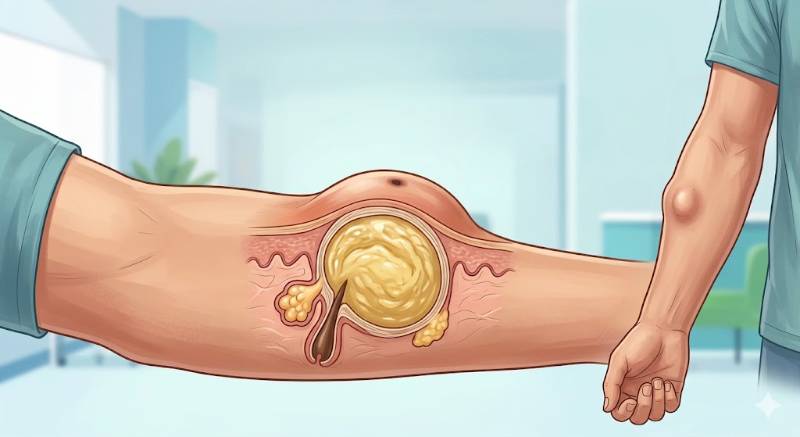
What is a Lipoma?
A lipoma is a benign (non-cancerous) mass of fatty tissue that grows very slowly just beneath the skin. It is enclosed within a thin capsule that separates it from surrounding tissues. When touched, it feels soft and rubbery and moves easily under your fingers—this is a key feature that distinguishes it from more serious lumps.
A lipoma is not cancer and does not spread throughout the body. It grows very slowly and usually stabilizes at a certain size. Most lipomas are less than 5 cm in diameter, and many people live with them for years without any discomfort.
What Causes Lipomas?
The exact cause of lipomas is still not fully understood. However, several factors may increase the likelihood of developing them:
- Genetics: Lipomas often run in families. If one of your parents has one, you are more likely to develop it. A condition called familial multiple lipomatosis causes multiple lipomas and is linked to specific genetic mutations.
- Age: Most common between ages 40 and 60, but they can appear at any age.
- Associated conditions: Conditions such as Dercum’s disease (chronic pain with multiple lipomas), Madelung’s disease, and obesity may be associated with a higher risk.
Lipoma on the Scalp
Lipomas on the scalp are relatively common and are often noticed when running your hand through your hair. They appear as soft, movable, and usually painless lumps under the skin. They may be cosmetically bothersome, especially for people with thin or shaved hair.
Importantly, scalp lipomas usually do not affect the brain or skull because they are superficial. If large or uncomfortable, they can be removed with a simple procedure under local anesthesia.
Lipoma on the Back
The back is one of the most common areas for lipomas. They may grow just under the skin or deeper within muscle layers (known as intramuscular lipomas). Superficial lipomas are usually painless, while deeper ones may cause discomfort or muscle pain if they press on nerves.
Lipoma in the Breast
Discovering a lump in the breast can be alarming. While lipomas can occur in the breast, they are not very common. Most soft, movable fatty lumps are benign. However, no breast lump should be ignored—ultrasound and mammography are essential to distinguish a lipoma from other types of masses.
Lipoma in the Neck
The neck is a common site for lipomas. They may be visible or only felt on examination. In this area, cosmetic concerns are often the main issue. If the lipoma grows larger or causes difficulty swallowing or restricting neck movement, surgical evaluation becomes necessary.
Lipoma Under the Armpit
A lipoma under the armpit may resemble enlarged lymph nodes or a skin abscess, so proper diagnosis is important. In this area, daily friction can be uncomfortable and may cause mild pain with movement.
How Can I Tell If It’s a Lipoma?
Lipomas have several characteristic features that make them recognizable in most cases:
- Soft and rubbery texture: Feels like a small, flexible ball.
- Mobile: Moves easily under the finger—this is one of the most distinctive signs.
- Usually painless: Unless it is large or pressing on a nerve.
- Slow-growing: Enlarges gradually over months or even years.
- Well-defined borders: Its edges can be clearly felt.
- Located just under the skin: The overlying skin usually appears normal.
What’s the Difference Between a Lipoma and a Tumor?
Lipomas (benign) and liposarcomas (malignant tumors) can be differentiated by several clinical features:
- Texture: Lipomas are soft and rubbery, while malignant tumors tend to be firm and irregular.
- Mobility: Lipomas move easily under the skin, whereas malignant tumors are often fixed to deeper tissues.
- Growth rate: Lipomas grow very slowly; malignant tumors grow more rapidly.
- Pain: Lipomas are usually painless, while malignant tumors may cause pain or discomfort.
- Margins: Lipomas have smooth, well-defined borders, while malignant tumors often have irregular, poorly defined edges.
How Are Lipomas Treated?
Lipomas are common and usually harmless. Many people discover them by chance and live with them without needing treatment.
However, they may become a concern for some—either cosmetically, especially in visible areas, or if they start to grow, cause discomfort, or lead to pain. Treatment decisions depend on several factors such as size, location, growth rate, and whether symptoms are present.
Treatment options include:
- Observation (no medical intervention):
If the lipoma is small, painless, and not bothersome, monitoring is usually sufficient, as most lipomas remain stable.
- Corticosteroid injection (simple procedure):
The lipoma is injected to reduce its size, but it does not disappear completely. This option is suitable for smaller cases or when surgery is not feasible, with a possibility of recurrence.
- Needle aspiration (minimal scarring):
The contents are removed using a needle, leaving a very small mark. However, recurrence is possible because the capsule remains.
- Surgical excision (most effective):
A small incision is made to remove the lipoma completely along with its capsule. This is the best option to prevent recurrence. It is performed under local anesthesia and takes only a short time.
Can a Lipoma Disappear on Its Own?
In most cases, no. A lipoma does not dissolve or disappear on its own. It usually remains the same size or grows very slowly over time. Some very small lipomas may appear unchanged for years, but they do not typically go away spontaneously.
Is It Dangerous to Leave a Lipoma Untreated?
In most cases, no. Lipomas are benign, slow-growing, and do not turn into cancer.
However, medical evaluation is recommended if:
- The lump is growing noticeably and rapidly
- It starts causing pain or pressing on a nerve or organ
- It is large (greater than 5 cm) or located deep within tissues
Conclusion
In most cases, lipomas are benign, slow-growing, and harmless. Understanding their characteristics can help ease unnecessary worry. However, any new lump under the skin should be evaluated by a doctor at least once, as something that appears to be a lipoma may occasionally be something else.
Removal is simple if needed, and recovery is usually quick. Do not delay seeking medical advice if you notice changes in size, shape, or if pain develops.
If you still need to consult a doctor about this condition, you can easily book an appointment through Vezeeta.
Related Keywords



Specialized Doctors

Mohamed Refaai
General Surgery Specialist - Fellow of the Royal College of Surgeons of London

farahat shawky
General Surgery Specialist

Mohamed Essam Amin
Consultant and Assistant Lecturer of General Surgery, Obesity and Laser Anal Surgery at the Faculty of Medicine, Horus University
References
- Mayo Clinic — Lipoma: Symptoms & Causes
https://www.mayoclinic.org/diseases-conditions/lipoma/symptoms-causes/syc-20374470
- Mayo Clinic — Lipoma: Diagnosis & Treatment
https://www.mayoclinic.org/diseases-conditions/lipoma/diagnosis-treatment/drc-20374474
- Cleveland Clinic — Lipoma: Overview, Symptoms & Treatment
https://my.clevelandclinic.org/health/diseases/15008-lipomas
- Cleveland Clinic — Intramuscular Lipoma
https://my.clevelandclinic.org/health/diseases/23907-intramuscular-lipoma
- Cleveland Clinic — Angiolipoma
https://my.clevelandclinic.org/health/diseases/21958-angiolipoma
- Healthline — Lipoma: Types, Pictures, Causes, Symptoms & Treatment
https://www.healthline.com/health/skin/lumps
- Cleveland Clinic — Spindle Cell Lipoma
https://my.clevelandclinic.org/health/diseases/24326-spindle-cell-lipoma
- Cleveland Clinic — Benign Tumors: Types & Symptoms
https://my.clevelandclinic.org/health/diseases/22121-benign-tumor
Specialized Doctors
Mohamed Refaai
General Surgery Specialist - Fellow of the Royal College of Surgeons of London
farahat shawky
General Surgery Specialist
Mohamed Essam Amin
Consultant and Assistant Lecturer of General Surgery, Obesity and Laser Anal Surgery at the Faculty of Medicine, Horus University