Can a Root Canal Be Done Without Pain?
Technological advancements in dentistry have solved many problems that were once deemed unattainable. In the past, tooth extraction was the only way to eliminate pain, but root canal treatment emerged as a safe solution to relieve pain while preserving the tooth.
Let’s embark on a comprehensive journey to understand how long pain lasts after a root canal, the pros and cons of this procedure, its types, and the associated costs.
What is Dental Pulp Inflammation and Root Canal Treatment?
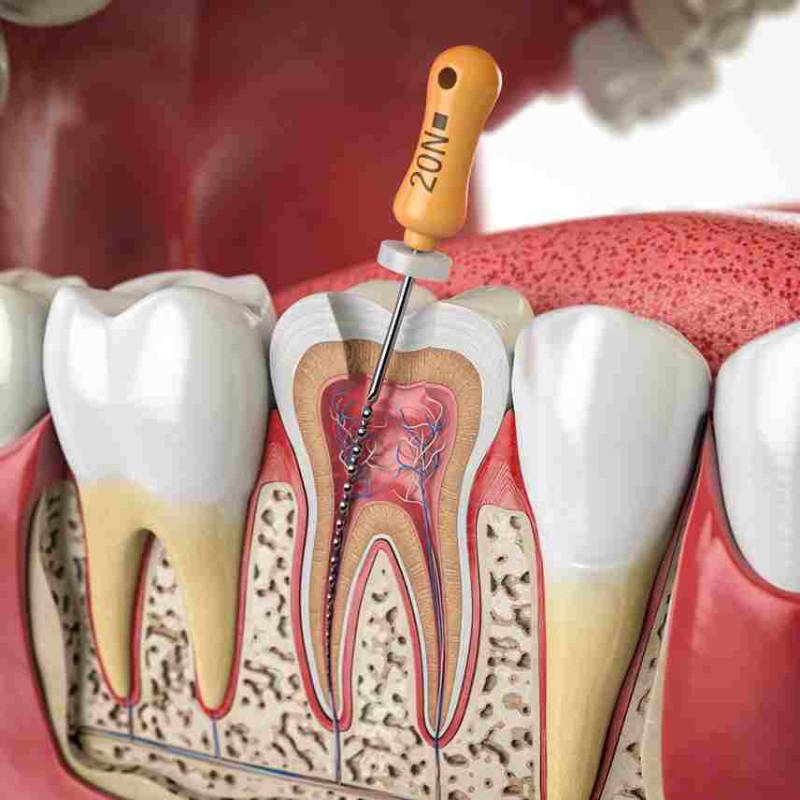
Root canal treatment (endodontic therapy) involves removing nerve endings, blood vessels, and any residual tissue from the tooth pulp using specialized tools, followed by thorough disinfection and sealing with root canal filling materials.
The tooth consists of three main layers:
- Enamel: The hard, outermost layer that provides a cosmetic appearance and is the strongest tissue in the body.
- Dentin: The middle layer that forms the bulk of the tooth.
- Pulp: A central chamber housing nerve endings, connective tissue, and blood vessels that nourish the tooth.
Tooth decay begins in the enamel, progressing into the dentin and eventually reaching the pulp, where nerves reside. Once bacteria invade the pulp, they cause significant inflammation and pain.
Symptoms may include:
- Severe toothache
- Gum redness and swelling
- Pain upon touching or applying pressure on the affected tooth
In such cases, root canal therapy is the ideal solution to eliminate pain and preserve the tooth by thoroughly cleaning the pulp and root canals.
What are Indications for Root Canal Treatment?
Root canal therapy was developed as an alternative to tooth extraction to manage pain caused by inflammation of the pulp tissue and nerves. It may also be required in the absence of pain, particularly in cases of pulp necrosis.
Common indications include:
- Trauma causing tooth fracture and pulp exposure
- Advanced decay reaching the pulp
- Trauma displacing the tooth and compromising blood supply, leading to pulp death
- Tooth cracks
- Severe tooth wear and hypersensitivity
- Gum recession exposing the highly sensitive root
- Other dental procedures that increase pulp sensitivity, such as:
- Aggressive tooth preparation for prosthetics
- Deep cavity removal
- Teeth whitening
What are Risks of Delaying or Avoiding Root Canal Treatment?
Some patients avoid treatment due to fear of pain, cost, or lack of time. They may resort to frequent use of painkillers or antibiotics, which only worsens the situation and leads to complications such as:
- Dental or gingival abscesses
- Severe tooth breakdown
- Persistent facial swelling
- Spread of infection
- Formation of a dental fistula (draining sinus)
What areTypes of Root Canal Treatment?
There are two main techniques:
- Manual instrumentation: Uses hand-operated files to clean the canals.
- Rotary instrumentation: Uses motor-driven files that rotate at variable speeds, allowing more efficient and less tiring treatment (but with higher costs).
Root canal filling materials also vary, based on:
- Patient’s age
- Tooth type (primary vs. permanent)
Common materials include:
- Single cone (for rotary systems)
- Multiple lateral condensed cones (for manual systems)
- Thermoplasticized materials
- Powder-liquid or base-catalyst mixes
How Many Sessions Are Needed?
The number of treatment sessions depends on several factors:
- Technology used: Advanced tools reduce time
- Tooth condition: Infection or abscess may require more sessions
- Patient tolerance: Some struggle with keeping their mouth open
- Dentist’s schedule: May affect completion within one session
- Dentist’s expertise: Experienced dentists often finish faster
Is Root Canal Treatment Painful?
Contrary to popular belief, root canal therapy is not severely painful. It is typically performed under local anesthesia. Pain may occur in some cases due to:
- Inadequate anesthesia or severe inflammation (requiring additional doses)
- Over-instrumentation beyond the apex (preventable with skilled technique)
What are Root Canal Procedure Steps?
- Clinical and radiographic diagnosis to confirm pulp involvement
- Local anesthesia
- Rubber dam isolation to maintain asepsis
- Tooth access and caries removal
- Cleaning and shaping of canals using specialized instruments
- Disinfection and drying
- Root canal filling and sealing
- Temporary restoration followed by final filling (amalgam or composite/laser)
- Optional: Crown placement for added protection and durability
What are Benefits of Laser Fillings?
Laser fillings are used only for the coronal part of the tooth, not for root filling. Advantages include:
- Aesthetic color matching
- Mercury-free and biocompatible
- Minimal tooth preparation
- Durable and strong bonding
- Resistance to microleakage
What are Post-Treatment Instructions?
After treatment, patients can resume normal activities. Numbness wears off within an hour, and caution is needed to avoid lip or cheek injury.
Your dentist may prescribe:
- Anti-inflammatory medications
- Antibiotics (if there was an abscess)
- Good oral hygiene practices
- Crown placement for long-term tooth integrity
What are Side Effects and Complications?
Temporary discomfort or swelling is possible and usually resolves with medication.
Delayed pain may be due to:
- Natural healing of surrounding tissues
- Missed canal during treatment
- Overstressing the tooth post-treatment
Other complications include:
- Tooth fracture due to weakened structure
- Persistent infection if canals aren't cleaned or sealed properly
- Instrument breakage or extrusion of materials
- Perforation of root or canal floor
Most of these risks are minimized with a skilled and experienced dentist.
What is Root Canal Treatment Cost?
Costs vary based on:
- Tooth location and number of canals
- Type of tooth (primary vs. permanent)
- Severity of infection
- Dentist’s experience
- Equipment and materials used
What are Alternatives to Root Canal Treatment?
There is no true alternative once the pulp is infected—tooth extraction becomes the only option if root canal therapy is not feasible. However, this is considered a last resort.
Conclusion
Root canal treatment is not as frightening as some might believe. It is your best option for preserving teeth and eliminating pain—painlessly and effectively—when performed by a skilled professional. Prioritize timely treatment and follow-up care for the best outcomes.
If you still need to consult a doctor regarding this condition, you can easily book an appointment through Vezeeta
Related Keywords



References
American Association of Endodontists (AAE). Root Canal Explained: Myths and Facts.
https://www.aae.org
Cleveland Clinic. Root Canal: What It Is, Procedure, Pain & Recovery.
https://my.clevelandclinic.org
Mayo Clinic. Root Canal Treatment: What You Can Expect.
https://www.mayoclinic.org
WebMD. What to Expect During and After a Root Canal.
https://www.webmd.com/oral-health
Colgate Oral Care Center. Root Canal Procedure and Pain Management.
https://www.colgate.com