Diabetic Foot
الوصف
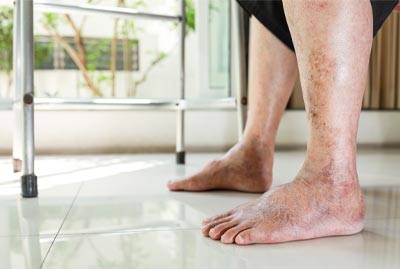
Diabetic foot infections are common in patients with diabetes. Elderly patients with co-morbid conditions are more likely to develop diabetic foot infections. Both men and women are equally affected. Diabetes can cause inadequate blood flow or foot numbness in some persons. That may make it challenging to see cuts, sores, and blisters. Untreated wounds that go undetected can get infected fast, which can result in problems and even require amputation. There are numerous ways to keep your foot free of infections and sores. An individual with diabetes mellitus has a 15% to 25% lifetime chance of developing a foot ulcer. 0.03% to 1.5% of patients with diabetic foot require an amputation.
الأعراض
You should refer to your doctor immediately if you have one of the following symptoms:
- Tingling, burning, or pain in your feet.
- Loss of ability to feel touch, heat, or cold.
- A cut, or bruise on your foot that does not start to heal after a few days.
- Skin on your foot that becomes red, warm, or painful; these signs indicate an infection.
- A callus with dried blood inside of it can often be the first sign of a wound under the callus.
- A foot infection that becomes black and smelly; these may be signs of gangrene.
If you experience any of these symptoms, visit a Diabetes and Endocrinology doctor, who might refer you to a Vascular Surgery doctor (Arteries and Vein Surgery doctor), for proper diagnosis and treatment to prevent further complications.
دكاترة مرشحين
عرض المزيدالأسباب
- Diabetes-related neuropathy is a form of nerve injury that can be brought on by chronic high blood sugar. Although diabetes-related neuropathy can affect any part of the body, it most frequently affects the legs and feet. As a result of this condition, you could lose feeling in your feet. You might not detect a blister, cut, or pain if your feet are numb. For example, you might not even notice when your foot is being wounded by a pebble in your sock. Unnoticed and untreated wounds might get infectious.
- Your legs and feet's blood flow may be impacted by diabetes. Peripheral artery disease is more likely to occur in people with diabetes. This disease causes arteries to narrow or block. Poor circulation (reduced blood flow) might make it challenging for an infection or foot ulcer caused by diabetes to heal.
التشخيص
Your doctor will ask about your symptoms and how well you are controlling your blood sugar to detect diabetes-related foot issues. Also, he will examine your feet, legs, and toes.
If a diabetes-related ulcer is seen, your doctor will:
- Check if there are any redness, swelling, warmth, or discharges; these are the signs of infection.
- Request some tests to examine the affected area deeply, x-ray and MRI for example.
- Take a sample of discharges or your skin to test for infections.
العلاج
Treatment of diabetes-related foot ulcers:
Your podiatrist (feet specialist) will care for your feet ulcer as follows:
- Wound cleaning
- Fluid or pus draining from the ulcer
- Removing the dead or infected tissue
- Applying a bandage and ointments for extra fluid absorption and wound protection
- Advising the use of crutches or a wheelchair to take the weight off the affected foot
- Prescribing oral or intravenous antibiotics to control and treat the infection (for example, amoxicillin/clavulanate, doxycycline, levofloxacin, linezolid, ampicillin/sulbactam, ceftriaxone, moxifloxacin, vancomycin)
Depending on the disease severity, your doctor may recommend hospitalization. Amputation may be necessary in some cases to prevent infection from spreading to other body parts.
Diabetes patients frequently experience foot problems. You might be concerned that diabetes will cause you to lose a toe, foot, or leg, or you may know someone who has, but by taking daily care of your feet, you can reduce your risk of developing diabetes-related foot issues. Maintaining control of your blood sugar level helps support your feet’ health.
Tips for healthy feet to reduce the risk of diabetes-related foot problems:
You can identify any foot problem early and seek immediate treatment if you check your feet each day. Your risk of amputation is significantly reduced by early treatment.
- Wash your feet daily in warm water (just wash, do not soak). Then, dry your feet. Finally, apply lotion to the top and bottom of your feet (do not apply any lotion between your nails as this may cause infections)
- Examine your feet daily for any change to the skin or nails like redness, cuts, swelling, calluses, or any other change. You can ask a family member to help you or use a mirror to check the bottom of your feet.
- Wear shoes (or slippers) and socks always. Make sure your shoes fit comfortably and that your socks are not too tight. To help avoid ulcers or sores, some diabetics wear therapeutic footwear or shoe inserts.
- Trim your toenails straight across, then use a nail file to softly round any sharp angles. Ask your podiatrist to cut your toenails if you cannot see or reach your feet.
- Use talcum powder or cornstarch between the toes to absorb moisture.
- Maintain the blood flow. When you are sitting, raise your feet.
- Do feet-friendly activities like walking, riding a bike, or swimming.
- Avoid walking barefoot, removing corns or calluses yourself, and wearing tight socks or shoes.