Gastric cancer
الوصف
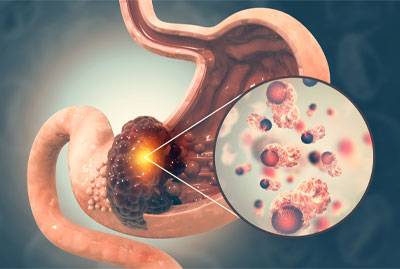
Gastric cancer is a type of cancer in which cells in the stomach grow out of control and this malignancy can spread to different organs.
It can be considered as one of the most common cancers around the world as it’s ranked as the sixth most common cancer, and the fourth most common cancer-related death worldwide.
Gastric cancer is approximately 2 times more prevalent in men compared to women.
الأعراض
Sometimes local illness progresses before symptoms appear.
Common symptoms:
- Pain in the stomach or the back
- Loss of appetite
- Weight loss
- Vomiting
- Difficulty in swallowing
- Bloody stools
- Bloody vomiting
- Anemia
- Feeling a mass at the top of the tummy
If you experienced symptoms of gastric cancer,
visit your gastroenterologist who may direct you to an oncologist.
دكاترة مرشحين
عرض المزيدالأسباب
There’s no exact known cause for the development of gastric cancer, but several risk factors are associated with the disease development.
- Family history
- Male gender
- Old age- Usually more than 60 years
- History of gastric cancer
- Smoking
- H.Pylori infection
- Alcohol consumption
- Chronic gastritis
- History of pernicious anemia
- High consumption of red meat
- Obesity
التشخيص
Different tests and procedures may be used to diagnose and stage gastric cancer such as:
Endoscopic biopsy: This is considered the main diagnostic tool as it uses a camera to examine the upper digestive system and take a sample of the suspected tumor to be tested.
Scans: Different types and techniques of scans are used to get pictures of the body to know the stage of cancer and to be sure that it can be removed before doing the surgery (ex: Computed tomography “CT”, Endoscopic ultrasound, Positron emission tomography/Computed tomography “PET/CT”.
Explorative laparoscopy: This procedure is used to check if the tumor has spread to the lining of the abdominal cavity (Peritoneum) in patients with planned resection surgery.
Staging
The staging of gastric cancer depends on the tumor size, involvement of lymph nodes, and spreading to other parts of the body. It has stages from zero to 4, with stage 4 being the most severe stage and which indicates the spreading of cancer to different organs.
العلاج
Although it can be challenging to treat, stomach cancer is frequently curable. choosing the appropriate treatment depends on the size of the tumor, location, spreading, and the patient's general health.
Treatment options are:
Endoscopic resection: Removing the tumor by using the endoscope when the tumor is small and in its early stages.
Surgery: Can be used to treat cancer by removing it when the tumor is small and can be restricted, or to only relieve the symptoms such as obstruction or bleeding in advanced cases.
Chemotherapy: A type of medicine that kills cancer cells. It is used before or after surgery to make cancer smaller, to prevent cancer recurrence, or to increase the efficacy of treatment when it’s combined with other medications if surgery is not applicable (ex: Fluorouracil, Cisplatin, Oxaliplatin, and Epirubicin).
Radiotherapy: It is using radiation to kill cancer cells. This procedure can be used with chemotherapy in high-risk patients to avoid the recurrence of cancer.
Targeted therapy: Medicines that target a specific gene in case of gastric cancer (ex: Trastuzumab).
Palliative therapy: This includes chemotherapy and targeted therapy and is used to relieve the symptoms and improve the quality of life when there’s no hope for curing cancer.